





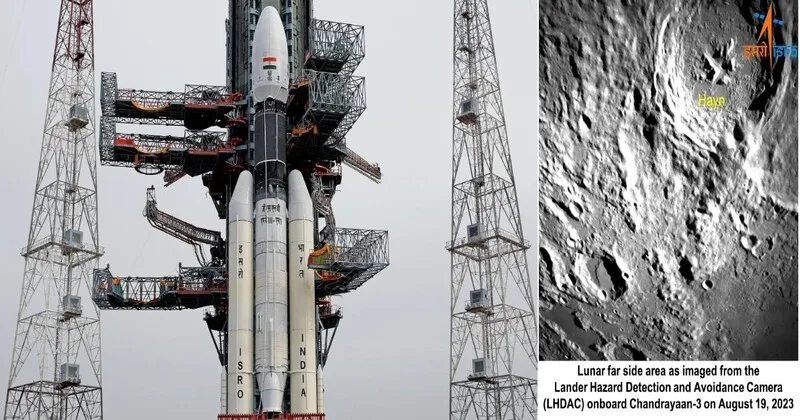
India’s space programme, dreamed up in the 1960s, has followed dual track approach by harnessing the space technology for national growth and the promotion of space science through research and planetary exploration. India has not only constructed satellites for communications, meteorology and navigation but has also explored distant spaces, with these missions it has enhanced scientific understanding about the Solar System.
India space science mission efforts had raised interest of youths in technological advancements, thus motivating young brains to pursue science. Missions such as Chandrayaan-1, Mars Orbiter Mission, AstroSat, Chandrayaan-2, Aditya-L1 and XPoSat have produced a rich dataset and led to numerous scientific papers. These achievements have contributed to worldwide existing knowledge regarding the Universe while advancing India’s standing in the field of space exploration.
One of these stands as a testament to the capabilities and technical powers of the Indian Space Research Organisation (ISRO) the Chandrayaan-3 mission. On 23rd August 2023, India became the first country to achieve a soft landing in the Moon’s southern high latitudes, this achievement was remarkable that this day has now been established as National Space Day.
Establishing a strong foundation on Lunar Exploration
India’s exploration of the Moon started with Chandrayaan-1 in 2008, which had an orbiter and a Moon Impact Probe (MIP) onboard. It was India’s first mission to the Moon and included significant international cooperation. Chandrayaan-1 has produced findings such as the identification of hydration on the Moon’s surface, subsurface and exosphere. It also made discovery of mini-magnetospheres, solar wind interaction with the lunar surface and signs of lava tubes buried beneath. These findings provided fresh insights about the geology and atmosphere of the Moon.
In 2019, Chandrayaan-2 was sent as a more advanced mission consisting of an orbiter, a lander and a rover. Even though its landing module failed, the orbiter continued to relay remote sensing information for six years and is still monitoring the Moon in polar orbit. The mission yielded valuable outputs like global high-resolution elemental maps, unequivocal identification of water, understanding of exospheric dynamics and solar microflares observations from quiet Sun periods.
The joint data from Chandrayaan-1 and Chandrayaan-2 has been utilized by Indian scientists to research the lunar surface and subsurface, composition and exosphere. These information’s have improved the existing knowledge of lunar evolution processes. To promote larger involvement, ISRO released this data under an Announcement of Opportunity (AO), allowing educational institutions to conduct projects. Currently more than 30 projects are underway across in Indian research institutions and universities.
Chandrayaan-3: A Lunar Science Milestone
In continuation of its lunar exploration pursuit and with better landing capabilities, Chandrayaan-3 was launched on 14th July 2023. The mission landed successfully, deployed the rover and performed in-situ experiments. The rover covered approximately 100 metres on the circumference of the landing site, while payloads on the lander and rover gathered essential data for one lunar day.
The scientific objectives were achieved with accuracy. The instruments recorded seismicity, thermo-physical properties, plasma environment and elemental analysis of the landing site. These data sets have been processed and published in scientific journals. On 23rd August 2024, the day of the first anniversary of National Space Day, ISRO publicly released the data after the review by experts.
A Call to Scientific Community
ISRO is now opening up to the Indian scientific community for collaboration in the analysis of Chandrayaan-3 data. ISRO is excpecting proposals from researchers and faculty members of recognised universities, colleges, national research institutes and government institutions in the country through an Announcement of Opportunity. The submission deadline for proposals is 21st October 2025.
The goal is self-evident to explore the experimental data measured by the mission’s lander and rover for scientific investigations of the lunar surface. Proposal selection will be based on the quality of the write-up, the originality of ideas, innovative scientific concepts and the ability of proposals to yield interesting insights into lunar science.
Who Can Participate and Guidelines
Proposals can be made by individual or team of scientists and academicians representing institutions outside the ISRO or Department of Space. Projects need to be accomplished in three years, as soon as they are sanctioned. Depending on their deliverables and recommendations by the review committee, projects can be extended for an extra one year.
ISRO has prescribed certain conditions to achieve quality, novelty and national interest in the research work are:
• Review of proposals: ISRO can accept, reject or ask for modifications in any proposal.
• Criteria of selection: Projects would be selected on the basis of novelty, innovative science, suitability, deliverables and overall merit. ISRO’s decision will be final.
• Revocation rights: ISRO has the right to cancel support at any time for a project without providing reasons.
• Use of licensed tools: Principal Investigators (PIs) have to make a declaration that all the software utilized for data analysis is licensed and not pirated.
• Cooporation with review: PIs and their groups need to cooperate completely with review panels while assessing projects.
• Commercial use: Outcomes derived from these projects cannot be utilized for business or marketing purposes without seeking advance permission from ISRO.
• Intellectual Property (IP) rights: All IP rights arising out of the project, such as patents, copyrights, or design rights, will be shared by ISRO and the research organization.
• Exclusive funding: Shortlisted proposals cannot make duplicate funding requests from other organizations.
• Commercialisation of IP: Any commercialisation of IP held jointly will need ISRO’s approval and will be dealt with on a case-by-case basis under ISRO’s standard practices.
Strengthening India Scientific Footprint
This proposal call is a crucial chance for India’s scientific community to become the focal point in analysing data gathered directly from the moon’s surface. By providing access to Chandrayaan-3’s payload data, ISRO has made room for scores of scientists to get involved in discovering new information regarding the geology, environment and resources of the Moon.
Chandrayaan-3’s legacy is not only its successful landing but also the new era of scientific exploration that it has facilitated. By opening up for contributions from academia and research institutions, ISRO is building a stronger national science ecosystem.
The Indian space programme was initiated with the vision of applying space to national development. This vision persists as ISRO balances technological achievements with opportunities for the country’s scientists on an inclusive basis. With Chandrayaan-3, India has not just reached the Moon but also welcomed its surface to be researched by its most brilliant minds.
The success of this mission now depends not merely on ISRO’s engineering achievements but also in the hands of scientists who will turn data into discovery. The challenge is in front of India’s scientific community is to create knowledge, inspire generations to come and advance lunar exploration from where Chandrayaan-3 has made an imprint.
















Comments