Xi refers to Panchsheel pact in talks with PM Modi
June 15, 2026
  • Read Ecopy
  • Circulation
  • Advertise
  • Careers
  • About Us
  • Contact Us
Android AppiPhone AppArattai
Organiser
  • ‌
  • Bharat
    • Assam
    • Bihar
    • Chhattisgarh
    • Jharkhand
    • Maharashtra
    • View All States
  • World
    • Asia
    • Europe
    • North America
    • South America
    • Africa
    • Australia
  • Editorial
  • International
  • Opinion
  • RSS @ 100
  • More
    • Op Sindoor
    • Analysis
    • Sports
    • Defence
    • Politics
    • Business
    • Economy
    • Culture
    • Special Report
    • Sci & Tech
    • Entertainment
    • G20
    • Azadi Ka Amrit Mahotsav
    • Vocal4Local
    • Web Stories
    • Education
    • Employment
    • Books
    • Interviews
    • Travel
    • Law
    • Health
    • Obituary
  • Subscribe
    • Subscribe Print Edition
    • Subscribe Ecopy
    • Read Ecopy
  • ‌
  • Bharat
    • Assam
    • Bihar
    • Chhattisgarh
    • Jharkhand
    • Maharashtra
    • View All States
  • World
    • Asia
    • Europe
    • North America
    • South America
    • Africa
    • Australia
  • Editorial
  • International
  • Opinion
  • RSS @ 100
  • More
    • Op Sindoor
    • Analysis
    • Sports
    • Defence
    • Politics
    • Business
    • Economy
    • Culture
    • Special Report
    • Sci & Tech
    • Entertainment
    • G20
    • Azadi Ka Amrit Mahotsav
    • Vocal4Local
    • Web Stories
    • Education
    • Employment
    • Books
    • Interviews
    • Travel
    • Law
    • Health
    • Obituary
  • Subscribe
    • Subscribe Print Edition
    • Subscribe Ecopy
    • Read Ecopy
Organiser
  • Home
  • Bharat
  • World
  • Operation Sindoor
  • Editorial
  • Analysis
  • Opinion
  • Culture
  • Defence
  • International Edition
  • RSS @ 100
  • Magazine
  • Read Ecopy
Home Bharat

Xi mentions Panchsheel in talks with PM Modi — But what exactly was the 1954 Nehru-Zhou pact?

PM Narendra Modi and Chinese President Xi Jinping discussed trust-building and cooperation. Xi’s reference to Panchsheel, the five principles of peaceful coexistence first signed in 1954, revives focus on the historic Nehru-era pact

WEBDESKWEBDESK
Aug 31, 2025, 06:00 pm IST
in Bharat, World, South Asia, Asia
Follow on Google News
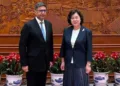
PM Modi with Chinese President Xi Jinping

PM Modi with Chinese President Xi Jinping

FacebookTwitterWhatsAppTelegramEmail

Prime Minister Narendra Modi and Chinese President Xi Jinping came face-to-face after more than three years on the sidelines of the Shanghai Cooperation Organisation (SCO) Summit in Tianjin. The meeting, watched closely by global observers, carried undertones of caution, while Xi attempted to revive old rhetoric, Modi asserted India’s uncompromising stand on dignity, sovereignty, and mutual sensitivity.

The two leaders had last engaged before the 2020 border standoff, which left deep scars on bilateral trust. Despite Xi’s conciliatory gestures, scepticism in New Delhi remains high, given Beijing’s repeated violations of past commitments.

In what many saw as a tactical move, Xi Jinping mentioned the Panchsheel agreement, a Nehru-era framework first drafted in the 1950s, to present China as a proponent of “peaceful coexistence.” He projected the agreement as a “guiding framework” for future ties between the two Asian powers.

However, Beijing has often cited Panchsheel when convenient, while simultaneously disregarding its very essence, especially the principle of mutual respect for sovereignty, repeatedly challenged by Chinese aggression at the borders.

Unlike Xi, Prime Minister Modi avoided empty historical symbolism and instead laid down a contemporary and practical diplomatic doctrine. He stressed “mutual respect, mutual interest, and mutual sensitivity” as the true basis of stable ties, an articulation that subtly underscored India’s insistence on respect for territorial integrity and security concerns.

PM Modi’s participation in the SCO marks his first visit to China in seven years, underscoring the significance of his message. The two-day summit brought together leaders from Russia, Central Asia, South Asia, Southeast Asia, and the Middle East, with a focus on regional security and multilateral cooperation.

At a time when Beijing is facing distrust from many of its neighbours, Modi’s leadership projected India as a voice of balance and stability in the Global South.

The Panchsheel Agreement, signed on April 29, 1954, included five key principles:

Respect for sovereignty and territorial integrity
Mutual non-aggression
Non-interference in internal affairs
Equality and mutual benefit
Peaceful coexistence

Though once hailed as a model for diplomacy, the pact remains marred by history, barely eight years later, in 1962, China launched a war against India, violating every principle it had endorsed.

Xi’s invocation of Panchsheel at this stage seems more a tactical gesture than a genuine commitment. With border tensions still festering, trade heavily skewed in Beijing’s favour, and China’s track record of disregarding its own promises, New Delhi has every reason to view Xi’s words with caution.

This moment comes against the backdrop of a rapidly shifting global order. With U.S. President Donald Trump’s tariff wars and economic misadventures destabilising global supply chains, leaving nations scrambling to redefine trade partnerships. Unlike many, India seized the moment, diversifying its energy basket with discounted Russian oil, strengthening outreach to the Global South, and positioning itself as a credible voice against great power manipulation.

In this new geopolitical landscape, India under Modi has emerged as a decisive and independent power. Whether calling out Pakistan’s aggressive manoeuvres at the border, resisting Western pressure on energy policy, or challenging Trump-era protectionism that unfairly targeted emerging economies, New Delhi has shown it will not bow to external diktats.

By holding its ground with China even at a forum like the SCO, India demonstrated once again that it is no longer a passive participant in global affairs but a rising South power shaping the rules of engagement on its own terms.
Topics: India-China relationsSCO Summit 2025Xi Jinping Modi meetingPanchsheel principlesNehru Zhou Enlai PanchsheelIndia China diplomacy
ShareTweetSendShareSend
✮ Subscribe Organiser YouTube Channel. ✮
✮ Join Organiser's WhatsApp channel for Nationalist views beyond the news. ✮
Previous News

Trump tariffs trigger Swadeshi wave: Calls grow to boycott American products in India

Next News

Andhra Pradesh High Court Orders Security for Ganesh Shobha Yatra, Says No More Excuses

Related News

India rejects China’s latest renaming of places in Arunachal Pradesh, calling it a politically motivated move with no impact on ground reality

Renaming to Reclaiming Narratives: India pushes back as China expands its cartographic claims over Arunachal Pradesh

Representative Image

Trump-synonymous with an erratic mindset; India denounces his hell-hole remark

Vikram Doraiswami

What Does Vikram Doraiswami’s appointment as India’s ambassador to China signal amid reset in bilateral ties?

LoP Rahul Gandhi speaks to the media as he shows a copy of the 'unpublished' memoir of former Army chief General M M Naravane outside the Parliament House in New Delhi

Hidden Agenda? Rahul Gandhi’s Penguin book controversy and German trip spark questions amid US deal & BRICS

Former Indian diplomat Vidya Bhushan Soni

China recognises BRICS cannot advance without India’s Leadership: Former diplomat Vidya Bhushan Soni

Foreign Secretary Vikram Misri shakes hands with Executive Vice Foreign Minister of China Ma Zhaoxu during the India-China Strategic Dialogue on 10 February

Major Diplomatic Shift: China says it “respects” India’s UNSC aspirations, backs BRICS Summit

Load More

Latest News

Prime Minister Narendra Modi and his Slovakian counterpart Prime Minister Robert Fico

India-Slovakia elevate ties to Comprehensive Partnership; PM Modi hails cultural bond, Upanishads translation to Slovak

Centre seeks explanation from Keralam Waqf Board on Munambam land entry into Umeed Portal

In China's strategic map of threats, geography continues to give India a significance that cannot be overlooked

The Rival China Cannot Ignore: Why India matters more than Beijing admits

Addressing the second day of Vijnana Bharati’s 7th National Convention at BHU, RSS Sah Sarkaryavah Dr Krishna Gopal

Vijnana Bharati’s 7th National Convention | Scientists must work to harmonise spirituality & science: Dr Krishna Gopal

Representative image

West Asia Conflict: Donald Trump announces landmark US-Iran agreement, raises hopes for peace

Keralam: CM VD Satheesan Faces Backlash for Criticising VCs Attending RSS Programme Addressed by Dr Mohan Bhagwat

Prime Minister Narendra Modi: Record maker and breaker

India surpasses South Korea, Enters big 5 manufacturing hub; Seals strategic footprint in the global supply chain

Gujarat: Married Man Karim Rafik Posed as Widower 'Aditya Patel' to Trap Hindu Women; 8,000 Photos and Videos Found on Phone

Gujarat Matrimonial Fraud: Karim posed as widower ‘Aditya Patel’ to target Hindu women; 8,000 photos found on phone

A suicide bomber attacked the Jhangi police checkpost in Taunsa Sharif, Dera Ghazi Khan, Punjab, near the Khyber Pakhtunkhwa border

Khyber Pakhtunkhwa: TTP suicide bomber hits police checkpost, two Pakistani policemen killed

Load More
  • Privacy
  • Terms
  • Cookie Policy
  • Refund and Cancellation
  • Delivery and Shipping

© Bharat Prakashan (Delhi) Limited.
Tech-enabled by Ananthapuri Technologies

  • Home
  • Search Organiser
  • Bharat
    • Assam
    • Bihar
    • Chhattisgarh
    • Jharkhand
    • Maharashtra
    • View All States
  • World
    • Asia
    • Africa
    • North America
    • South America
    • Europe
    • Australia
  • Editorial
  • Operation Sindoor
  • Opinion
  • Analysis
  • Defence
  • Culture
  • Sports
  • Business
  • RSS @ 100
  • Entertainment
  • More ..
    • Sci & Tech
    • Vocal4Local
    • Special Report
    • Education
    • Employment
    • Books
    • Interviews
    • Travel
    • Health
    • Politics
    • Law
    • Economy
    • Obituary
  • Subscribe Magazine
  • Read Ecopy
  • Advertise
  • Circulation
  • Careers
  • About Us
  • Contact Us
  • Policies & Terms
    • Privacy Policy
    • Cookie Policy
    • Refund and Cancellation
    • Terms of Use

© Bharat Prakashan (Delhi) Limited.
Tech-enabled by Ananthapuri Technologies