Electoral Process in India: Between reform and misinformation
June 24, 2026
  • Read Ecopy
  • Circulation
  • Advertise
  • Careers
  • About Us
  • Contact Us
Android AppiPhone AppArattai
Organiser
  • ‌
  • Bharat
    • Assam
    • Bihar
    • Chhattisgarh
    • Jharkhand
    • Maharashtra
    • View All States
  • World
    • Asia
    • Europe
    • North America
    • South America
    • Africa
    • Australia
  • Editorial
  • International
  • Opinion
  • RSS @ 100
  • More
    • Op Sindoor
    • Analysis
    • Sports
    • Defence
    • Politics
    • Business
    • Economy
    • Culture
    • Special Report
    • Sci & Tech
    • Entertainment
    • G20
    • Azadi Ka Amrit Mahotsav
    • Vocal4Local
    • Web Stories
    • Education
    • Employment
    • Books
    • Interviews
    • Travel
    • Law
    • Health
    • Obituary
  • Subscribe
    • Subscribe Print Edition
    • Subscribe Ecopy
    • Read Ecopy
  • ‌
  • Bharat
    • Assam
    • Bihar
    • Chhattisgarh
    • Jharkhand
    • Maharashtra
    • View All States
  • World
    • Asia
    • Europe
    • North America
    • South America
    • Africa
    • Australia
  • Editorial
  • International
  • Opinion
  • RSS @ 100
  • More
    • Op Sindoor
    • Analysis
    • Sports
    • Defence
    • Politics
    • Business
    • Economy
    • Culture
    • Special Report
    • Sci & Tech
    • Entertainment
    • G20
    • Azadi Ka Amrit Mahotsav
    • Vocal4Local
    • Web Stories
    • Education
    • Employment
    • Books
    • Interviews
    • Travel
    • Law
    • Health
    • Obituary
  • Subscribe
    • Subscribe Print Edition
    • Subscribe Ecopy
    • Read Ecopy
Organiser
  • Home
  • Bharat
  • World
  • Operation Sindoor
  • Editorial
  • Analysis
  • Opinion
  • Culture
  • Defence
  • International Edition
  • RSS @ 100
  • Magazine
  • Read Ecopy
Home Bharat

Dangerous trend of undermining electoral process in India

The ongoing controversy over the Special Intensive Revision (SIR) in Bihar raises critical concerns about the integrity of India’s electoral process. Drawing parallels with reforms in cricket, the piece highlights efforts to ensure free and fair elections amidst politically motivated narratives

Lt Gen (Retd) MK DasLt Gen (Retd) MK Das
Aug 31, 2025, 07:00 pm IST
in Bharat, Opinion
Follow on Google News
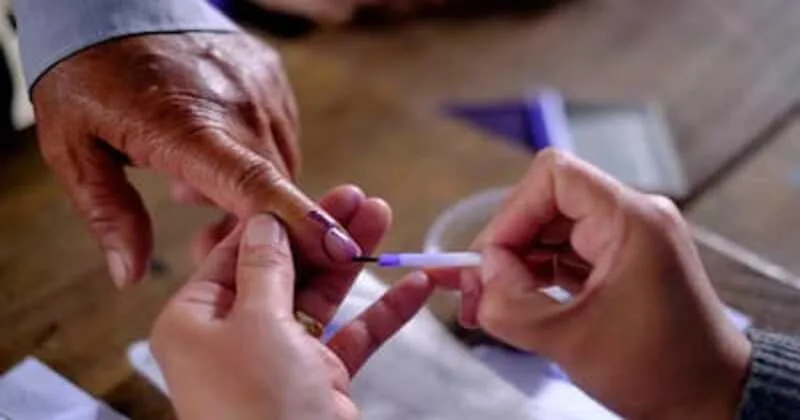
Representative image

Representative image

FacebookTwitterWhatsAppTelegramEmail

Last week, I addressed young engineering students at a function. As expected, during the question-and-answer session, one student asked me about the controversy surrounding Special Intensive Revision (SIR) in Bihar. Somehow, I had anticipated this question and was prepared to answer the query. I am reminded of the famous quote by Mark Twain that “A lie can travel half way around the world while the truth is putting on its shoes.” My view on the query raised by a young student who is yet to vote for the first time is to sensitise the dangers of such a false narrative by the opposition.

I started my answer by giving the evolution of umpiring in Test Cricket. Till the 1990s, the umpires in Test Cricket were from the host nation. Obviously, there was a bias towards the home country. In fact, Pakistan was infamous for highly biased and partial umpiring. It was said that the Pakistan cricket team plays with 13 players, 11 from the playing 11 and two more as their umpires. International Cricket Council (ICC) addressed the problem by introducing one neutral umpire from 1994 onwards and thereafter made it mandatory from the year 2002 onwards that both the on-field umpires in Test matches will be neutral, i.e. from the other cricket playing nations.

The reforms in ensuring fair play in cricket did not stop here. The third umpire system started in 1992, but a formal Decision Review System (DRS) became mandatory from 2008 onwards. DRS gave both the teams a limited number of reviews to reconsider an on-field umpire decision, using technologies of slow-motion replay, ball tracking and hot-spot. The use of such innovative technology was later introduced in One Day Cricket and T20 Internationals. Such reforms have made the game of cricket more transparent and further improved the popularity of the game.

The evolution of the election process in India since the first Lok Sabha election is very similar. Elections in India are conducted by a constitutional body called the Election Commission of India (ECI). From the days of paper ballots, where booth capturing was a common phenomenon in states like Bihar, West Bengal, UP, Assam, etc., Electronic Voting Machines (EVMs) were introduced from the year 1999 onwards to counter this malaise. In order to prevent vote fraud, a physical Voter Identity Card or Electoral Photo Identity Card (EPIC) was introduced from 1993 onwards. Voter Verifiable Paper Audit Trail (VVPAT), which gives a printed slip confirming their vote, was introduced from 2013 onwards.

It is the preparation and revision of the Electoral Roll or the Voters List which is the most challenging task for the ECI. Special Summary Revision (SSR) is carried out before any Lok Sabha or State Assembly election. SSR is also carried out in a comprehensive manner, but there is some possibility of not achieving 100% accuracy. A more detailed and comprehensive exercise to ensure complete integrity of the Electoral Roll is carried out through Special Intensive Revision. SIR is a focused, time-bound house-to-house voters’ verification. This process is conducted by the Booth Level Officers (BLOs) in coordination with Booth Level Agents (BLAs) of the political parties. In Bihar, the last SIR was carried out in the year 2003, and obviously, the state needed a fresh, intensive revision.

As far as the villages and the rural areas are concerned, the Voters’ List is relatively easy to review and revise. In a village, the people know about the other villagers, their families, relatives, dependents etc. It is easy to identify who is dead, who is more than 18 years of age and thus eligible to be on the Voters’ List. The antecedents of an outsider can easily be identified by the villagers. The real challenge is to revise the Voters’ List in cities and towns. There is a huge migratory population in cities, and people do not have much idea about the background of the new people in their neighbourhood. It is here that the district administration and the State ECI have to work in unison to revise the Electoral Roll with no omissions.

There is a concerted effort by the Opposition I.N.D.I Alliance to paint the entire election process as a manipulated one. The obvious target is to malign the Election Commission of India for narrow political gains. ECI is a constitutional body, and it is a soft target because it cannot defend itself on a daily basis. The ECI conducted a detailed press conference on 17 August and clarified the issues raised by the opposition. But the opposition is unlikely to give up the temptation of politicising the election process. The opposition is posing this as a constitutional crisis even when the Hon’ble Supreme Court is yet to deliver a final verdict on the ongoing Special Intensive Revision in Bihar.

Also Read: Gujarat: Eggs thrown at Ganesha murti in Vadodara during Ganeshotsav; Sufyan & Shahnawaz Qureshi among three arrested

Hon’ble Supreme Court has also expressed its displeasure at the non-cooperative attitude of the political parties towards the SIR. It has come to notice that hardly any observations have been raised by lakhs of BLAs belonging to the various political parties. With the last date to submit observations or objections ending on September 1, it is high time that all the political parties should become equal stakeholders in the process of SIR. The ECI itself has to be more proactive in ensuring the most accurate SIR in Bihar. This being a test case towards the credibility of the ECI, the constitutional body can utilise the manpower from other state election commission bodies. At least one Election Commissioner out of the three can supervise the SIR process by being physically present in Bihar.

The allegations of ‘Vote Chori’ by the opposition parties in the country in general and in Bihar in particular are indeed disturbing. Such an attitude undermines the constitutional bedrock of our democracy, i.e. free and fair elections. Such a negative and dangerous narrative, which has the potential to create anarchy in the country, has to be defeated by a concerted campaign on the ground as well as through other means to connect with the voters and citizens. In this regard, I quote the example of J&K assembly elections held in September/October last year. Even in the most challenging conditions, the ECI did a commendable job and ensured the freest and fairest elections ever. The voter turnout was an impressive 64.28%, and an opposition alliance of the National Conference and Congress achieved a majority.

The credibility of the ECI has been lauded by the international observers, too. I have no doubt that the ECI and the conscientious citizens of India, particularly from the state of Bihar, would give a befitting reply to the opposition parties for generating a false narrative about the electoral process in India. The youth of India should know that while lies may be travelling fast, truth is also fully geared up to defeat the false narrative of Vote Chori and compromised elections. A popular mandate through free and fair elections cannot be denied in India, the most vibrant democracy in the world. Jai Bharat!

 

Topics: Election Commissionindian electionsEVMElectoral rollBihar SIRVote IntegrityDemocracy In India
ShareTweetSendShareSend
✮ Subscribe Organiser YouTube Channel. ✮
✮ Join Organiser's WhatsApp channel for Nationalist views beyond the news. ✮
Previous News

Andhra Pradesh High Court Orders Security for Ganesh Shobha Yatra, Says No More Excuses

Next News

Indian GDP growth accelerates to 7.8% in April-June, driven by strong agriculture and services

Related News

Representative Image

Uttar Pradesh: UP’s facial recognition move in civic polls seen as next big shift after EVMs and VVPATs

Assam Chief Minister Himanta Biswa Sarma during a public meeting (Image Credit ANI)

Assam Election Results 2026: State braces for verdict day on May 4; Record turnout sets stage for high-stakes counting

Chief Electoral Officer Manoj Kumar Agarwal addressing a press conference

Fact Check: No EVM theft in West Bengal, Chief Electoral Officer Manoj Kumar Agarwal busts viral rumour

West Bengal Assembly Polls: TMC tapes EVM to block voting for BJP in Falta constituency; BJP seeks immediate repoll

The debate over central forces in West Bengal elections highlights a deeper concern about electoral safety, political trust, and democratic fairness

When Democracy Needs Protection: Inside the continuing debate over central forces and electoral safety in West Bengal

Assam begins polling for 126 assembly seats with 2.5 crore voters eligible (ANI Photo)

Assam votes today: High stakes, tight contest, and what to watch as polling set to begin

Load More

Latest News

External Affairs Minister S Jaishankar

Kanishka Bombing Anniversary: Jaishankar reaffirms India’s commitment to combat terrorism in all its forms

Rani Durgawati

Remembering Rani Durgavati: A woman can be a mother, an empress and an embodiment of an immortal resolve

Karan Singh Kept in Dark: Sheikh Abdullah Never Informed J&K’s Sadr-e-Riyasat of Syama Prasad Mookerjee’s Death (This image is generated by AI)

Syama Prasad Mookerjee Death Mystery: Karan Singh says Sheikh Abdullah never informed him

On the occasion of Dr Syama Prasad Mookerjee’s State-Level Balidan Diwas , Chief Minister Shri Mohan Charan Majhi and others at an event organized at Jayadev Bhawan on June 23, 2026

“Article 370 abrogation fulfilled Dr Syama Prasad Mookerjee’s dream,” says Odisha CM Majhi at Balidan Divas programme

Prakash Raj in Fresh Controversy as Court Issues NBW in Voter Registration Case (This image is generated by AI)

Karnataka: Prakash Raj faces legal scrutiny over alleged multiple voter IDs; Bengaluru Court issues NBW

The fall of Keir Starmer highlights a broader crisis in British governance, where leadership changes have failed to reverse long-term national decline

From Brexit to Starmer: Why Britain’s crisis lies beyond changing leaders in Westminster

Tribute to Rani Durgawati on her Martyrdom Day

Rani Durgavati Martyrdom Day: Immortal Warrior rani, defender of Tribal Pride, national honour & Sanatan values

President Droupadi Murmu confers the Padma Shri on former civil servant R.V.S. Mani on June 23, 2026.

Former MHA official RVS Mani honoured with Padma Shri for contributions to internal security

Tamil Nadu: Temple funds only for temple property; TVK govt concedes before Madras High Court

Keralam’s former Industries Secretary, Mohammed Haneesh IAS (Right Side)

Keralam Cashew Scam: Former Industries Secretary Md Haneesh apologises before High Court after contempt proceedings

Load More
  • Privacy
  • Terms
  • Cookie Policy
  • Refund and Cancellation
  • Delivery and Shipping

© Bharat Prakashan (Delhi) Limited.
Tech-enabled by Ananthapuri Technologies

  • Home
  • Search Organiser
  • Bharat
    • Assam
    • Bihar
    • Chhattisgarh
    • Jharkhand
    • Maharashtra
    • View All States
  • World
    • Asia
    • Africa
    • North America
    • South America
    • Europe
    • Australia
  • Editorial
  • Operation Sindoor
  • Opinion
  • Analysis
  • Defence
  • Culture
  • Sports
  • Business
  • RSS @ 100
  • Entertainment
  • More ..
    • Sci & Tech
    • Vocal4Local
    • Special Report
    • Education
    • Employment
    • Books
    • Interviews
    • Travel
    • Health
    • Politics
    • Law
    • Economy
    • Obituary
  • Subscribe Magazine
  • Read Ecopy
  • Advertise
  • Circulation
  • Careers
  • About Us
  • Contact Us
  • Policies & Terms
    • Privacy Policy
    • Cookie Policy
    • Refund and Cancellation
    • Terms of Use

© Bharat Prakashan (Delhi) Limited.
Tech-enabled by Ananthapuri Technologies