Treating India like Lebanon with steep tariffs could backfire on US economy & strategic interest, experts warn Trump
June 9, 2026
  • Read Ecopy
  • Circulation
  • Advertise
  • Careers
  • About Us
  • Contact Us
Android AppiPhone AppArattai
Organiser
  • ‌
  • Bharat
    • Assam
    • Bihar
    • Chhattisgarh
    • Jharkhand
    • Maharashtra
    • View All States
  • World
    • Asia
    • Europe
    • North America
    • South America
    • Africa
    • Australia
  • Editorial
  • International
  • Opinion
  • RSS @ 100
  • More
    • Op Sindoor
    • Analysis
    • Sports
    • Defence
    • Politics
    • Business
    • Economy
    • Culture
    • Special Report
    • Sci & Tech
    • Entertainment
    • G20
    • Azadi Ka Amrit Mahotsav
    • Vocal4Local
    • Web Stories
    • Education
    • Employment
    • Books
    • Interviews
    • Travel
    • Law
    • Health
    • Obituary
  • Subscribe
    • Subscribe Print Edition
    • Subscribe Ecopy
    • Read Ecopy
  • ‌
  • Bharat
    • Assam
    • Bihar
    • Chhattisgarh
    • Jharkhand
    • Maharashtra
    • View All States
  • World
    • Asia
    • Europe
    • North America
    • South America
    • Africa
    • Australia
  • Editorial
  • International
  • Opinion
  • RSS @ 100
  • More
    • Op Sindoor
    • Analysis
    • Sports
    • Defence
    • Politics
    • Business
    • Economy
    • Culture
    • Special Report
    • Sci & Tech
    • Entertainment
    • G20
    • Azadi Ka Amrit Mahotsav
    • Vocal4Local
    • Web Stories
    • Education
    • Employment
    • Books
    • Interviews
    • Travel
    • Law
    • Health
    • Obituary
  • Subscribe
    • Subscribe Print Edition
    • Subscribe Ecopy
    • Read Ecopy
Organiser
  • Home
  • Bharat
  • World
  • Operation Sindoor
  • Editorial
  • Analysis
  • Opinion
  • Culture
  • Defence
  • International Edition
  • RSS @ 100
  • Magazine
  • Read Ecopy
Home Bharat

Treating India like Lebanon with steep tariffs could backfire on US economy & strategic interest, experts warn Trump

The US has slapped India with steep tariffs under the pretext of national security, ignoring India’s legitimate trade and energy choices. This move risks alienating a major global partner while failing to account for India’s growing role in international markets. Experts warn that Trump’s tariff strategy could backfire, harming the US economy more than India’s

Dr Vishnu AravindDr Vishnu Aravind
Aug 29, 2025, 10:30 am IST
in Bharat, USA, World, International Edition
Follow on Google News
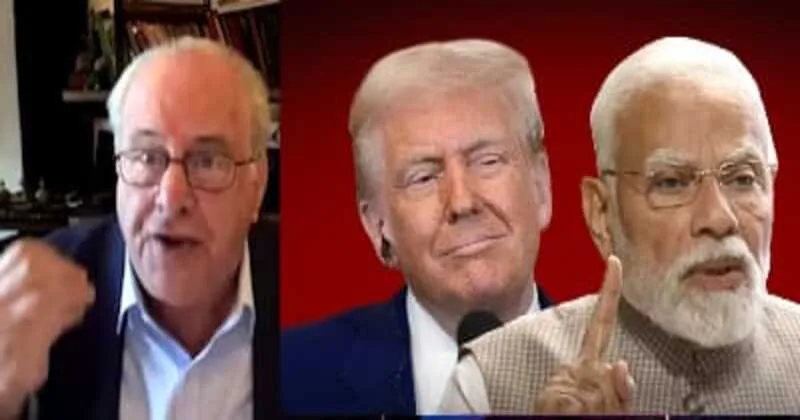
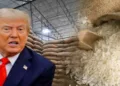
Economist Richard wolfe warns US tariffs on India could backfire, boosting BRICS and reshaping global trade alliances

Economist Richard wolfe warns US tariffs on India could backfire, boosting BRICS and reshaping global trade alliances

FacebookTwitterWhatsAppTelegramEmail

After assuming office as President of the United States, Donald Trump moved decisively to impose tariffs on countries that, in his administration’s view, fail to align with US strategic and economic interests. India is now among those bearing the brunt of these measures. In a move that has raised eyebrows globally, the US Customs and Border Protection (CBP) recently issued a notification levying additional tariffs on a wide range of Indian exports, stretching from shrimp to textiles. What makes this development even more significant is its broader geopolitical backdrop.

In this context, additional tariffs on India came into effect from Wednesday, citing the policy of countering threats posed by the Russian Federation against the US. The ripple effect of these moves has unsettled global markets, with industry stakeholders keenly observing how the situation unfolds. American economists are already voicing concerns that this tariff escalation could backfire on the US economy. India, meanwhile, is preparing to counter the impact through alternative strategies, including diversifying its export markets.

Economist wolfe warns treating India like Lebanon could backfire, strengthen BRICS alliance

Experts warn that the tariff war could trigger long-term consequences, including higher consumer prices and slower economic growth in the US itself. The current tariff measures stem from a series of escalatory steps taken by the Trump administration. Initially, the US imposed a 25% tariff on Indian goods as leverage to push New Delhi toward signing a comprehensive trade agreement favorable to Washington. This was followed by an additional 25% tariff, bringing the total to 50%, on grounds that India had purchased crude oil from Russia and allegedly aided Moscow during its ongoing conflict with Ukraine. Economist Richard Wolfe, a professor at New School University in New York, has strongly cautioned the Trump administration against pursuing this hardline approach toward India. “If you treat India as if it were a small country like Lebanon in West Asia, there will be a big blowback,” Wolfe told Russian journalist Rick Sanchez in a recent conversation. He stressed that India, as the world’s most populous nation and a major emerging economy, cannot be coerced through the same tactics applied to smaller states. Wolfe further warned that sustained pressure on India could push it closer to parallel economic and political blocs, such as BRICS. “Just as Russia turned to new partners when Western sanctions isolated it, India too will deepen trade and diplomatic ties within BRICS and beyond,” Wolfe noted. Such a shift, he argued, could accelerate the strengthening and unification of BRICS, eventually positioning it as a formidable counterweight to Western alliances.

Also Read: “Insult to 140 cr Indians”: CM Yogi Adityanath slams RJD, Congress over alleged abuses hurled at PM Modi in Darbhanga

CBP tariff on India sparks criticism over selective approach amid rising Russian oil imports

The CBP notification imposing a 50% duty on Indian imports cites President Trump’s determination that Russia’s actions continue to pose an “extraordinary threat” to US national security and foreign policy. The notification also accuses India of directly and indirectly importing Russian oil, despite Western sanctions. What has drawn criticism is the apparent inconsistency in Washington’s approach. The notification does not mention China, a country that imports far more Russian oil than India. Nor has the US taken comparable measures against other nations that maintain energy ties with Moscow. This disparity has fueled allegations that Trump’s administration is adopting a selective and politically motivated tariff strategy. India’s oil trade with Russia surged significantly after the latter’s military action against Ukraine in February 2022. Before the conflict, Russian crude accounted for less than 2% of India’s total oil imports. However, when Western countries abandoned Russian oil in response to the invasion, Moscow began offering steep discounts. Indian refiners capitalized on this opportunity, and within months, Russia overtook traditional West Asian suppliers to become India’s largest source of crude oil, a position it continues to hold today.

US tariffs prompt India to diversify trade as the US economy faces risk of sluggish growth

New Delhi is responding to Washington’s punitive tariffs by seeking to mitigate the economic fallout through trade diversification. India already has free trade agreements (FTAs) with countries such as Australia, the UAE, and the UK. Negotiations for an FTA with the European Union are nearing completion, offering Indian exporters an opportunity to redirect trade flows to these markets. Analysts point out that the consequences of Trump’s tariff measures will not be limited to India. Higher tariffs on essential imports will likely raise costs for American businesses and consumers, aggravating inflationary pressures that are already straining household budgets. Experts warn that persistently high inflation could slow US economic growth significantly. Between 2017 and 2020, the period coinciding with Trump’s first term, the US economy grew at an average rate of about 1.4%. Economists fear that a renewed tariff war with major trading partners like India could drag growth back to similarly sluggish levels. The double tariff on Indian products officially took effect yesterday under the US Harmonized Tariff Schedule. Alongside India, two other countries—Brazil and Lesotho—are subject to the highest tariff rate of 50%. Vietnam follows closely with 46%, while several Southeast Asian nations dominate the top tier of the US tariff list. The top 10 countries facing the steepest tariffs are: Lesotho – 50%, India – 50%, Brazil – 50%, Cambodia – 49%, Laos – 48%, Madagascar – 47%, Vietnam – 46%, Sri Lanka – 44%, Myanmar – 44%, and Falkland Islands – 42%. The tariffs will affect over 55% of Indian products exported to the US, with severe implications for labor-intensive sectors such as textiles, apparel, jewelry, and footwear. Exporters fear a sharp decline in orders and potential job losses in small-scale manufacturing units. Industry groups are warning that this tariff escalation could deal a significant blow to livelihoods, particularly in sectors heavily dependent on the US market. For now, the stage is set for a bruising trade confrontation, one that could reshape global trade patterns and test the resilience of economic alliances in the years tarif.



Topics: Tariffs and Trade WarsTrump Administration PoliciesIndia-Russia Energy RelationsBRICS Economic AllianceGlobal Trade ImpactUS Economy RisksUS India Trade
ShareTweetSendShareSend
✮ Subscribe Organiser YouTube Channel. ✮
✮ Join Organiser's WhatsApp channel for Nationalist views beyond the news. ✮
Previous News

Tamil Nadu: Dravidianist brands Sanatana ‘worse than stray dogs’ after running out of answers in TV debate

Next News

Karnataka: Muslim clerics oppose selection of Banu Mushtaq for Mysore Dasara inauguration, alleging government pressure

Related News

US President Donald Trump

Rice exporters brush off Trump tariff threat; POTUS eyes to invest Rs 1 lakh cr in India despite ‘dead economy’ remark

Representative image

World Bank raises India growth forecast amid US tariff threats, domestic demand and trade deals support economy

The currency that glitters from time to time

Trump-Putin Summit: Alaska Illusions

Prime Minister Narendra Modi (Left) and US President Donald Trump (Right)

Mission 500: Modi-Trump aim to boost bilateral trade to USD 500 billion by 2030, says former US envoy Sandhu

Load More

Latest News

India Deploys 12 Nuclear Warheads: Heralds doctrinal shift to script strategic deterrence against multi-front threat

J&K: Zojila tunnel clears key hurdle; Signals new era of connectivity for Ladakh

How Cockroach politics is hollowing out Bharatiya democratic culture

RSS centenary year is a time for renewed resolve and greater commitment to nation-building: Dr Mohan Bhagwat

Ex-DMK Minister Senthil Balaji (Right Side-File Photo)

Tamil Nadu: CBI books Rs 397 cr transformer tender scam from ex-DMK Minister Senthil Balaji’s tenure (2021-2023)

Border Security Force (BSF) officials inspect the Single Row Fencing (SRF) at a Border Out Post area (India-Bangladesh border)

Infiltration and Border Management: Saving the Siliguri corridor

External Affairs Ministry spokesperson Randhir Jaiswal, slams Pakistan over the recent killings in POJK

‘Hope Pakistan is held accountable’: India reacts after 20 killed in Pakistan Occupied Jammu & Kashmir

China’s anti-BLA offensive hits snag as UN members demand proof

UN Setback for China and Pakistan: US and allies stall move to ban Baloch Liberation Army

West Asia Conflict: Collective response to energy crisis

Atul Limaye Ji Sah Sarkaryavah, Rashtriya Swayamsevak Sangh while addressing a Pramukh Jan Gosthi Rashtriya at Raipur, Chhattisgarh

Chhattisgarh: Society must lead its own transformation through collective initiative: Atul Limaye

Load More
  • Privacy
  • Terms
  • Cookie Policy
  • Refund and Cancellation
  • Delivery and Shipping

© Bharat Prakashan (Delhi) Limited.
Tech-enabled by Ananthapuri Technologies

  • Home
  • Search Organiser
  • Bharat
    • Assam
    • Bihar
    • Chhattisgarh
    • Jharkhand
    • Maharashtra
    • View All States
  • World
    • Asia
    • Africa
    • North America
    • South America
    • Europe
    • Australia
  • Editorial
  • Operation Sindoor
  • Opinion
  • Analysis
  • Defence
  • Culture
  • Sports
  • Business
  • RSS @ 100
  • Entertainment
  • More ..
    • Sci & Tech
    • Vocal4Local
    • Special Report
    • Education
    • Employment
    • Books
    • Interviews
    • Travel
    • Health
    • Politics
    • Law
    • Economy
    • Obituary
  • Subscribe Magazine
  • Read Ecopy
  • Advertise
  • Circulation
  • Careers
  • About Us
  • Contact Us
  • Policies & Terms
    • Privacy Policy
    • Cookie Policy
    • Refund and Cancellation
    • Terms of Use

© Bharat Prakashan (Delhi) Limited.
Tech-enabled by Ananthapuri Technologies