





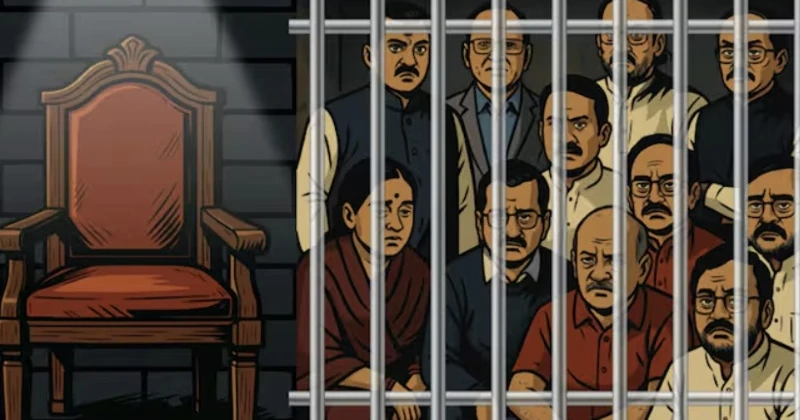
Earlier this week, Union Home Minister Amit Shah introduced what are being dubbed the “corrupt neta removal bills,” setting off a wave of outrage and protest across Opposition benches. Members of the Opposition tore copies of the proposed legislations inside the House, calling them a calculated move by the BJP to dislodge rival leaders from power under the pretext of corruption charges.
The bills mandate automatic removal of any sitting minister, chief minister, or even the prime minister if they remain in jail or detention for 30 consecutive days on serious charges such as corruption or money laundering. While the Opposition slammed the move as a “political weaponisation of law,” the government has justified it as a measure to strengthen accountability and end the culture of corruption at the highest levels of governance.
The Opposition tore up copies of the bills in protest, accusing the BJP of crafting a political weapon to dislodge rivals from power. But an examination of the past decade reveals a fact that cannot be ignored: since 2014, when Narendra Modi’s government first took office, no BJP or NDA minister has been arrested in a corruption-related case.
Instead, the record shows that 12 serving ministers from Opposition parties including chief ministers and senior cabinet members have been arrested under central agency probes, many of them spending months and even years in jail.
Opposition leaders in Jail: A decade of arrests
The India Today OSINT analysis paints a telling picture of how corruption investigations have unfolded over the last 11 years.
- Arvind Kejriwal (AAP, Delhi CM) – Arrested in the alleged liquor scam, jailed for 6 months. He remains the only sitting chief minister to be arrested while in office.
- Manish Sisodia (AAP, Delhi Deputy CM) – Jailed for 1 year, 5 months in the same case.
- Satyendra Jain (AAP) – In jail for 2 years, 4 months on money laundering charges.
- Partha Chatterjee (TMC, Bengal) – Arrested in the teacher recruitment scam, spent 1 year, 27 days in jail.
- Madan Mitra (TMC) – Behind bars for 1 year, 9 months in the Saradha chit fund scam.
- Jyoti Priya Mallick (TMC) – Jailed for 80 days in corruption cases.
- Subrata Mukherjee (TMC) – Spent 11 days in custody on bribery charges.
- Firhad Hakim (TMC) – Arrested alongside Mukherjee, also jailed for 11 days.
- V. Senthil Balaji (DMK) – Spent 1 year, 3 months in prison in a corruption probe.
- Nawab Malik (NCP) – Arrested by the ED, jailed for 1 year, 5 months in money laundering cases.
- Jitendra S. Tomar (AAP) – Spent 45 days in jail on forgery charges.
- J. Jayalalithaa (AIADMK) – In September 2014, jailed for 21 days following conviction in a decades-old corruption case, later overturned by the Supreme Court.
This pattern demonstrates a striking reality: Opposition parties TMC, AAP, DMK, NCP, and AIADMK have borne the brunt of corruption-related arrests since 2014.
In sharp contrast, no serving minister from the BJP or its allies has faced arrest during this period. The only notable instance was Uttar Pradesh BJP minister Rakesh Sachan, who was sentenced to one year in an Arms Act case. However, Sachan was not arrested; he secured bail immediately and continues to serve as minister.
This absence of arrests within the ruling coalition has created a clear contrast between the Opposition’s track record and the NDA’s unblemished record on ministerial arrests.
Under the new legislation, any minister jailed beyond 30 days will automatically be stripped of office regardless of whether they have been convicted. That means figures like Manish Sisodia, Satyendra Jain, Partha Chatterjee, and Nawab Malik who spent over a year behind bars would have lost their ministerial posts automatically had this law existed earlier.
Even shorter-term incarcerations like Kejriwal’s six months or Balaji’s year-long jail term would have ended their tenure in power much earlier than political pressure or party decisions did. For the government, this ensures accountability at the highest level: no leader can cling to office while facing serious corruption charges.















Comments