SC says no to overturning verdict on timelines for governors
July 3, 2026
  • Read Ecopy
  • Circulation
  • Advertise
  • Careers
  • About Us
  • Contact Us
Android AppiPhone AppArattai
Organiser
  • ‌
  • Bharat
    • Assam
    • Bihar
    • Chhattisgarh
    • Jharkhand
    • Maharashtra
    • View All States
  • World
    • Asia
    • Europe
    • North America
    • South America
    • Africa
    • Australia
  • Editorial
  • International
  • Opinion
  • RSS @ 100
  • More
    • Op Sindoor
    • Analysis
    • Sports
    • Defence
    • Politics
    • Business
    • Economy
    • Culture
    • Special Report
    • Sci & Tech
    • Entertainment
    • G20
    • Azadi Ka Amrit Mahotsav
    • Vocal4Local
    • Web Stories
    • Education
    • Employment
    • Books
    • Interviews
    • Travel
    • Law
    • Health
    • Obituary
  • Subscribe
    • Subscribe Print Edition
    • Subscribe Ecopy
    • Read Ecopy
  • ‌
  • Bharat
    • Assam
    • Bihar
    • Chhattisgarh
    • Jharkhand
    • Maharashtra
    • View All States
  • World
    • Asia
    • Europe
    • North America
    • South America
    • Africa
    • Australia
  • Editorial
  • International
  • Opinion
  • RSS @ 100
  • More
    • Op Sindoor
    • Analysis
    • Sports
    • Defence
    • Politics
    • Business
    • Economy
    • Culture
    • Special Report
    • Sci & Tech
    • Entertainment
    • G20
    • Azadi Ka Amrit Mahotsav
    • Vocal4Local
    • Web Stories
    • Education
    • Employment
    • Books
    • Interviews
    • Travel
    • Law
    • Health
    • Obituary
  • Subscribe
    • Subscribe Print Edition
    • Subscribe Ecopy
    • Read Ecopy
Organiser
  • Home
  • Bharat
  • World
  • Operation Sindoor
  • Editorial
  • Analysis
  • Opinion
  • Culture
  • Defence
  • International Edition
  • RSS @ 100
  • Magazine
  • Read Ecopy
Home Bharat

SC says no to overturning verdict on timelines for governors, President; clarifies only advisory role under Article 143

The Supreme Court declined to set aside its April 12 verdict imposing deadlines on the President and Governors for acting on state bills, stressing it can only render an advisory opinion under Article 143. The bench, led by CJI BR Gavai, made clear it was not sitting in appeal but responding to a Presidential Reference

WEBDESKWEBDESK
Aug 20, 2025, 10:00 am IST
in Bharat, Law
Follow on Google News
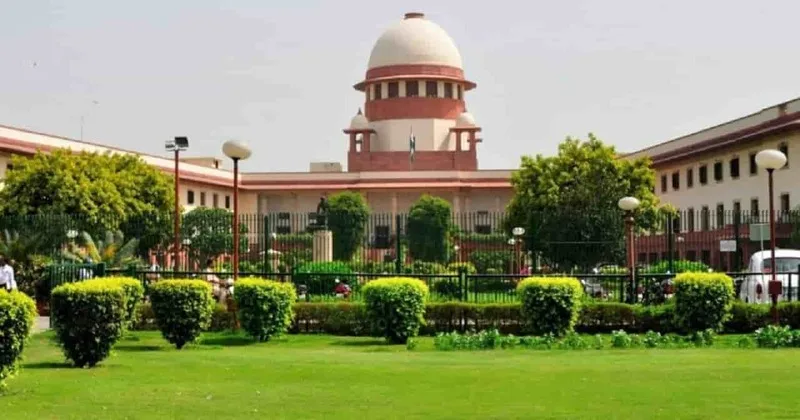
A representative image- Supreme Court of India

A representative image- Supreme Court of India

FacebookTwitterWhatsAppTelegramEmail

A five-judge bench headed by Chief Justice of India BR Gavai, along with Justices Surya Kant, Vikram Nath, PS Narasimha and A Chandurkar, refused to reconsider its April 12 ruling that directed the President and Governors to decide on state bills within a fixed timeframe.

CJI Gavai clarified: “We will be expressing just a view of law, not on the decision in the Tamil Nadu case. We are in advisory jurisdiction; we are not in appellate.”

Justice Surya Kant further explained that under Article 143, the Supreme Court may express an opinion that a prior judgment may not lay down correct law, but it cannot “overrule” that judgment in an advisory capacity.

In April, the top court held that:

  • Governors cannot indefinitely withhold bills passed by the state legislature.
  • The President must decide within three months on bills referred to her by Governors.
  • Tamil Nadu Governor RN Ravi’s withholding of multiple bills was declared “illegal.”

The court also allowed state governments to directly approach the SC if the President withholds assent, sparking questions about judicial oversight over executive discretion.

Following the verdict, President Droupadi Murmu exercised her powers under Article 143(1) of the Constitution, sending a reference to the Supreme Court. She posed 14 questions on the scope of the powers of Governors (Article 200) and the President (Article 201) while dealing with state legislation.

The reference reflected concerns over “functional disharmony” between the executive and judiciary, and sought clarity on whether judicially-imposed timelines for constitutional authorities could be binding.

Senior advocates KK Venugopal (for Kerala) and Abhishek Manu Singhvi (for Tamil Nadu) opposed the reference. They argued that:

  • The issues raised had already been conclusively decided in the April 12 judgment.
  • Article 143 cannot serve as an intra-court appeal or a substitute for review.
  • The Presidential Reference was an indirect attempt to derail a final verdict.

Singhvi told the bench: “Article 143 cannot be used as a mechanism to revisit settled law. This is not an appeal or review.”

In its written submission, the Central government opposed fixed deadlines on Governors and the President, warning it could cause “constitutional disorder.”

Solicitor General Tushar Mehta supported the view that the court, under Article 143, could revisit an earlier ruling, arguing: “This is the first time the President has sought guidance due to functional disharmony. Judgments of two, three, and five judges have created constitutional confusion that needs authoritative resolution.”

The legal tussle stems from Tamil Nadu’s ruling DMK government accusing Governor RN Ravi of deliberately withholding or delaying assent to bills passed by the Assembly. The Supreme Court had sided with the state, ruling that Governors must act within a reasonable timeframe and cannot override the democratic process.

This confrontation has now triggered a larger constitutional debate on the powers and accountability of the President and Governors.

The court made it clear that its role in the Presidential Reference is advisory, not appellate. However, the case has revived questions over the balance of power between the judiciary and the executive, especially on whether courts can bind constitutional authorities like the President and Governors with strict timelines.

The bench will resume hearings today, with expectations of further clarifications on the scope of Article 143 and its implications for centre-state relations.

Topics: Article 200Article 201judicial review President powersSupreme Court verdict timelinesArticle 143 advisory rolePresidential Reference MurmuTamil Nadu DMK Governor row
ShareTweetSendShareSend
✮ Subscribe Organiser YouTube Channel. ✮
✮ Join Organiser's WhatsApp channel for Nationalist views beyond the news. ✮
Previous News

Centre to table landmark bills in Parliament today for the removal of ‘tainted’ PMs, CMs and ministers 

Next News

Cartoonist Hemant Malviya tenders unconditional apology over caricatures of PM Modi, RSS and Bhagwan Shiva

Related News

A representative image- Supreme Court of India

Tamil Nadu: Supreme Court answers 14 questions on Articles 200 and 201, verdict impacts challenge on NEET Bill

The Constitution Bench of the Supreme Court, led by Chief Justice B.R. Gavai, is presently grappling with a question that touches the very core of India’s parliamentary democracy: can the Governor or the President indefinitely withhold assent to Bills, and can the Court prescribe timelines where the Constitution is silent

Supreme Court hearing Presidential reference on timelines for bills: Judicial limits and Constitutional boundaries

Supreme Court of India

Supreme Court on bill assent: Delay alone cannot justify fixed timeline for Governors, President

Load More

Latest News

80 Years of Organiser: Celebrating 8 decades as Voice of the Nation; VP Radhakrishnan to join in commemorative event

Tamil Nadu: Madras HC allows temple entry to American woman, says Hindutva cannot be judged by name or nationality

Tamil Nadu CM Joseph Vijay (File Photo)

Tamil Nadu: TVK alleges DMK bid to poach its MLAs; DMK counters with horse-trading complaint against CM Joseph Vijay

Odisha Govt to provide error-free textbooks to students, rejects claim of 1,678 mistakes

Odisha government to provide error-free textbooks to students, rejects claim of 1,678 mistakes

US-Iran Conflict: Beyond the battlefield

Japan’s Domestic Transformation: The silent revolution behind its strategic rise

A section of the vast procession paying homage to Dr Syama Prasad Mookerjee

Dr Shyama Prasad Mookerjee: Exposing the mystery surrounding his death

India-Pak reconciliation appeal in an open letter by a section of Indians draws fire amid cross-border terror concerns

By enabling direct yen-rupee settlements, India and Japan are laying the foundation for a more efficient, resilient and strategically integrated economic partnership

Beyond De-Dollarisation: What India-Japan’s Yen-Rupee trade framework really means

(Left) J&K LG Manoj Sinha performing puja (Right) LG Manoj Sinha flags off the bus carrying pilgrims for the Amarnath Yatra

Amarnath Yatra 2026: LG Manoj Sinha flags off first batch of pilgrims amid tight security

Load More
  • Privacy
  • Terms
  • Cookie Policy
  • Refund and Cancellation
  • Delivery and Shipping

© Bharat Prakashan (Delhi) Limited.
Tech-enabled by Ananthapuri Technologies

  • Home
  • Search Organiser
  • Bharat
    • Assam
    • Bihar
    • Chhattisgarh
    • Jharkhand
    • Maharashtra
    • View All States
  • World
    • Asia
    • Africa
    • North America
    • South America
    • Europe
    • Australia
  • Editorial
  • Operation Sindoor
  • Opinion
  • Analysis
  • Defence
  • Culture
  • Sports
  • Business
  • RSS @ 100
  • Entertainment
  • More ..
    • Sci & Tech
    • Vocal4Local
    • Special Report
    • Education
    • Employment
    • Books
    • Interviews
    • Travel
    • Health
    • Politics
    • Law
    • Economy
    • Obituary
  • Subscribe Magazine
  • Read Ecopy
  • Advertise
  • Circulation
  • Careers
  • About Us
  • Contact Us
  • Policies & Terms
    • Privacy Policy
    • Cookie Policy
    • Refund and Cancellation
    • Terms of Use

© Bharat Prakashan (Delhi) Limited.
Tech-enabled by Ananthapuri Technologies