Union to SC: President, governors’ assent beyond judicial limits
June 9, 2026
  • Read Ecopy
  • Circulation
  • Advertise
  • Careers
  • About Us
  • Contact Us
Android AppiPhone AppArattai
Organiser
  • ‌
  • Bharat
    • Assam
    • Bihar
    • Chhattisgarh
    • Jharkhand
    • Maharashtra
    • View All States
  • World
    • Asia
    • Europe
    • North America
    • South America
    • Africa
    • Australia
  • Editorial
  • International
  • Opinion
  • RSS @ 100
  • More
    • Op Sindoor
    • Analysis
    • Sports
    • Defence
    • Politics
    • Business
    • Economy
    • Culture
    • Special Report
    • Sci & Tech
    • Entertainment
    • G20
    • Azadi Ka Amrit Mahotsav
    • Vocal4Local
    • Web Stories
    • Education
    • Employment
    • Books
    • Interviews
    • Travel
    • Law
    • Health
    • Obituary
  • Subscribe
    • Subscribe Print Edition
    • Subscribe Ecopy
    • Read Ecopy
  • ‌
  • Bharat
    • Assam
    • Bihar
    • Chhattisgarh
    • Jharkhand
    • Maharashtra
    • View All States
  • World
    • Asia
    • Europe
    • North America
    • South America
    • Africa
    • Australia
  • Editorial
  • International
  • Opinion
  • RSS @ 100
  • More
    • Op Sindoor
    • Analysis
    • Sports
    • Defence
    • Politics
    • Business
    • Economy
    • Culture
    • Special Report
    • Sci & Tech
    • Entertainment
    • G20
    • Azadi Ka Amrit Mahotsav
    • Vocal4Local
    • Web Stories
    • Education
    • Employment
    • Books
    • Interviews
    • Travel
    • Law
    • Health
    • Obituary
  • Subscribe
    • Subscribe Print Edition
    • Subscribe Ecopy
    • Read Ecopy
Organiser
  • Home
  • Bharat
  • World
  • Operation Sindoor
  • Editorial
  • Analysis
  • Opinion
  • Culture
  • Defence
  • International Edition
  • RSS @ 100
  • Magazine
  • Read Ecopy
Home Politics

Union Govt warns Supreme Court against imposing deadlines on governors and President for giving assent to state bills

The Union Government has told the Supreme Court that the President and Governors’ powers of assent are plenary and non-justiciable, warning that judicially imposed timelines or mandatory consultations would cause “constitutional chaos

WEBDESKWEBDESK
Aug 18, 2025, 06:20 pm IST
in Politics, Bharat, Law
Follow on Google News
FacebookTwitterWhatsAppTelegramEmail

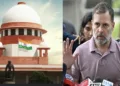
The Union Government has categorically told the Supreme Court that the President and Governors of India cannot be subjected to judicial diktats in the matter of giving assent to State Bills. The government, through Solicitor General Tushar Mehta, has issued a stern reminder to the apex court: gubernatorial and presidential assent is a “plenary, sui generis, non-justiciable power” that stands outside the reach of judicial timelines or mandatory consultations.

The sharp submissions, made before a five-judge Constitution Bench hearing a Presidential reference, have reopened fundamental questions about the boundaries of executive discretion, the limits of judicial review, and the delicate architecture of separation of powers under the Indian Constitution.

The flashpoint for the dispute was an April 8, 2024 judgment where a two-judge bench of the Supreme Court laid down, for the first time, a fixed timeline of three months for the President to act on State Bills referred by Governors. The bench also observed that if a Governor withheld assent citing unconstitutionality, then the President “should” refer the matter to the Supreme Court under Article 143 for an advisory opinion.

This unprecedented ruling effectively read into the Constitution an obligation that its framers had not envisaged. The judgment provoked concerns that the judiciary was venturing into the exclusive territory of the executive, reinterpreting provisions like Articles 200 and 201 in a manner that amounted to a judicial amendment of the Constitution.

Recognising the gravity of the matter, President Droupadi Murmu, in May 2024, invoked her power to seek the opinion of the apex court and placed 14 pointed questions before a larger bench. The issues included whether timelines could be judicially imposed on the President or Governors, and whether Article 143 consultation could ever be made mandatory.

Also Read: Religious Intolerance in Classrooms: 20 incidents of Christian schools punishing Hindu students for their faith

On August 12, Solicitor General Mehta filed a detailed written note asserting that the judiciary was crossing constitutional limits by attempting to regulate presidential and gubernatorial discretion. “The judiciary cannot bind the President. If the courts decide when and how to consult, it would amount to usurping powers not given to the judiciary by the Constitution. The consequence would be constitutional disorder,” Mehta submitted.

He stressed three points:

  • Article 143 is discretionary, not mandatory: The Constitution allows the President to seek advice from the Supreme Court but does not compel him to do so. The discretion is absolute, personal, and non-justiciable.
  • No timelines in Articles 200 and 201: While other provisions (like Article 111 or 123) explicitly prescribe timeframes, Articles 200 and 201 were deliberately left open-ended. For the judiciary to prescribe a timeline is to legislate from the bench, which would be unconstitutional.
  • Exclusive zones of power exist: Certain powers, such as assent, are core executive functions and beyond judicial standards. If judicial review is extended into these zones, it would erode separation of powers a basic feature of the Constitution.

The Union’s language was unusually sharp, warning that judicial encroachment into this domain would destabilise the entire constitutional order.

Mehta cautioned:

  • That if the Supreme Court assumes the power to fix timelines or force consultation, it would create an “institutional hierarchy” with the judiciary sitting in supremacy over the other two organs.
  • That the delicate equilibrium crafted by the framers would collapse, creating “constitutional chaos.”
  • That Article 142, which allows the Court to do “complete justice,” cannot be misused to override explicit constitutional provisions or invent the concept of “deemed assent.”

“The alleged failure, inaction or error of one organ does not and cannot authorise another organ to assume powers that the Constitution has not vested in it,” Mehta wrote, in a direct rebuttal to the April verdict.

Far from being mere ceremonial functionaries, the Union emphasised, the President and Governors are constitutional pivots that embody democratic will and national unity.

Mehta argued that:

  • The President, as the head of state, represents the sovereign will of the people through an indirect electoral process.
  • Governors are not “agents of the Union ” but “representatives of the nation in each federating unit.”
  • Their role is to safeguard national interest within the federal framework and their assent powers are Union to this role.

“Gubernatorial assent is a high prerogative, plenary, non-justiciable power. Although exercised by the executive, it is legislative in nature, and no judicially manageable standards exist to review it,” the SG stated.

Another crucial strand of the Union ’s argument was the doctrine of political questions that not every dispute has a judicial solution. Some issues, particularly those involving the President or Governor, are meant to be resolved through democratic and political mechanisms.

“The judiciary does not hold answers to all problems in a democracy,” Mehta reminded the court. “Perceived lapses must be corrected through elections, legislative review, executive accountability or inter-institutional dialogue not judicial fiat.”

At stake is not just the fate of a few State Bills but the very design of the Indian constitutional order. If the Supreme Court upholds the April precedent, it would effectively subject the President and Governors to judicial timelines, diluting their discretion. If it accepts the Union’s view, it would reaffirm the principle that some powers remain inherently beyond judicial reach.

The issue also touches federal sensitivities: States often accuse Governors of sitting indefinitely on Bills, while the Union now warns against judicial intrusion into this executive prerogative. The outcome will define how Union -State relations evolve in the coming years.

The Constitution Bench, tasked with answering President Murmu’s reference, must navigate between two competing risks — the risk of executive delay and arbitrariness, versus the risk of judicial supremacy and overreach.

But the Union ’s message is unambiguous: the Supreme Court must not attempt to rewrite the Constitution under the guise of interpretation. “Judicial deference and restraint have come to define the high ideals of the Indian judiciary. The court must recognise that the framers deliberately kept some powers outside the judicial domain,” Mehta said.
Topics: Tushar MehtaConstitution BenchSupreme CourtDroupadi MurmuUnion Government
ShareTweetSendShareSend
✮ Subscribe Organiser YouTube Channel. ✮
✮ Join Organiser's WhatsApp channel for Nationalist views beyond the news. ✮
Previous News

“Their intention is to save infiltrators”: BJP MP Sambit Patra slams Congress party over protest on electoral revision

Next News

Atmanirbhar Bharat – Swaraj, Swadeshi, Samriddhi

Related News

Supreme Court remarks have revived the UAPA bail debate, with supporters citing national security concerns

UAPA Bail Debate: Striking a delicate balance between individual liberty and national security

Supreme Court invokes Article 142, issues strict timelines to curb delay in High Court judgments

Supreme Court invokes Article 142, orders strict timelines for High Court judgments to end delays in justice delivery

SIR and Article 324: Supreme Court strengthens the constitutional spine of Indian Democracy; Reaffirms ECI’s authority

Andhra Pradesh cancels Pastor Anand’s SC certificate following Apex Court’s verdict on SC/ST Act on Christian converts

Supreme Court - DMK leader MK Stalin

Tamil Nadu: After reserving judgment, SC Bench recuses from delivering verdict in Stalin’s 2011 Kolathur election case

Akhil Bharatiya Adhivakta Parishad explores India’s early constitutional battles over free speech and judicial review

The First Amendment at 75: Revisiting Organiser’s historic free speech battle against the Nehru government

Load More

Latest News

Border Security Force (BSF) officials inspect the Single Row Fencing (SRF) at a Border Out Post area (India-Bangladesh border)

Infiltration and Border Management: Saving the Siliguri corridor

External Affairs Ministry spokesperson Randhir Jaiswal, slams Pakistan over the recent killings in POJK

‘Hope Pakistan is held accountable’: India reacts after 20 killed in Pakistan Occupied Jammu & Kashmir

China’s anti-BLA offensive hits snag as UN members demand proof

UN Setback for China and Pakistan: US and allies stall move to ban Baloch Liberation Army

West Asia Conflict: Collective response to energy crisis

Atul Limaye Ji Sah Sarkaryavah, Rashtriya Swayamsevak Sangh while addressing a Pramukh Jan Gosthi Rashtriya at Raipur, Chhattisgarh

Chhattisgarh: Society must lead its own transformation through collective initiative: Atul Limaye

New York anti-Hindu Bill fails to advance: How the bill fueled bias & espoused caste discrimination

Beyond Alignment: How India is Carving Its Own Strategic Space Amid Global Power Play

Beyond Alignment: How India is Carving Its Own Strategic Space Amid Global Power Play

Chinese President Xi Jinping, Russian President Vladimir Putin and Prime Minister Narendra Modi

China’s New Tone Towards India: Tactical shift or strategic necessity? What Beijing’s push for RIC ties really signals

Keralam’s 2026 Fiscal Health White Paper has unveiled a mounting debt burden of Rs 5.07 lakh crore, exposing deep structural challenges in the state’s economy

Keralam’s Financial Reality Check: White Paper exposes Rs 5.07 lakh crore debt crisis

Tamil Nadu: TVK government arrests YouTuber Maridhas; BJP alleges crackdown on dissent

Load More
  • Privacy
  • Terms
  • Cookie Policy
  • Refund and Cancellation
  • Delivery and Shipping

© Bharat Prakashan (Delhi) Limited.
Tech-enabled by Ananthapuri Technologies

  • Home
  • Search Organiser
  • Bharat
    • Assam
    • Bihar
    • Chhattisgarh
    • Jharkhand
    • Maharashtra
    • View All States
  • World
    • Asia
    • Africa
    • North America
    • South America
    • Europe
    • Australia
  • Editorial
  • Operation Sindoor
  • Opinion
  • Analysis
  • Defence
  • Culture
  • Sports
  • Business
  • RSS @ 100
  • Entertainment
  • More ..
    • Sci & Tech
    • Vocal4Local
    • Special Report
    • Education
    • Employment
    • Books
    • Interviews
    • Travel
    • Health
    • Politics
    • Law
    • Economy
    • Obituary
  • Subscribe Magazine
  • Read Ecopy
  • Advertise
  • Circulation
  • Careers
  • About Us
  • Contact Us
  • Policies & Terms
    • Privacy Policy
    • Cookie Policy
    • Refund and Cancellation
    • Terms of Use

© Bharat Prakashan (Delhi) Limited.
Tech-enabled by Ananthapuri Technologies