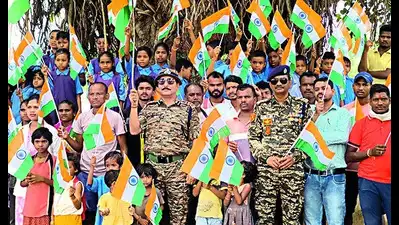
For the first time in 78 years, the Tricolour was proudly hoisted across 29 villages in Chhattisgarh’s Naxal-hit Bastar region during India’s 79th Independence Day celebrations. The historic event comes after decades of Left-Wing Extremist control, where villagers were long denied the right to celebrate such festivals.
The Bastar division, comprising seven districts, has faced Naxal violence for over three decades. For years, residents were forced to obey extremist diktats, with insurgents branding India’s freedom as “false independence.” In many areas, Naxals even hoisted black flags as a mark of protest.
However, sustained counter-insurgency measures and development schemes are now reshaping the region. Police camps have been set up across interior areas, providing both security cover and confidence to local communities. Special forces such as the District Reserve Guard, Bastar Fighters, Special Task Force, and Central Armed Police Force have maintained continuous patrols, enabling villagers to reclaim their right to celebrate.

Villagers participated enthusiastically in the Independence Day ceremonies this year. In Narayanpur district, flag hoisting took place in Horadi, Garpa, Kachhpal, Kodliyar, Kutul, Bademakoti, Padmakot, Kandulnar, Nelangur, Pangur, and Raynar. In Sukma, villages like Raigudem, Tumalpad, Golakunda, Gomguda, Mettaguda, Uskavaya, and Mulkathong witnessed the Tricolour rising for the first time. Meanwhile, in Bijapur district, Kondapalli, Jeedapalli, Vatebagu, Karregutta, Pidia, Gunjeparti, Pujari, Kanker, Bhimaram, Korcholi, and Kotpalli joined in the celebrations.
Sukma Superintendent of Police Kiran Chauhan stated that police camps are continuously being set up in interior zones, and under the Nellanar scheme, basic infrastructure such as roads, electricity, and mobile towers is being introduced. This initiative, targeting districts like Bijapur, Sukma, Kanker, Dantewada, and Narayanpur, aims to bridge the gap between citizens and state welfare services, thereby weakening extremist influence.
The historic hoisting of the Tricolour marks not just a symbolic victory against this terror but also a renewed hope for integration, development, and lasting peace in one of India’s most violence-hit regions.
Electrification brings joy to 17 remote Naxal-hit villages
In May this year, about 540 families in 17 remote villages of Mohla-Manpur-Ambagarh Chowki district, Chhattisgarh, saw electricity from the supply grid for the first time under the Mukhyamantri Majratola Vidyutikaran Yojana, executed at a cost of Rs 3 crore. Officials said the task was extremely challenging due to the rough terrain and persistent Naxalite threat, making the grid connection nothing short of a mission.

Earlier, villagers depended on solar power to light bulbs, but frequent theft of panels and poor maintenance forced children to study under kerosene lamps. Now, celebrations erupted in Katuljhora, Kattapar, Bodra, Bukmarka, Sambalpur, Gattegahan, Pugda, Amakodo, Petemeta, Tatekasa, Kundalkal, Raimanhora, Nainguda, Metatodke, Kohkatola, Edasmeta and Kunjakanhar, as electricity reached their homes for the first time.
“In some villages, children danced, while in others, the elderly burst crackers to express their happiness as it was the moment they had waited for decades,” said an official.
First bus service reaches Kutul after Independence
In May 2025, the once impenetrable Naxal stronghold of Abujhmad witnessed a historic shift as a bus service began operations between Narayanpur and Kutul for the first time since Independence. Operated by Bastar Travels, the route passes through Kundla, Kohkameta, Irkbhatti, Kachcha Pal, Kasturmeta, and Mohndi, linking remote villages that had long remained isolated in dense forests and rugged terrains.
For locals, the new bus represents more than just transport, it symbolises freedom, access, and long-awaited development. Villagers, who earlier depended on bicycles or long treks through difficult terrain, can now reach hospitals, schools, and markets with relative ease. “At least now I am sure we will no more be deprived of basic facilities like education and health,” said a villager, expressing joy as a first-time passenger.
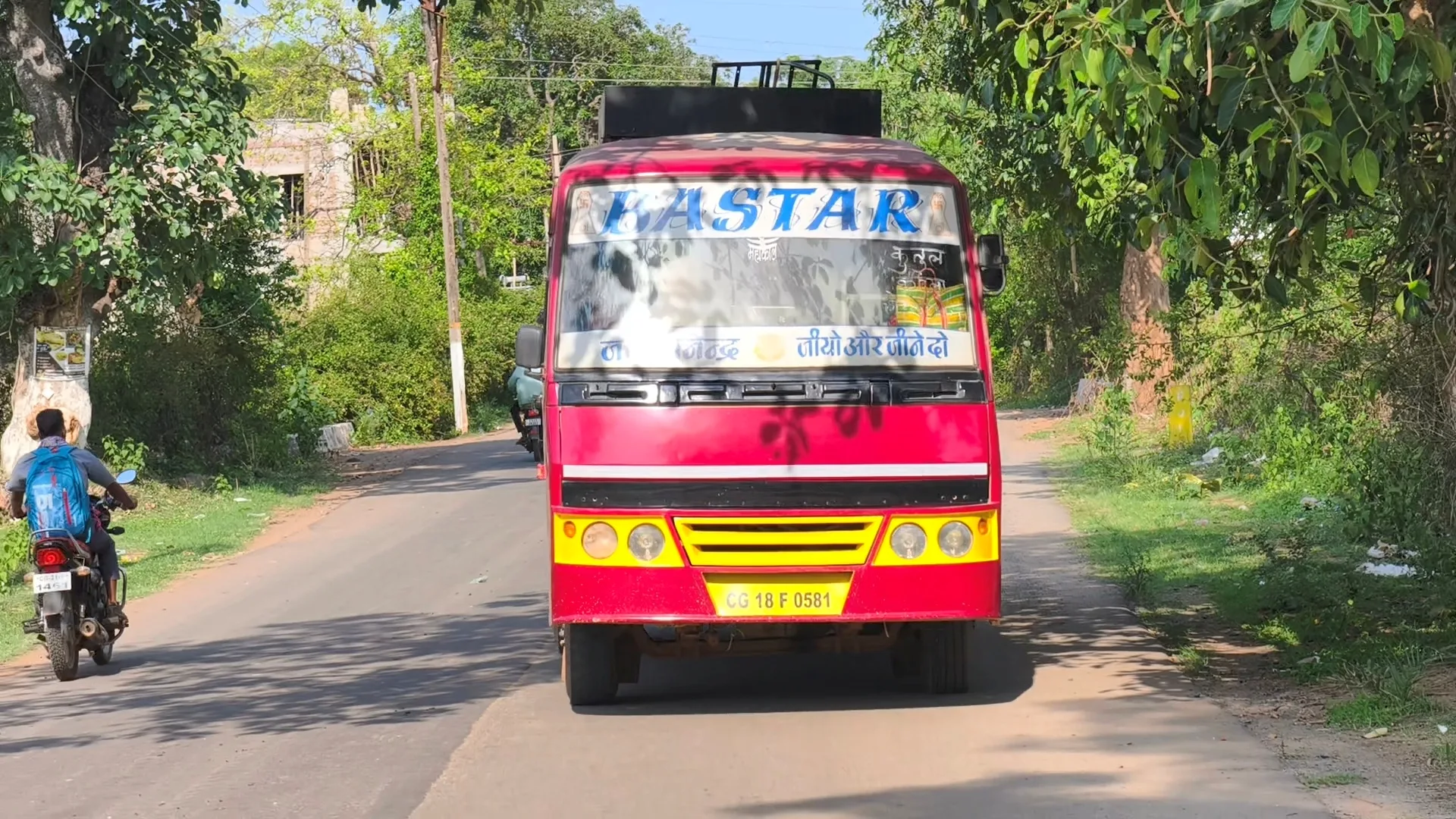
The initiative was made possible through the combined efforts of the Narayanpur administration and the police, who first secured the region with a police camp before shifting focus to development. Construction of the NH-130D highway up to the Gram Panchayat Kutul paved the way for the service.
Under the leadership of Prime Minister Narendra Modi and his vision of a Naxal-free Bharat, many such initiatives are transforming the lives of people living in the once ‘no-go zones’ of the nation.