India rejects Hague verdict, ties IWT to Pakistan ending terror
July 3, 2026
  • Read Ecopy
  • Circulation
  • Advertise
  • Careers
  • About Us
  • Contact Us
Android AppiPhone AppArattai
Organiser
  • ‌
  • Bharat
    • Assam
    • Bihar
    • Chhattisgarh
    • Jharkhand
    • Maharashtra
    • View All States
  • World
    • Asia
    • Europe
    • North America
    • South America
    • Africa
    • Australia
  • Editorial
  • International
  • Opinion
  • RSS @ 100
  • More
    • Op Sindoor
    • Analysis
    • Sports
    • Defence
    • Politics
    • Business
    • Economy
    • Culture
    • Special Report
    • Sci & Tech
    • Entertainment
    • G20
    • Azadi Ka Amrit Mahotsav
    • Vocal4Local
    • Web Stories
    • Education
    • Employment
    • Books
    • Interviews
    • Travel
    • Law
    • Health
    • Obituary
  • Subscribe
    • Subscribe Print Edition
    • Subscribe Ecopy
    • Read Ecopy
  • ‌
  • Bharat
    • Assam
    • Bihar
    • Chhattisgarh
    • Jharkhand
    • Maharashtra
    • View All States
  • World
    • Asia
    • Europe
    • North America
    • South America
    • Africa
    • Australia
  • Editorial
  • International
  • Opinion
  • RSS @ 100
  • More
    • Op Sindoor
    • Analysis
    • Sports
    • Defence
    • Politics
    • Business
    • Economy
    • Culture
    • Special Report
    • Sci & Tech
    • Entertainment
    • G20
    • Azadi Ka Amrit Mahotsav
    • Vocal4Local
    • Web Stories
    • Education
    • Employment
    • Books
    • Interviews
    • Travel
    • Law
    • Health
    • Obituary
  • Subscribe
    • Subscribe Print Edition
    • Subscribe Ecopy
    • Read Ecopy
Organiser
  • Home
  • Bharat
  • World
  • Operation Sindoor
  • Editorial
  • Analysis
  • Opinion
  • Culture
  • Defence
  • International Edition
  • RSS @ 100
  • Magazine
  • Read Ecopy
Home Bharat

India rejects Hague ruling, links Indus Waters Treaty resumption to end of Pakistan-backed terror

India has strongly rebuffed the Hague-based Permanent Court of Arbitration’s ruling on the Indus Waters Treaty, refusing to recognise its jurisdiction. New Delhi has made it clear that treaty implementation will remain suspended until Pakistan dismantles its cross-border terror infrastructure

WEBDESKWEBDESK
Aug 14, 2025, 01:00 pm IST
in Bharat, World, Asia
Follow on Google News
FacebookTwitterWhatsAppTelegramEmail

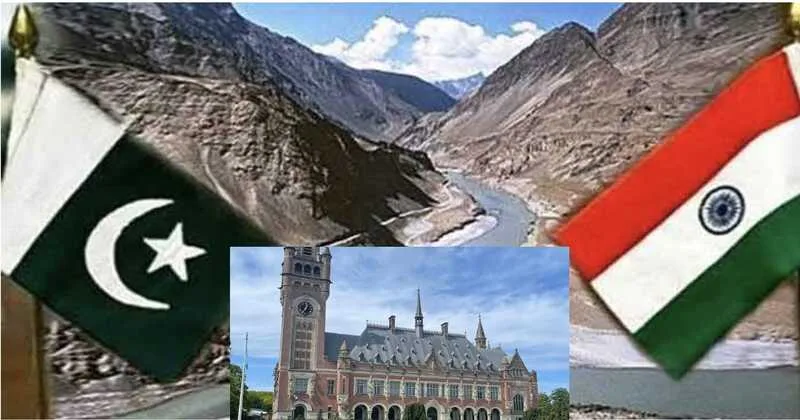
India has firmly rejected the August 8, 2025, ruling of the Permanent Court of Arbitration (PCA) on the Indus Waters Treaty (IWT), declaring it has never recognised the court’s jurisdiction over the Kishanganga and Ratle hydropower projects. India clearly underlined the position that New Delhi does not recognise the court’s jurisdiction and will not resume treaty implementation until Pakistan takes verifiable action against cross-border terrorism. The strong stand comes shortly after India defied US demands to cut Russian oil imports and imposed retaliatory tariffs, signalling New Delhi’s growing strategic autonomy in the face of external pressure.

India’s official position underscores that the arbitration was unilaterally initiated by Pakistan in violation of the IWT’s dispute resolution mechanism, undermining the scope for bilateral settlement. The government reiterated that the World Bank’s 2022 move to simultaneously activate both a neutral expert and the Court of Arbitration, at Pakistan’s insistence, created “practical and legal challenges” and was unacceptable under the treaty framework. New Delhi remains clear that the IWT, placed in abeyance after the April 22 Pahalgam terror attack, will not be reinstated until Pakistan takes credible, verifiable action to dismantle cross-border terror networks.

India Rejects External Imposition on Hydropower Design

The PCA’s award sided with Pakistan’s interpretation of the IWT, stating India must strictly adhere to treaty provisions in designing run-of-river hydropower projects on the western rivers, Indus, Jhelum and Chenab, without imposing its own engineering standards. Pakistan alleged that Indian projects reduce downstream flows, a claim India has consistently dismissed as unfounded and politically motivated. The court reportedly directed India to “let flow” the waters for Pakistan’s unrestricted use, with only limited exceptions for hydropower generation as outlined in the treaty.

Also Read: Mosque calls mobilise Islamist mob to attack Hindus: Parking dispute triggers communal riot in Nuh

Despite the ruling, India’s position remains unwavering, the PCA’s jurisdiction is not recognised, and the award holds no legal standing for New Delhi. Officials have reportedly stressed that legitimate technical issues under the IWT should be addressed through the neutral expert mechanism, not through politically charged arbitration.

BIG BREAKING NEWS 🚨 India REJECTS Hague Court Verdict on Indus Waters Treaty.

UNPRECEDENTED MOMENT 🔥🔥

Permanent Court of Arbitration in The Hague ruled that India must comply with the Indus Waters Treaty and allow western river flows to Pakistan.

India responded that it… pic.twitter.com/aVH0EF2kPY

— News Algebra (@NewsAlgebraIND) August 13, 2025

Pakistan’s Escalatory Rhetoric Undermines Dialogue

The ruling comes amid increasingly hostile rhetoric from Pakistan’s top leadership. Army Chief Gen Asim Munir, speaking in the United States, issued a nuclear threat, declaring: “We are a nuclear nation. If we think we are going down, we’ll take half the world down with us.” He further warned of destroying Indian infrastructure if water flows were reduced. Prime Minister Shehbaz Sharif, in a separate speech, accused India of plotting to “snatch” Pakistan’s water and vowed retaliation, calling the rivers Pakistan’s “lifeline.”

Such aggressive posturing reinforces New Delhi’s stance that Pakistan’s use of the IWT as a diplomatic tool is inseparable from its continued sponsorship of terrorism. The Pahalgam terror attack, which prompted India to suspend treaty implementation, remains a stark reminder that cooperation on water sharing cannot be divorced from security realities.

Historical Context and India’s Strategic Position

Signed in 1960 after nine years of negotiations mediated by the World Bank, the IWT allocates the western rivers to Pakistan and the eastern rivers, Ravi, Beas and Sutlej, to India, while allowing limited usage rights across both sides. The treaty has survived wars and diplomatic freezes, but Indian officials have long maintained it disproportionately favours Pakistan despite its unrelenting support for cross-border militancy.

The latest PCA decision is being treated in New Delhi as part of a broader pattern of attempts by Pakistan to internationalise bilateral issues. India’s recent policy actions, from strategic trade autonomy to tariff impositions, underscore its unwillingness to accept externally imposed restrictions, particularly from a country that refuses to act against terror operatives targeting Indian civilians and infrastructure.

By decisively rejecting the PCA ruling and linking any future engagement to Pakistan’s verifiable action against terrorism, India has sent a clear message, its water rights, security interests, and sovereignty will not be subjected to politically motivated arbitration or coercive diplomacy. The government’s firm position reflects a broader strategic doctrine that India will defend its rights under international agreements on its own terms, while ensuring that no engagement with Pakistan proceeds without concrete guarantees for peace and security.


 

Topics: IndiaPermanent Court of ArbitrationIWTHagueIndus Water Treary
ShareTweetSendShareSend
✮ Subscribe Organiser YouTube Channel. ✮
✮ Join Organiser's WhatsApp channel for Nationalist views beyond the news. ✮
Previous News

Vibhajan Vibhishika Day: The day Pakistan, a terrorist country that poses a threat to the world, was created

Next News

Karnataka: Complaint to Governor against CM Siddaramaiah, DCM DK Shivakumar over alleged cash-for-votes audio

Related News

India-Pak reconciliation appeal in an open letter by a section of Indians draws fire amid cross-border terror concerns

By enabling direct yen-rupee settlements, India and Japan are laying the foundation for a more efficient, resilient and strategically integrated economic partnership

Beyond De-Dollarisation: What India-Japan’s Yen-Rupee trade framework really means

Japanese Prime Minister Sanae Takaichi and Prime Minister Narendra Modi

Indo-Japan Summit: Tech & AI are the pillars of partnership; MoUs inked on defence, critical minerals & clean energy

Japanese Prime Minister Sanae Takaichi recieves a ceremonial welcome at Rashtrapathi Bhavan, New Delhi

India-Japan Annual Summit: 150 firms commit $12.5bn investment; Maritime security, economy & tech ties on the agenda

Tamir Missiles form the core of Israel's Iron dome air defense system

Israel turns to India to build Iron Dome Tamir missiles: Signals New Delhi as defence partner amid West Asia crisis

Prime Minister Narendra Modi and Seychelles President Patrick Herminie

PM Modi Gifts to Seychelles Leaders: Brass tortise, Kanchivaram silk, Todo embroidery reflect India’s artistic heritage

Load More

Latest News

80 Years of Organiser: Celebrating 8 decades as Voice of the Nation; VP Radhakrishnan to join in commemorative event

Tamil Nadu: Madras HC allows temple entry to American woman, says Hindutva cannot be judged by name or nationality

Tamil Nadu CM Joseph Vijay (File Photo)

Tamil Nadu: TVK alleges DMK bid to poach its MLAs; DMK counters with horse-trading complaint against CM Joseph Vijay

Odisha Govt to provide error-free textbooks to students, rejects claim of 1,678 mistakes

Odisha government to provide error-free textbooks to students, rejects claim of 1,678 mistakes

US-Iran Conflict: Beyond the battlefield

Japan’s Domestic Transformation: The silent revolution behind its strategic rise

A section of the vast procession paying homage to Dr Syama Prasad Mookerjee

Dr Shyama Prasad Mookerjee: Exposing the mystery surrounding his death

India-Pak reconciliation appeal in an open letter by a section of Indians draws fire amid cross-border terror concerns

By enabling direct yen-rupee settlements, India and Japan are laying the foundation for a more efficient, resilient and strategically integrated economic partnership

Beyond De-Dollarisation: What India-Japan’s Yen-Rupee trade framework really means

(Left) J&K LG Manoj Sinha performing puja (Right) LG Manoj Sinha flags off the bus carrying pilgrims for the Amarnath Yatra

Amarnath Yatra 2026: LG Manoj Sinha flags off first batch of pilgrims amid tight security

Load More
  • Privacy
  • Terms
  • Cookie Policy
  • Refund and Cancellation
  • Delivery and Shipping

© Bharat Prakashan (Delhi) Limited.
Tech-enabled by Ananthapuri Technologies

  • Home
  • Search Organiser
  • Bharat
    • Assam
    • Bihar
    • Chhattisgarh
    • Jharkhand
    • Maharashtra
    • View All States
  • World
    • Asia
    • Africa
    • North America
    • South America
    • Europe
    • Australia
  • Editorial
  • Operation Sindoor
  • Opinion
  • Analysis
  • Defence
  • Culture
  • Sports
  • Business
  • RSS @ 100
  • Entertainment
  • More ..
    • Sci & Tech
    • Vocal4Local
    • Special Report
    • Education
    • Employment
    • Books
    • Interviews
    • Travel
    • Health
    • Politics
    • Law
    • Economy
    • Obituary
  • Subscribe Magazine
  • Read Ecopy
  • Advertise
  • Circulation
  • Careers
  • About Us
  • Contact Us
  • Policies & Terms
    • Privacy Policy
    • Cookie Policy
    • Refund and Cancellation
    • Terms of Use

© Bharat Prakashan (Delhi) Limited.
Tech-enabled by Ananthapuri Technologies