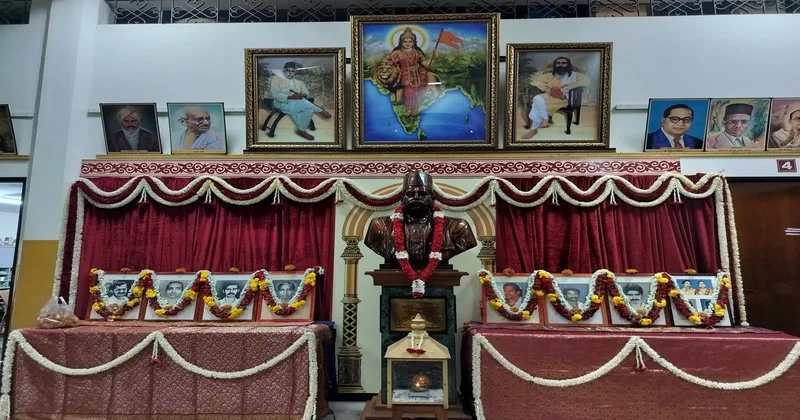
Chennai: The Rashtriya Swayamsevak Sangh (RSS) in Tamil Nadu on August 8 paid solemn tributes to the 11 swayamsevaks (pracharaks and karyakarthas) who lost their lives in the devastating 1993 Chennai RSS office bomb blast. On the occasion of the 32nd anniversary, floral tributes were offered at the RSS Karyalaya in Chetpet, Chennai, where the tragedy struck.
1993 ஆகஸ்ட் 8 சென்னை ஆர்.எஸ்.எஸ் காரியாலய குண்டுவெடிப்பின் 32 ஆம் ஆண்டு நினைவு தினம்!
பலிதானிகளான ஸ்வயம்சேவக சகோதரர்கள் அனைவருக்கும் நினைவஞ்சலி வணக்கங்கள்! pic.twitter.com/OznbrSiCrE
— H Raja (@HRajaBJP) August 8, 2025
Sangh adhikaris, karyakarthas, and members of the public gathered to remember the Balidhanis – Ramasubramaniam, Seshathri, Kumari Balan, Prem Kumar, Mohana, Lalitha, Desikan, Ramakrishna Reddy, Kasinathan, Rajendran, and Raveendran – who made the ultimate sacrifice in the service of the nation and society.
A Day Etched in History
On August 8, 1993, swayamsevaks and adhikaris had assembled at the Narada Gana Sabha in Alwarpet for a Guru Pooja event. The forenoon function concluded peacefully, and members dispersed, unaware that a catastrophic event awaited them later that day.
At around 2:30 pm, a powerful RDX bomb ripped through the RSS headquarters in Chetpet. The blast claimed 11 lives – including eight young full-time pracharaks and three visiting swayamsevaks – and injured seven others.
One of the victims, Kasinathan (fondly called Kasi), had resigned from a secure job in a nationalised bank to become a full-time RSS worker. After years of service in various districts, he was appointed office secretary in Chennai, where he ultimately laid down his life.
Investigations revealed that the blast was orchestrated by Islamic jihadi elements with the intent to terrorize Hindu society and specifically target the RSS. The prime accused, S.A. Basha (who died of age-related issues years later), along with 15 others, was arrested under the Terrorist and Disruptive Activities (Prevention) Act (TADA).
The arrested included key Al-Umma operatives such as State Secretary M. Mohammed Ansari, Mujibur Rehman, Ojir, Mohammed Aslam, Siraj alias Auto Siraj, and Ahmed Pasha. These individuals had been hiding and training for months to execute the attack.
The blast came less than a year after the demolition of the Babri Masjid in December 1992 and was followed by riots targeting Hindus in December 1993.
Long Road to Justice
The Central Bureau of Investigation (CBI) took over the probe, filing a charge sheet in 1994 against 18 individuals under provisions of the IPC, Explosive Substances Act, and TADA. The trial began on August 7, 1995, with 431 witnesses listed; 224 were examined over the years.
Despite some arrests, justice remains incomplete. In 2018, the main accused Mushtaq Ahmed was arrested by the CBI, 25 years after the blast.
Some of the accused met violent ends – suspected ISI agent Imam Ali was killed in a police encounter in Bangalore on September 29, 2002, while Palani Baba, founder of the Jihad Committee, was hacked to death by suspected RSS sympathisers on January 28, 1997.
The blast caused extensive damage to the RSS Karyalaya. Then Chief Minister J Jayalalithaa offered government funds for reconstruction, but the RSS leadership declined the assistance. General Secretary HV Seshadri formally communicated the decision to the Tamil Nadu government, stating that the rebuilding would be carried out with public support.
True to that spirit, swayamsevaks launched donation campaigns across Tamil Nadu and beyond. Contributions from the public and other organizations helped rebuild the headquarters, making it a symbol of resilience and self-reliance.
This year’s memorial event began with floral tributes and remembrance speeches at the Chetpet Karyalaya. Leaders praised the courage and dedication of the Balidhanis, highlighting their sacrifice as an inspiration for future generations.
The event served as a reminder of the threats faced by nationalist organizations in the 1990s and the continued need for vigilance. The names of the martyrs were read aloud, followed by moments of silence in their memory.
Even after 32 years, the incident remains a wound in Tamil Nadu’s history – a reminder of the price paid by those who serve with unwavering commitment to their cause.