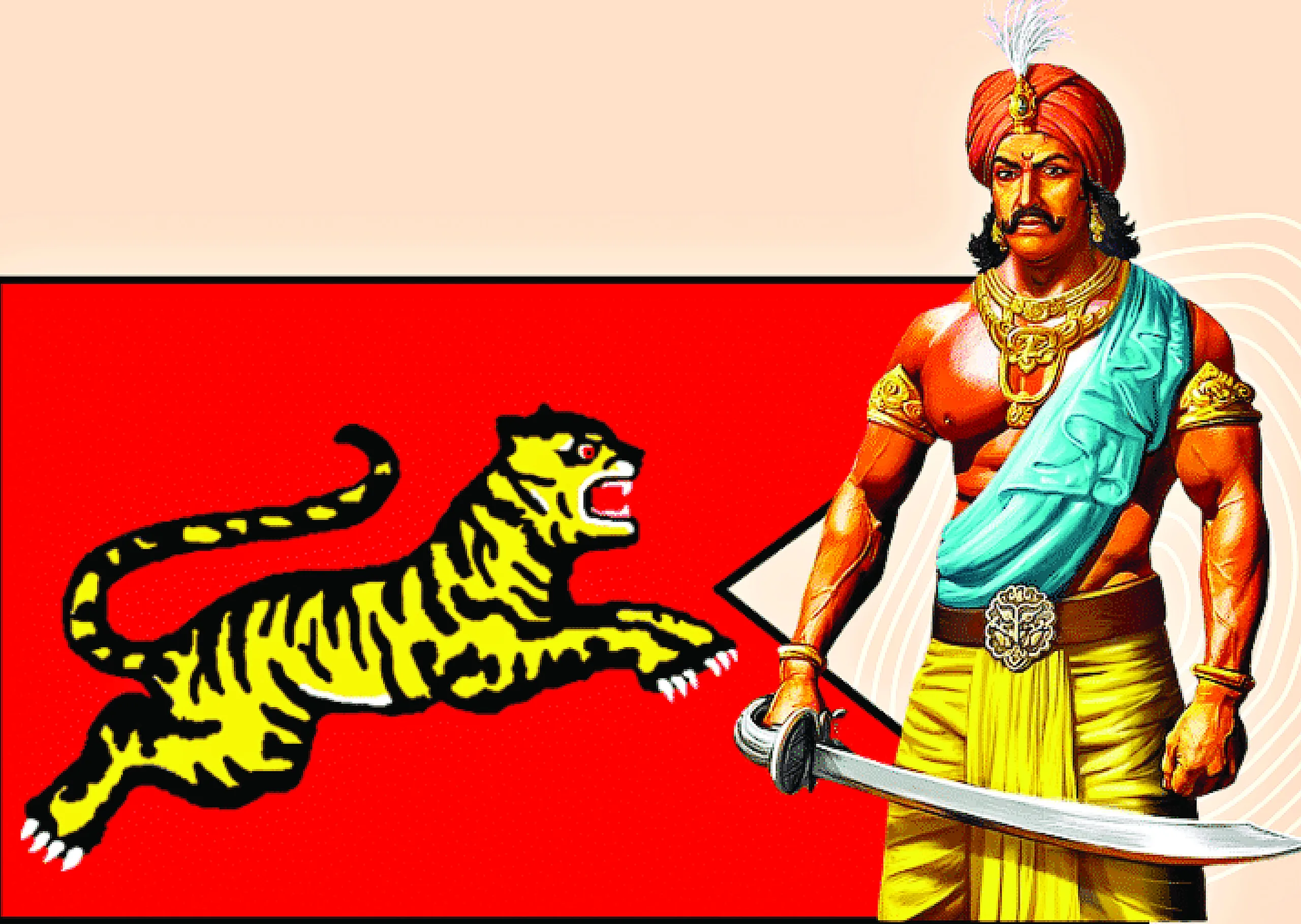
The celebration of the Chola Empire is a grand tribute to the enduring glory of our history, where kings ruled not just with power, but with purpose, vision, and deep cultural pride. From the heights of the Sangam age, rulers like Karikala Chola shone brilliantly, leaving behind engineering marvels like Kallanai (Grand Anicut), which still stands as a living testimony to their foresight and public welfare.
This legacy reached its zenith with the rise of the later Cholas, beginning with Vijayalaya Chola in the 7th century. Through sheer military might, naval excellence and administrative brilliance, they established a vast empire that spanned the southern peninsula and extended across the seas.
Mandir-Centric Economy
Today’s celebrations are a moment to rediscover this magnificent era—its mandir-centric economy, cultural splendour, and the spirit of dharma that guided one of Bharat’s most iconic empires. From approximately 980 to 1150 CE, Chola rule prevailed across the Indian peninsula surrounded by sea to the East, West and South. Their Northern boundary extended to the Tungabhadra and Godavari rivers. During the reigns of Rajaraja and Rajendra, the Chola Empire expanded even overseas.
The Chola Empire, alongside powerful infantry, elephantry, and cavalry, there was also a navy. Each division of the military had a separate name. The elite infantry unit was the “Kaikkolar Padai.” Besides these, there were archers and sword-wielding warriors. There were two types of divisions: “Valangai” (right-hand) and “Idangai” (left-hand).
During the time of Rajaraja I and Rajendra I, there was a special army known as the “Three-Handed Great Army (Mundrukai Mahasenai).” It won many internal and external victories.
Expansion & Methodical Governance
Though Chola kings considered territorial expansion as their main objective, they also understood the need for efficient governance. The administrative methods of the later Cholas served as support to the political frameworks of that era’s Bharat. Immediately after conquering a region, administrative order was established. The Cholas introduced a refined administrative system blending monarchy and democratic principles. Centralised power was vested under the king, but its intensity was reduced through local self-government. The local administration involved the people in governance. From the time of Vijayalaya, the Chola imperial administration began to improve in quality.
Consolidation of Central Govt
The Central Government became strong during the later Chola period. It functioned under the direct supervision of the king. There were various strict eligibility rules for who could ascend the throne. The ruling king’s duties and functions were clearly defined.
Under the later Chola rule, the empire was divided into several mandalams (provinces) for administrative convenience. The Chola Empire had monarchical rule. Usually, the eldest son would ascend the throne
Under the later Chola rule, the empire was divided into several mandalams (provinces) for administrative convenience.
The Chola Empire had monarchical rule. Usually, the eldest son would ascend the throne. However, sometimes this tradition was set aside so that a worthy person could occupy the throne. To avoid succession conflicts or to train in governance, the king would appoint one of his sons as a prince and involve him in administration. In the absence of a direct heir, a non-heir could be appointed king; Kulothunga Chola I is an example. If the heir was a child, the king’s own brothers could also gain ruling rights.
The king held the chief executive role in the Chola Empire. The king was revered as equal to God. In fact, he also acted like God. The king ruled the country from the capital. Thanjavur, Pazhaiyarai, and Gangaikonda Cholapuram served as capital cities. To ensure even more efficient administration and proper governance in all regions, towns like Thiruvarur, Chidambaram, and Kanchipuram were made secondary capitals. Establishing secondary capitals was a unique distinction of the Cholas, unprecedented in history. A royal priest (Rajaguru) advised the king on religious matters and institutions. The position of Rajaguru was of great importance in the Chola empire.
Officials listened to people’s grievances and presented them to the king. These grievances were resolved by either the central or local governments. At times, the king personally travelled to parts of the empire, met citizens, and heard their grievances. The king issued oral orders to resolve them – this was called “Thiruvaik Kelvi.”
Divisions of the Country
There was no separate legislative body to enact laws. In each village, Sabhas (Assemblies) were formed. The Central Government was obliged to implement resolutions passed by these Sabhas. This reflects the importance given to local self-governance by the Chola empire. It also shows that power was decentralised.
It was the village Sabha’s duty to investigate and give verdicts on disputes. Only when the Sabha failed to deliver justice would the Central Government intervene.
There was no permanent Council of Ministers to advise the king. For administrative tasks, royal officials advised the king. Senior military and administrative officers were called “Adhikaris.”
The Chola Empire expanded through military conquests. It was impossible to manage it only with central administration. Hence, the Chola Empire was divided into nine mandalams (provinces).
Segregation Into Nine Mandalams
Chola Mandalam
Rajaraja Pandi Mandalam
Jayankonda Chola Mandalam
Mummudi Chola Mandalam
Mudikonda Mandalam
Nigarilis Chola Mandalam
Adhirajaraja Chola Mandalam
Malai Mandalam
Vengai Mandalam
The smallest administrative unit of the Chola Empire was the village – called “Oor.” Many villages formed a “Naadu.” Multiple “Naadus” made a “Valanadu.” Several “Valanadus” made up a Mandalam. Each Mandalam was divided into nine Valanadus.
Among them, the king directly ruled Chola Mandalam. Princes or royal relatives were appointed as governors in the other Mandalams. They maintained peace, conveyed issues to the Central Government, and implemented its orders. Each “Kottam” (district) had self-governing villages under its jurisdiction.
Fillip to Rural Administration
The village self-governance system, which existed during the Sangam and Pallava periods, matured further under the later Cholas. The Central Government focused on defence, internal order, welfare, temple work, and cultural growth. Other administrative functions were left to village assemblies. Only when conflicts arose between village Sabhas did the Central Government interfere.