Indian Knowledge System: Vishwa Guru to Global Renaissance
June 24, 2026
  • Read Ecopy
  • Circulation
  • Advertise
  • Careers
  • About Us
  • Contact Us
Android AppiPhone AppArattai
Organiser
  • ‌
  • Bharat
    • Assam
    • Bihar
    • Chhattisgarh
    • Jharkhand
    • Maharashtra
    • View All States
  • World
    • Asia
    • Europe
    • North America
    • South America
    • Africa
    • Australia
  • Editorial
  • International
  • Opinion
  • RSS @ 100
  • More
    • Op Sindoor
    • Analysis
    • Sports
    • Defence
    • Politics
    • Business
    • Economy
    • Culture
    • Special Report
    • Sci & Tech
    • Entertainment
    • G20
    • Azadi Ka Amrit Mahotsav
    • Vocal4Local
    • Web Stories
    • Education
    • Employment
    • Books
    • Interviews
    • Travel
    • Law
    • Health
    • Obituary
  • Subscribe
    • Subscribe Print Edition
    • Subscribe Ecopy
    • Read Ecopy
  • ‌
  • Bharat
    • Assam
    • Bihar
    • Chhattisgarh
    • Jharkhand
    • Maharashtra
    • View All States
  • World
    • Asia
    • Europe
    • North America
    • South America
    • Africa
    • Australia
  • Editorial
  • International
  • Opinion
  • RSS @ 100
  • More
    • Op Sindoor
    • Analysis
    • Sports
    • Defence
    • Politics
    • Business
    • Economy
    • Culture
    • Special Report
    • Sci & Tech
    • Entertainment
    • G20
    • Azadi Ka Amrit Mahotsav
    • Vocal4Local
    • Web Stories
    • Education
    • Employment
    • Books
    • Interviews
    • Travel
    • Law
    • Health
    • Obituary
  • Subscribe
    • Subscribe Print Edition
    • Subscribe Ecopy
    • Read Ecopy
Organiser
  • Home
  • Bharat
  • World
  • Operation Sindoor
  • Editorial
  • Analysis
  • Opinion
  • Culture
  • Defence
  • International Edition
  • RSS @ 100
  • Magazine
  • Read Ecopy
Home Bharat

Takshashila to NEP 2020: The return of Bharat’s ancient wisdom

India’s knowledge tradition, from Vedas to the Bhagavad Gita, zero to astronomy, once made it the Vishwa Guru. After centuries of colonial erasure, India is reclaiming its intellectual legacy through policies like NEP 2020 and rising global influence

Vishal RandwaVishal Randwa
Aug 3, 2025, 08:30 pm IST
in Bharat, Opinion, Education
Follow on Google News
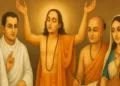
A representative image

A representative image

FacebookTwitterWhatsAppTelegramEmail

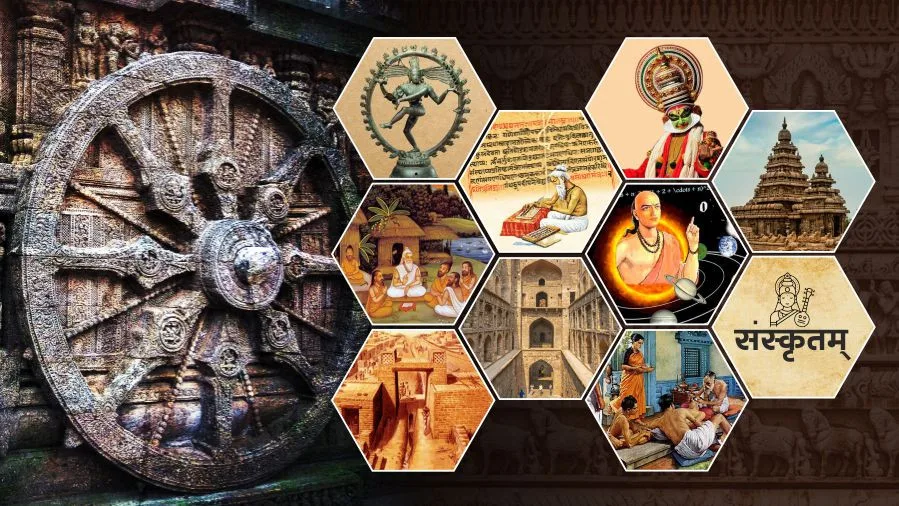
India is not only the light of knowledge but also accommodates various cultures and ideas. This openness reflects an important feature of history. This is the reason why from the 6th to the 12th century AD, India’s image was established as Vishwa Guru in Asia.

At present, whatever progress the world has made in the field of science, concepts like zero, decimal, geography, astronomy and time calculation have contributed significantly to it. Due to which it has become possible for the world to go to the moon. India introduced this to the world because India has a rich knowledge tradition at its core. But with time we moved away from this tradition. Why has it become necessary to know the Indian knowledge tradition after 75 years of independence? Because during the British rule, through a conspiracy, Indian knowledge was completely rejected without any hesitation and Sanskrit was declared a dead language and the Vedas were the songs of shepherds. The most surprising thing in this is that influenced by Englishism, a large section of the country also believed this.

Today, the name of rejecting this belief and misunderstanding is Indian knowledge tradition. Which has been the foundation stone of India. If we talk about 5 thousand years ago, then in Kurukshetra, Shri Krishna gave the element of knowledge in the form of Geeta to the world by making Arjun a medium. The first English translation of the Gita was done by Charles Wilkins in 1785, since then the Bhagavad Gita alone has been translated into 75 languages across the world. There are more than 300 translations of it in English alone. If all these were songs of the dead and shepherds, then why would the world surrender to it. Right now we are talking only about the Bhagavad Gita, whereas the Indian knowledge tradition is a very big ocean. It has four Vedas, six Vedangas, 108 Upanishads, 6 philosophies, 18 Puranas, Ramayana, Mahabharata and much more, which attract the world towards India.

When the dark age of knowledge was going on in the world, lakhs of Indian and foreign students were studying in 39 universities like Takshila, Nalanda and Vallabhi in India. Perhaps that is why India’s image had been established as the world teacher in Asia. The world was called upon by these centres of knowledge and science of India that “O people of the earth, come and learn about your character and return to your respective places”. This openness shows an important characteristic of Indian culture and history. America’s famous writer and historian Will Durant, while explaining Indian culture, had said that “Our civilisation originated from India and Sanskrit is the mother of all European languages. Our entire philosophy has originated from Sanskrit. Our mathematics is its gift. Democracy and self-governance have also originated from India”.

But the way our Gurukul and knowledge tradition was destroyed during the British period and Englishness was forcibly imposed on us. Due to which we forgot our glorious tradition and perhaps that is why the talent of India also turned towards educational institutions like Harvard and Cambridge. Otherwise the truth is that forget about decimal or zero, the numbers which are being used in the whole world today have come from India. From the freedom struggle to after independence, efforts were made to make some things controversial. Due to which our knowledge tradition kept lagging behind.

If we talk about economic prosperity along with knowledge, then India has been an economically dominant country as well, India was not called the golden bird for nothing. Till the 15th century, India’s share in world trade was up to 36 percent, which remained up to 24 percent till the arrival of the British. But when the British left the country, one decimal came and stood between 24. In the year 2018, a research published in Columbia University Press revealed that the British looted about Rs 3175 lakh crore from India between 1765 and 1938. Which was 17 times more than the current GDP of Britain. Despite all these challenges and deceit, India is rapidly emerging as a big economy on the strength of its knowledge and skills. It is estimated that by the financial year 2028, India will become the third-largest economy by leaving behind both Japan and Germany.

At present, many efforts are being made in the country to introduce Indianness to the new generation. In which the National Education Policy 2020 is also a part. This policy will make the present and future generations aware of their cultural traditions, knowledge systems and economic contexts, so that they can understand and respect their roots. This will promote rational analytical thinking among the youth, which will enable them to make a fair assessment of the good and bad aspects of their past.

(This is the researcher’s own opinion, Researcher Dr. Harisingh Gour, University of Sagar, M.P.)
Topics: ancient Indian universitiesIndian science contributionNational Education Policy-2020Indian knowledge traditionIndian intellectual heritageBritish colonialism
ShareTweetSendShareSend
✮ Subscribe Organiser YouTube Channel. ✮
✮ Join Organiser's WhatsApp channel for Nationalist views beyond the news. ✮
Previous News

Tamil Nadu: DMK cries foul over SIR in Bihar, but rejects inclusion of migrant workers in TN electoral roll

Next News

‘Azadi ka Plan’ by BSNL propels Atmanirbhar Bharat with affordable connectivity and cutting-edge 5G innovation

Related News

Book Review: Khandavalli Satyadeva Prasad’s ‘Interrogating Macaulay’ dismantles British colonial agenda

The proposed ‘Viksit Bharat Shiksha Adhishthan’ aims to transform India into a knowledge-driven, self-reliant, and globally competitive nation through modern and inclusive education

‘Viksit Bharat Shiksha Adhishthan’: A transformative vision to build a knowledge-driven and self-reliant India

Representative Image

NCERT’s new books to redefine learning for classes 1 to 8, emphasises on concept-based learning

Notes from the Pilgrimage to the Cellular Jail at Kala Pani; A reminder of the horrors of British colonialism

J Nandakumar presents his book National Selfhood in Science at the Jaipur Literature Festival

Jaipur Lit Fest: J Nandakumar reveals the epic saga of Bharatiya scientists reclaiming national identity

CM Mohan Charan Majhi at a event on the “National Education Policy 2020 and Indian Knowledge Tradition” held at the Central Sanskrit University, Puri

NEP 2020 a bridge between Indian thought and modern knowledge: CM Mohan Majhi

Load More

Latest News

AI-generated image for representation

Tamil Nadu: School teacher faces action over alleged humiliation of menstruating student

Cochin Shipyard (File Photo)

Keralam: ‘I Love Pakistan’ inscription found inside vessel at Cochin Shipyard; Central agencies launch probe

BJP national spokesperson Pradeep Bhandari

Karnataka: BJP accuses Kharge family of illegally acquiring government land worth over Rs 100 crore

Elomi Global Worship Centre in Omalloor, Pathanamthitta district ; Pastor Binu Vazhakkuttom (Left to Right)

Keralam: Child abuse allegations at Pentecostal worship centre in Pathanamthitta; locals demand Pastor Binu’s arrest

Modi Govt’s Tourism Revolution: 183 projects, Rs 9,225 crore investment & rise of India’s cultural & spiritual circuits

Padma Awards 2026: Tamil Nadu’s distinguished achievers receive national honours

India’s history is not merely a tale of foreign domination but also a remarkable story of resilience, resistance & civilisational continuity

Indian History: Not just foreign rule, but a timeless story of resistance, self-respect and civilisational resilience

From $10 Billion to $190 Billion: Indian Bioeconomy Touches New Heights in 12 Years

From $10 Billion to $190 Billion: India’s Bioeconomy leads a 12-Year science revolution

Nagpur | Acceptance of Bharatiya civilisational values is steadily increasing worldwide: Shanta Kumari

Representative Image

Passport Seva Divas: India issues 1.39 crore passports in 2025 as ‘Passport Seva Network’ expands to 545 Centres

Load More
  • Privacy
  • Terms
  • Cookie Policy
  • Refund and Cancellation
  • Delivery and Shipping

© Bharat Prakashan (Delhi) Limited.
Tech-enabled by Ananthapuri Technologies

  • Home
  • Search Organiser
  • Bharat
    • Assam
    • Bihar
    • Chhattisgarh
    • Jharkhand
    • Maharashtra
    • View All States
  • World
    • Asia
    • Africa
    • North America
    • South America
    • Europe
    • Australia
  • Editorial
  • Operation Sindoor
  • Opinion
  • Analysis
  • Defence
  • Culture
  • Sports
  • Business
  • RSS @ 100
  • Entertainment
  • More ..
    • Sci & Tech
    • Vocal4Local
    • Special Report
    • Education
    • Employment
    • Books
    • Interviews
    • Travel
    • Health
    • Politics
    • Law
    • Economy
    • Obituary
  • Subscribe Magazine
  • Read Ecopy
  • Advertise
  • Circulation
  • Careers
  • About Us
  • Contact Us
  • Policies & Terms
    • Privacy Policy
    • Cookie Policy
    • Refund and Cancellation
    • Terms of Use

© Bharat Prakashan (Delhi) Limited.
Tech-enabled by Ananthapuri Technologies