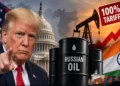
The arrival of the United States (US) President Donald Trump in the White House was perceived in New Delhi as a possible shift in the US policy towards Russia, which signalled India’s future trade with Russia, particularly its energy trade, being insulated from the threat of further sanctions. Nonetheless, six months later, multiple rounds of negotiations between Russia and the US (and two with Ukraine) have shown little movement toward a negotiated settlement. The pace of the talks has upset Trump, who has publicly expressed his dissatisfaction on several occasions, even threatening to impose tariffs on Russia if the latter fails to reach an agreement with Ukraine within 50 days, with a punitive measure termed ‘secondary sanctions’ in economic parlance. The debate around escalating sanctions against Russia has gained momentum, as seen in recent discussions within the US Congress on introducing additional punitive measures against Moscow. Simultaneously, the European Union (EU) announced its 18th round of sanctions, which—among other provisions—targeted countries purchasing oil from Russia, including sanctions on India’s Vadinar refinery in Gujarat. Thus far, New Delhi has not expressed concern and is observing the situation as it unfolds, while justifying its oil exports from Russia as being driven by the need to secure its energy security. If enforced, these sanctions could disrupt global energy markets, shooting up oil prices and causing short-term shocks to the Indian economy.
The use of secondary sanctions has long been controversial—provoking outrage not only among Trump’s adversaries but also drawing criticism from his allies.. US allies have also been wary of using secondary sanctions with extraterritorial implications, penalising businesses with US adversaries, even based in friendly countries. In the 1980s, the West German government was outraged when the Reagan administration sanctioned European firms in constructing a pipeline to bring Soviet gas to West Germany. India is no exception to US sanctions. The US has imposed far-reaching sanctions on India at least twice, once in 1974 when India conducted a nuclear test termed the ‘Peaceful Nuclear Explosion’ and again in 1998 when India tested its nuclear weapons. On both occasions, most US allies followed suit except France, which condemned the tests but did not implement any punitive measures. The most comprehensive set of sanctions was imposed in May 1998, when the US enacted comprehensive sanctions under the Glenn Amendment, restricting economic, military, and technological cooperation. However, these sanctions were lifted by 2001. Furthermore, sectoral sanctions on the Indian Space Research Organisation (ISRO) and its subsidiaries were also enacted from 1992 to 2011. Stirringly, the former Soviet Union in 1974 and Russia in 1998 did not join the international sanctions. However, Russia condemned the testing of nuclear weapons by India in 1998 and expressed its apprehensions about nuclear proliferation, but did not join the Western sanctions.
Stability in global oil markets
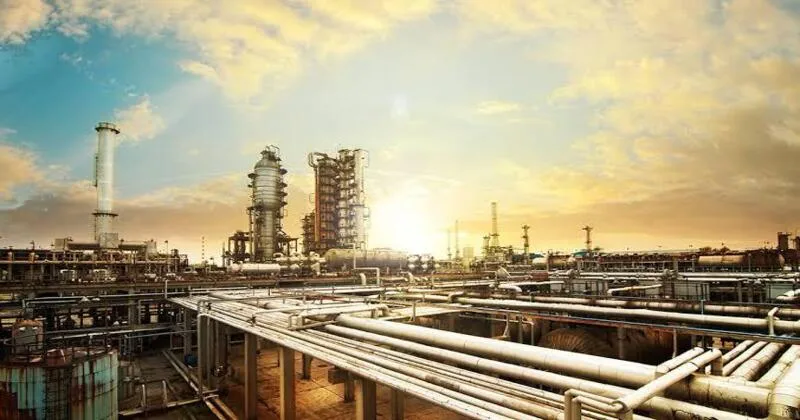
Prior to Russia’s invasion of Ukraine, 85 per cent of India’s crude oil was imported from the Gulf countries. The Ukraine war and the subsequent sanctions imposed on the export of Russian oil catalysed the re-routing of energy trade via Asia. This shift resulted in Asian countries such as India and China importing substantial Russian oil at a discounted price and re-exporting refined crude and petroleum products. Before the war, India imported Russian oil and oil products at US$5.2 billion. By the end of the fourth quarter (Q4) of 2024, the imports skyrocketed to US$56 billion, marking an approximately 10-fold increase. India accounts for over one-third of Russia’s oil exports, while China accounts for almost 50 per cent of its oil requirement. The re-routing of Russian oil via Asian markets to the West has stabilised the global oil markets. Conversely, for India, the discounted crude and the subsequent revenue generated helped tackle domestic inflation and kept the price of oil stable.
Toughening of sanctions
Despite introducing the G7 price cap at the end of December 2022, which capped the import of Russian oil at US$60, Indian refiners continued to purchase oil above the price cap, using Russian and Indian vessels. Both countries have agreed to create mechanisms for resolving payment issues, such as the Reserve Bank of India (RBI) enabling Russian firms to open rupee-vostro accounts in India, and Russian maritime insurers giving better incentives to Indian refiners. However, since 2024, with Russian forces making additional gains in Ukraine, and the Russian economy being largely insulated from the impact of sanctions, the EU and the US have clamped down on countries allegedly violating the sanctions regime by imposing secondary sanctions.
Furthermore, the US Treasury’s Office of Foreign Assets Control (OFAC) released a list of Indian firms allegedly supplying Russia with advanced servers and microchips and firms facilitating the maritime transit of Russian crude to India. Additionally, during the final phase of the Biden administration, the President announced sanctions on Russian oil firms Gazpromneft and Surgutneftegaz, as well as 183 vessels involved in transporting Russian crude, measures that would have impacted Indian firms. Nevertheless, new realities in the recalibrated Russia-US ties under Trump 2.0 have resulted in the executive order not seeing the light of day. Despite a notable rise in bilateral trade since 2022, Indian business interests have come under pressure due to the sanctions. Major firms, such as Infosys, Air India, and Tata, have suspended operations in Russia, while others with exposure to Western markets scaled back their Russian engagements. Additionally, the Indian government announced it would not import liquefied natural gas (LNG) from the sanctioned Arctic LNG-2 project.
Despite the mounting pressure, India’s position on sanctions has remained unchanged. The secondary tariff threat comes amid ongoing India-US trade negotiations, with a final deal deadline near. The US is pressuring India to slash tariffs and open markets—especially for agricultural products—which is a politically sensitive sector in India. New Delhi perceives that in the international system, the United Nations (UN) remains the central authority in imposing sanctions and opposes unilateral sanctions. Indian leaders have reiterated that securing the country’s energy needs remains a primary concern. Following the recent EU sanctions and a bipartisan proposal by US Senators Lindsey Graham and Richard Blumenthal to allow the President to impose 500 per cent tariffs on imports of Russian oil, gas, and uranium, the Indian Ministry of External Affairs spokesperson Randhir Jaiswal responded by reiterating India’s position on sanctions. He also cautioned against double standards, referencing the EU’s prolonged access to Russian oil despite its sanctions rhetoric. Any abrupt disruption could spike global oil prices, considering Russia accounts for 10 per cent of global crude supply. Nevertheless, in recent years, India has built a degree of resilience against oil shocks, enabling it to diversify its energy imports to include suppliers such as Guyana, Brazil, the US, and Canada, alongside being prepared for a fallback to its original suppliers. India’s oil storage capacity has also improved over the years, with reserves ranging from 15 days to 90 days.
Moreover, there is broad agreement among industry experts that the threat to impose further sanctions is a form of strategic messaging to prompt a positive move from Moscow on the Ukraine front. However, the short-term price surge, potentially up to US$120 per barrel, contradicts Trump’s objective of maintaining low energy costs and keeping inflation in check. Thus, it remains uncertain whether Trump would go ahead with the restrictions, as doing so could further undermine his administration’s efforts to improve relations with Russia since February 2025. Meanwhile, Indian refiners have temporarily ramped up Russian crude imports, without any visible signs of concern emerging from the political leadership.