





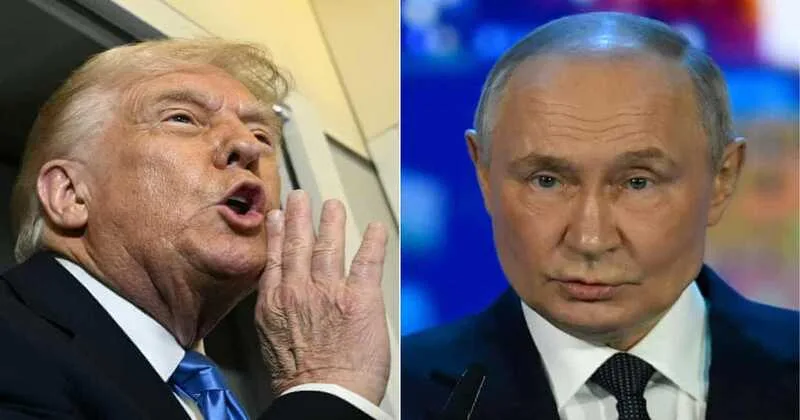
In a dramatic escalation of rhetoric and military posturing, United States President Donald Trump has ordered the deployment of two nuclear submarines near Russian waters following what he described as reckless and provocative remarks from former Russian President Dmitry Medvedev. The move has reignited Cold War-era tensions, with Moscow responding by invoking the spectre of its notorious “Dead Hand” nuclear retaliation system.
The announcement, made by Trump via his social media platform Truth Social, comes against the backdrop of rapidly deteriorating US-Russia ties, aggravated by Trump’s recent imposition of 25 percent tariffs on Indian exports due to New Delhi’s energy trade with Moscow. Recently, Trump lashed out at both India and Russia, branding them “dead economies,” and warned Medvedev against making inflammatory remarks about Washington’s policies, particularly the shortened ceasefire deadline for Ukraine.
Medvedev, currently serving as deputy chairman of Russia’s Security Council, retaliated by referencing “Dead Hand,” a Cold War-era automatic nuclear retaliation system developed by the Soviet Union. The system was designed to ensure that a counterstrike would be launched even if the country’s leadership was wiped out in a nuclear attack. Although its operational status remains disputed, the reference was seen as a clear message from Moscow about the dangers of escalating tensions with a nuclear power.
In response to Trump’s submarine deployment, Russian lawmaker Viktor Vodolatsky downplayed any military threat, asserting that Russia maintains strategic superiority in global waters. According to statements made to state-run agency TASS, he claimed Russian nuclear submarines outnumber their American counterparts and that the US vessels were already being monitored. He insisted that no countermeasures were required, suggesting Russia was firmly in control of the situation.
Meanwhile, Russian Foreign Minister Sergei Lavrov reiterated Moscow’s position against any direct military confrontation with Washington. He responded to a query regarding US Secretary of State Marco Rubio’s televised comments, agreeing that open conflict between the two powers must be avoided.
The latest flare-up comes amid growing instability in the global geopolitical arena, with economic penalties, military manoeuvres, and aggressive rhetoric pushing Washington and Moscow into an increasingly adversarial posture. Trump’s reference to “dead economies” and his decision to reduce Ukraine’s ceasefire deadline from 50 to 10–12 days further deepened the diplomatic rift, drawing sharp responses from Russian officials and raising global concerns over the prospect of renewed Cold War tensions.











Comments