WHO recognises India’s AI-led traditional medicine innovations
June 7, 2026
  • Read Ecopy
  • Circulation
  • Advertise
  • Careers
  • About Us
  • Contact Us
Android AppiPhone AppArattai
Organiser
  • ‌
  • Bharat
    • Assam
    • Bihar
    • Chhattisgarh
    • Jharkhand
    • Maharashtra
    • View All States
  • World
    • Asia
    • Europe
    • North America
    • South America
    • Africa
    • Australia
  • Editorial
  • International
  • Opinion
  • RSS @ 100
  • More
    • Op Sindoor
    • Analysis
    • Sports
    • Defence
    • Politics
    • Business
    • Economy
    • Culture
    • Special Report
    • Sci & Tech
    • Entertainment
    • G20
    • Azadi Ka Amrit Mahotsav
    • Vocal4Local
    • Web Stories
    • Education
    • Employment
    • Books
    • Interviews
    • Travel
    • Law
    • Health
    • Obituary
  • Subscribe
    • Subscribe Print Edition
    • Subscribe Ecopy
    • Read Ecopy
  • ‌
  • Bharat
    • Assam
    • Bihar
    • Chhattisgarh
    • Jharkhand
    • Maharashtra
    • View All States
  • World
    • Asia
    • Europe
    • North America
    • South America
    • Africa
    • Australia
  • Editorial
  • International
  • Opinion
  • RSS @ 100
  • More
    • Op Sindoor
    • Analysis
    • Sports
    • Defence
    • Politics
    • Business
    • Economy
    • Culture
    • Special Report
    • Sci & Tech
    • Entertainment
    • G20
    • Azadi Ka Amrit Mahotsav
    • Vocal4Local
    • Web Stories
    • Education
    • Employment
    • Books
    • Interviews
    • Travel
    • Law
    • Health
    • Obituary
  • Subscribe
    • Subscribe Print Edition
    • Subscribe Ecopy
    • Read Ecopy
Organiser
  • Home
  • Bharat
  • World
  • Operation Sindoor
  • Editorial
  • Analysis
  • Opinion
  • Culture
  • Defence
  • International Edition
  • RSS @ 100
  • Magazine
  • Read Ecopy
Home Bharat

WHO lauds India’s AI integration in traditional medicine, spotlights Ayush, TKDL & Ayurgenomics

In a global endorsement of India's digital health innovation, the WHO and ITU have spotlighted India’s AI-driven traditional medicine ecosystem in a landmark report. With systems like Ayurgenomics, TKDL, and the Ayush Grid, India is now seen as a global pioneer in merging ancient wisdom with artificial intelligence

Shashank Kumar DwivediShashank Kumar Dwivedi
Jul 14, 2025, 07:30 am IST
in Bharat, Health
Follow on Google News
A representative image

A representative image

FacebookTwitterWhatsAppTelegramEmail

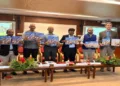
In a strong endorsement of India’s pioneering digital health vision, the World Health Organisation (WHO), in partnership with the International Telecommunication Union (ITU), has published a landmark technical brief named “Mapping the Application of Artificial Intelligence in Traditional Medicine.” The paper not only lays the groundwork for AI-integrated traditional medicine systems worldwide but also gives India’s Ayush sector the spotlight as a global leader in this field.

The WHO book represents the very first international roadmap to map how AI can be used responsibly to advance, modernise and globalise traditional medicine systems like Ayurveda, Unani, Siddha, Sowa-Rigpa, and Homoeopathy. Notably, it recognises India’s leadership in science, highlighting various indigenous innovations ranging from predictive diagnosis to genomic-based herbal drug research that are transforming healthcare.

India’s Digital Ayush Vision: “AI for All” in Traditional Medicine

Spearheaded by Prime Minister Narendra Modi’s vision of “AI for All” and supported by the Ministry of Ayush, India has taken rapid strides in marrying millennia-old healing practices with cutting-edge AI applications. The brief credits India as the first country to launch a Traditional Knowledge Digital Library (TKDL), which is a multilingual repository designed to safeguard and digitise indigenous medical knowledge and prevent biopiracy. This effort now serves as a global model.

Also Read: India leads the charge for climate justice

Union Minister of State for Ayush and Health, Shri Prataprao Jadhav, welcomed the WHO recognition, stating, “India’s AI-led initiatives reflect our deep commitment to scientific validation and internationalisation of traditional medicine. This is the embodiment of PM Modi ji’s call to integrate emerging technologies for inclusive health development.”

Ayurgenomics and Predictive Care: India at the Cutting Edge

One of the key highlights of the WHO report is India’s Ayurgenomics program, which is a pioneering interdisciplinary project that merges Ayurveda’s Prakriti-based constitution typing with genomics and machine learning. The goal is to create personalised, preventive health solutions based on genomic markers associated with classical Ayurvedic categories.

Through processing big data and NLP, artificial intelligence (AI) algorithms are now being applied to develop diagnostic tools such as pulse diagnosis, tongue diagnosis, and even voice patterns. These are methods traditionally applied in traditional systems but now reenvisioned through technology.

SAHI, NAMASTE and Ayush Grid: India’s Digital Backbone for Traditional Medicine

The WHO update applauds India’s Ayush Grid, which was introduced in 2018, as an all-encompassing digital backbone underpinning citizen-facing applications such as the SAHI portal, NAMASTE platform, and Ayush Research Portal. The systems provide AI-driven clinical decision support and guarantee interoperable and evidence-based digital health records, online consultations, and Ayush-related research publications.

The SAHI platform has played a key role in promoting patient-specific diagnostic devices by combining Ayurvedic diagnostics with contemporary AI tools, making it possible for healthcare providers to provide individualised treatment regimens even in rural or underserved regions.

Herb Identification to AI-Supported Formulations

India’s efforts on AI-assisted medicinal plant identification, herb-based pharmacological data digitisation, and in-silico drug design are also referred to as path-breaking. Methods like deep learning models, artificial tongues for flavour profiling, and network pharmacology are now being employed to comprehend and advance formulations based on classical systems.

For instance, the Ayurgenomics platform is being used to decipher the genomic and molecular underpinnings of herbal medicines so that traditional medicines can be repurposed for the treatment of contemporary diseases.

Furthermore, AI is also being utilised to discover drug interaction pathways throughout Ayurveda, Unani, TCM, and Kampo to provide comparative therapeutic knowledge that was not possible before.

AI and Indigenous Data Sovereignty

The WHO report commends India’s efforts not only for their scientific integrity but also for their ethicality. With the Traditional Knowledge Digital Library (TKDL) and Indigenous Data Sovereignty models, India has focused on ethical data sharing, community consent, and safeguarding cultural heritage.

The nation’s policy and legal systems are seen to facilitate the deployment of AI in a responsible manner, making sure that traditional knowledge is equitably utilised and not taken advantage of by business stakeholders. India’s contribution to the WIPO Treaty on Intellectual Property, Genetic Resources and Associated Traditional Knowledge also reiterates the country as the custodian of world heritage.

Ayush Sector’s Economic Impact: USD 43.4 Billion and Rising

In addition to the technological and ethical benchmarks, the WHO brief recognises the economic value of the Ayush industry. With a market size estimated at USD 43.4 billion, expanding each year by 10 to 20 percent, the traditional medicine economy of India stands as a significant pillar in the health innovation of the world.

“From enhancing biodiversity-linked livelihoods to promoting holistic well-being, Ayush systems are now at the core of India’s health and development approach,” stated Vaidya Rajesh Kotecha, Secretary, Ministry of Ayush.

Also Read: Spirit of the Constitution: Real enemies Vs true saviours

Ancient Wisdom, Digital Future

The WHO-ITU report and the supporting press release by the Ministry of Ayush not only highlight India’s input but also, more importantly, issue a clarion call to the international health community. It is simple: AI is not for new medicine alone. Its true potential is to develop ancient knowledge, bringing it to life, making it accessible, and evidence-based for generations to come.

While WHO goes on to define the regulatory and ethical standards for AI in medicine, India is set to continue being at the front, not just as a player but as a pioneer.

Topics: Traditional Knowledge Digital LibraryIndia Ayush GridSAHI NAMASTE platformsIndia AI traditional medicineWHO Ayush recognition 2025Ayurgenomics India
ShareTweetSendShareSend
✮ Subscribe Organiser YouTube Channel. ✮
✮ Join Organiser's WhatsApp channel for Nationalist views beyond the news. ✮
Previous News

Sadanandan Master in Rajya Sabha: A blow to communist violence, media intolerance exposed in Kerala

Next News

Pre-Launch alert of ISRO saves Axiom-4 Crew: LOX leak detected, delay in return of Shubhanshu Shukla

Related News

No Content Available
Load More

Latest News

Union Home Minister Amit Shah and Delhi Police derail sinister plan of Cockroach Janata Party and its founder (This image is generated by AI)

CJP Protest Derailed: How Amit Shah, Delhi Police, Intelligence foiled sinister plan of Cockroach Janata Party

(Left) Victorious Indian Men-s hockey team who who won Gold in U-18 Asia Cup (Right) U-18 Women's hockey team who won bronze medal in the Asia Cup

U18 Asia Cup 2026: Indian Men’s hockey wins gold, women secure bronze medal; PM Modi & Amit Shah hail the teams

India’s semiconductor roadmap shifts from import dependence to silicon sovereignty, aiming for a self-reliant ecosystem by Viksit Bharat 2047

From Import Dependence to Silicon Sovereignty: India’s bold semiconductor roadmap for Viksit Bharat 2047

Keralam Chief Minister V.D. Satheeshan

Jamaat-e-Islami Hind Team Meets CM Satheeshan, Senior Ministers, fuel debate over influence in UDF government

Singapore acts against China-linked posts targeting Indian community, cites threat to social harmony

Singapore Invokes OCHA: Facebook, YouTube and X ordered to block anti-Indian content originating from China

Editors of the HAF Wikipedia page run propaganda and disinformation campaign against the organisation, India and Hindu cultural ethos

Wikipedia fuels propaganda against Hindu American Foundation: How anonymous writers demonise Hindu rights group?

Israel to Install Statue of Chhatrapati Shivaji Maharaj; Israel’s Consul General in Mumbai, Yaniv Revach, met Maharashtra Chief Minister Devendra Fadnavis and sough his support in this regard

Chhatrapati Shivaji Maharaj’s legacy to reach Israel; Statue to be installed as symbol of India-Israel friendship

IIGH Public Policy Seminar: Women’s dignity, safety & equal opportunity discussed

Representative Image

Decoding Hezbollah: How the terror group built a massive arsenal against Israel

Representative Image

Plastic, Traffic and Landslides: How rising tourist footfall is posing threat to the mountainous region

Load More
  • Privacy
  • Terms
  • Cookie Policy
  • Refund and Cancellation
  • Delivery and Shipping

© Bharat Prakashan (Delhi) Limited.
Tech-enabled by Ananthapuri Technologies

  • Home
  • Search Organiser
  • Bharat
    • Assam
    • Bihar
    • Chhattisgarh
    • Jharkhand
    • Maharashtra
    • View All States
  • World
    • Asia
    • Africa
    • North America
    • South America
    • Europe
    • Australia
  • Editorial
  • Operation Sindoor
  • Opinion
  • Analysis
  • Defence
  • Culture
  • Sports
  • Business
  • RSS @ 100
  • Entertainment
  • More ..
    • Sci & Tech
    • Vocal4Local
    • Special Report
    • Education
    • Employment
    • Books
    • Interviews
    • Travel
    • Health
    • Politics
    • Law
    • Economy
    • Obituary
  • Subscribe Magazine
  • Read Ecopy
  • Advertise
  • Circulation
  • Careers
  • About Us
  • Contact Us
  • Policies & Terms
    • Privacy Policy
    • Cookie Policy
    • Refund and Cancellation
    • Terms of Use

© Bharat Prakashan (Delhi) Limited.
Tech-enabled by Ananthapuri Technologies