





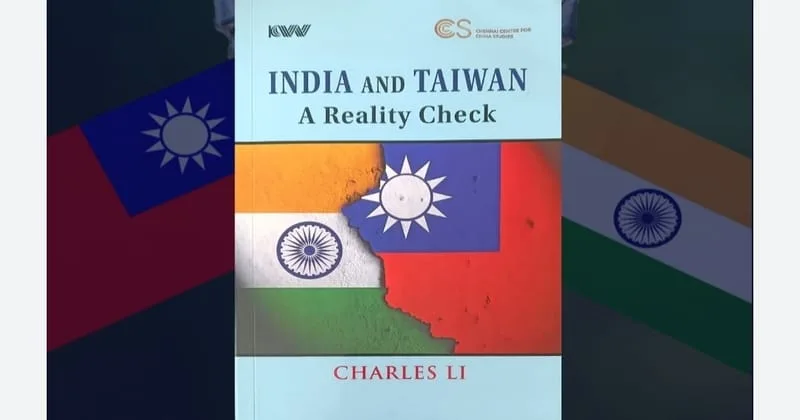
There are few books on India-Taiwan relations, let alone a comprehensive one. That is why India and Taiwan: A Reality Check, written by a Taiwanese career diplomat who was posted in India, merits attention. India and Taiwan — two robust and pulsating democracies — do not share diplomatic relations. India withdrew diplomatic recognition to the Republic of China (RoC), the official name of Taiwan, after its decision to recognise the People’s Republic of China (PRC) on December 30, 1949.
Following India’s “One China Policy”, New Delhi has had no diplomatic relations with Taiwan. But, as Charles Li points out, India’s interaction with Taiwan has generally been discreet, primarily at non-official or mid-level government circles. Highlighting the strategic significance of Taiwan for India, the author quotes former foreign secretary Rajiv Sikri’s observation that closer Taiwan-China relations could allow Beijing to redeploy many of its missiles, and other military assets, currently targeted at Taiwan, to Tibet and Xinjiang, altering the military balance and creating security concerns for India.
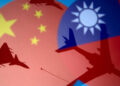
After the protracted civil war between the Communist Party of China under Mao Zedong and the Kuomintang (KMT) under Chiang Kai-Shek, the latter fled to Taiwan and proclaimed the Republic of China with US support. Ever since, Taiwan has lived under the shadow of Communist China, which aims at national reunification with the estranged sibling by all means, including coercive military tactics. While Communist China rules the mainland, it was the KMT under the leadership of its founding father, Sun Yat-sen, that ended the moribund imperialism in the Xinhai Revolution of 1911 and ushered in republicanism. Dr Li points out that Taiwan was the first Republic in Asia.
Half of a comprehensive introduction running to about 30 pages discusses India’s economic rise, and the rest highlights the complementarity and synergies between India and Taiwan in terms of investment and high technology, including in the cutting-edge semiconductor industry.
The China factor adds an unpredictable dynamic to the delicate India-Taiwan ties. In chapter two, the author focuses on India’s relationship with China through the prism of cultural and civilisational interactions, setting the historical backdrop and political context when nationalist China under the KMT ruled the mainland before the advent of the Communist regime. The author throws light on some little-known facets of India-Taiwan relations. He relates how Kang Youwei, a reformist leader in the late Qing Dynasty, went into exile in Darjeeling in 1901 and toured India for nearly 18 months. As nationalist and anti-imperialist agitation took root in India and China, the Hindustan Ghadr Party was active in China during the period of British rule. He met with Indian students in China and offered various forms of support. Chiang Kai-shek and Madame Chiang visited India in 1942, declaring that true international peace could not exist if China or India were denied freedom.
Chapter three focuses on the evolution of India-Taiwan relations after India’s Independence. Dr Li, however, uses the terms “One China Principle” and “One China Policy” interchangeably without clarifying subtle differences between the two. “One China Principle,” which the PRC uses, denotes that if a country has diplomatic relations with China, then that country cannot have any kind of relationship with Taiwan. The “‘One China Policy,” which most countries follow, allows substantive relations with Taiwan while having diplomatic relations with the PRC. Quoting former foreign secretary Vijay Gokhale, the author contends that while withdrawing diplomatic recognition to Taiwan and recognising PRC, India unilaterally gave up crucial negotiating space and observes that “the current border dispute between India and PRC could have been avoided if proper negotiations had been conducted”. This reviewer believes India could have followed the US’s lead in the Shanghai Communique, recognising the PRC in 1972 with some caveats.
At a time when Operation Sindoor has cast a shadow on India-China relations because of China’s purported role in providing Pakistan with materiel, Dr Li recalls the recommendations of the Standing Committee on External Affairs, then headed by Shashi Tharoor. Following the border incursion by China in Doklam in 2017, the Committee observed, “… even when India is overly cautious about China’s sensitivity while dealing with China and Tibet, China does not exhibit the same deference while dealing with India’s sovereignty concerns, be it in the case ofArunachal Pradesh or that of China-Pakistan Economic Corridor (CPEC) in Pakistan Occupied Kashmir (PoK)… .The government should contemplate using all options including its relations with Taiwan, as part of such an approach….”
This is an informative and useful book in a generally under-studied field, offering analyses of the entire gamut of India-Taiwan relations. Its value would have been enhanced if the publisher and author had taken greater care to avoid numerous typos and printing errors.











Comments