Why Rahul Gandhi signed rare pact with Chinese Communist Party?
June 6, 2026
  • Read Ecopy
  • Circulation
  • Advertise
  • Careers
  • About Us
  • Contact Us
Android AppiPhone AppArattai
Organiser
  • ‌
  • Bharat
    • Assam
    • Bihar
    • Chhattisgarh
    • Jharkhand
    • Maharashtra
    • View All States
  • World
    • Asia
    • Europe
    • North America
    • South America
    • Africa
    • Australia
  • Editorial
  • International
  • Opinion
  • RSS @ 100
  • More
    • Op Sindoor
    • Analysis
    • Sports
    • Defence
    • Politics
    • Business
    • Economy
    • Culture
    • Special Report
    • Sci & Tech
    • Entertainment
    • G20
    • Azadi Ka Amrit Mahotsav
    • Vocal4Local
    • Web Stories
    • Education
    • Employment
    • Books
    • Interviews
    • Travel
    • Law
    • Health
    • Obituary
  • Subscribe
    • Subscribe Print Edition
    • Subscribe Ecopy
    • Read Ecopy
  • ‌
  • Bharat
    • Assam
    • Bihar
    • Chhattisgarh
    • Jharkhand
    • Maharashtra
    • View All States
  • World
    • Asia
    • Europe
    • North America
    • South America
    • Africa
    • Australia
  • Editorial
  • International
  • Opinion
  • RSS @ 100
  • More
    • Op Sindoor
    • Analysis
    • Sports
    • Defence
    • Politics
    • Business
    • Economy
    • Culture
    • Special Report
    • Sci & Tech
    • Entertainment
    • G20
    • Azadi Ka Amrit Mahotsav
    • Vocal4Local
    • Web Stories
    • Education
    • Employment
    • Books
    • Interviews
    • Travel
    • Law
    • Health
    • Obituary
  • Subscribe
    • Subscribe Print Edition
    • Subscribe Ecopy
    • Read Ecopy
Organiser
  • Home
  • Bharat
  • World
  • Operation Sindoor
  • Editorial
  • Analysis
  • Opinion
  • Culture
  • Defence
  • International Edition
  • RSS @ 100
  • Magazine
  • Read Ecopy
Home World Asia South East Asia

Why Rahul Gandhi signed rare pact with Chinese Communist Party?

Wondered why the Congress has been taking a pro-Chinese stance? On August 7, 2008, then Congress General Secretary Rahul Gandhi signed a rare and crucial memorandum of understanding with the Chinese Communist Party ?promote exchanges at various levels?.

SreedattanSreedattan
Jun 22, 2025, 12:30 pm IST
in South East Asia, Politics, Bharat, World, Asia
Follow on Google News
FacebookTwitterWhatsAppTelegramEmail

Recently, Rahul Gandhi launched yet another attack on Prime Minister Narendra Modi and the Central government, this time targeting the ‘Make in India’ initiative. He dismissed the ambitious programme as a failure, claiming that India is merely assembling, not truly manufacturing, iPhones, and that the real profits are flowing to China.

He linked the so-called manufacturing stagnation to India’s growing unemployment crisis and called for a “fundamental shift” that, in his words, would empower lakhs of producers through honest reforms and financial backing.

However, Rahul’s unusual admiration for China is neither sudden nor surprising. He has, over the years, oscillated between being a silent sympathiser and an open supporter of Beijing, even during sensitive geopolitical tensions.

In this context, a must-read analysis originally published in Organiser on June 19, 2020, becomes more relevant than ever.

Wondered why the Congress has been taking a pro-Chinese stance? On August 7, 2008, then Congress General Secretary Rahul Gandhi signed a rare and crucial memorandum of understanding with the Chinese Communist Party “promote exchanges at various levels”.

Recently, Congress Leader of Opposition in the Lok Sabha Adhir Ranjan Chowdhury was forced to delete his tweet against China in which he had warned Beijing to be careful as the Indian Army knows how to defang the venomous snakes. It is said that Chowdhury was told by a Congress leader in plain words: “Madam is angry with the tweet. Delete it.” After Chowdhury deleted the tweet, Rajya Sabha MP Anand Sharma, tweeted: “The Indian National Congress recognises and values the special strategic partnership between India and China. As two ancient civilisations and large economies of the world, both countries are destined to make a significant contribution in the 21st Century.”

Wondered why the Congress has been taking a pro-Chinese stance? On August 7, 2008, then Congress General Secretary Rahul Gandhi signed a rare and crucial memorandum of understanding with the Chinese Communist Party “promote exchanges at various levels”. Rahul Gandhi had signed the MoU with Wang Jia Rui, Minister in the international department of the CPC in the presence of Sonia Gandhi and then Chinese Vice-President Xi Jinping at the Great Hall of the People in Beijing. Congress leader Anand Sharma was also part of the Indian delegation.

Sonia Gandhi met Xi for 30 minutes in which she praised the Chinese for their “organising genius”. Rahul was also present at this meeting. It is not clear why a political party like Congress should have “close linkages” with a political party of another country.

The Congress continues to share close tie-up with the Chinese government. In July 2017, when China and India were locked in a standoff in the Doklam area, Rahul Gandhi had secretly met Chinese Ambassador Luo Zhaohui. Initially, the party and the Chinese envoy denied having met. Under pressure from media and public, the Congress spokesperson RandeepSurjewalasaid Rahul met the ambassador. Interestingly, before admitting, Surjewala who accompanied Rahul had himself tweeted saying that the news of Rahul meeting Zhaohui was “planted” by government agencies through “bhakt channels”.

Shockingly, the Chinese Embassy website, which first confirmed the meeting later deleted it.

The Congress during Indira Gandhi’s time had similar close ties with the Russian Communist Party. A 2005 book based on the files by intelligence historian Christopher Andrew claimed that India during Indira Gandhi’s tenure as prime minister had been infiltrated at several levels by the KGB. The Russians funded the Congress party to win elections.

Impact of China-Cong pact

US journalist Joshua Philipp explains how ‘China strangles a country with its own systems’. In an interview, he says, “The Chinese Communist Party has a saying – when it comes to their psychological warfare and other forms of subversions – strangle you with your own systems. In other words, observing how different countries operate; what is controversial within their systems?; How does their system function?; How can we use these systems to twist things around, to cause chaos; to mess things up; to use it against them? You say you believe in free speech. We will have protests in your own backyard calling you out. You say you believe in free press? Well, we will start up state-run in your country and we will run those state-run media to lie to your population to spread your propaganda. That’s what they do.”

Ever since Congress lost the general election in 2014, the party has been supporting several subversionary activities in the country. The party took up causes that were dear to Maoists, jihadis and Urban Naxal elements. Congress was in the forefront supporting the ‘Tukde-Tukde gang’ in JNU and other campuses. Several grassroots Congress leaders had complained that the party had outsourced its election campaign to questionable NGOs and anarchists. In many places, such elements filled key party positions edging out committed party workers.

ThePrint had reported (on November 24, 2018), how China rolled out the red carpet to journalists drawn from India, Pakistan, Bangladesh and some African countries to build a narrative in its favour in respective countries. Even in the current standoff also, many journalists were found to be siding with China and helping its psychological warfare against India.

CCP ties with Indian and Nepali Communists parties

The Chinese Communist Party accorded top priority to its engagement with Indian Left parties, according to CPI(M) General Secretary Sitaram Yechury. Similarly, Nepali Communist parties have fraternal ties with the Chinese Communists. On September 24, 2019, the ruling communist parties of Nepal signed a memorandum of understanding with the Chinese Communist Party to establish close relations between the two parties. The MoU mentions high-level visits between the two parties, sharing communist ideology, experiences and training, and sharing development models. Many observers say, Nepali Prime Minister K P Sharma Oli is a pawn in the hands of the Chinese ambassador in Nepal.

(The writer is the Editor-in-Chief of Indusscrolls)

Topics: ChinaRahul GandhiRahul Gandhi Chinese CCPChina Congress pact
ShareTweetSendShareSend
✮ Subscribe Organiser YouTube Channel. ✮
✮ Join Organiser's WhatsApp channel for Nationalist views beyond the news. ✮
Previous News

Murugan Confluence: Madurai set to host over 50,000 vehicles as devotees arrive in unprecedented numbers

Next News

Sons of Blunder: When surnames speak louder than sense

Related News

As fuel shortages rippled across Asia, New Delhi expanded supplies to its neighbours while Beijing sought to turn energy security into strategic influence.

The Hormuz Test: How India’s energy assistance outshines China’s conditional approach

Bangladesh’s reported JF-17 push has triggered fresh scrutiny after India’s Ops Sindoor exposed the vulnerabilities of Pakistani-Chinese defence systems and precision strike capabilities

Shadows of Operation Sindoor: Questions loom over Bangladesh’s JF-17 ambitions amid Sino-Pakistani tech vulnerabilities

As Beijing tightens its grip ahead of June 4, dissidents inside China face surveillance and intimidation while activists abroad keep alive the memory of the 1989 Tiananmen crackdown

Tiananmen at 37: How China suppresses remembrance of the massacre through fear, censorship and surveillance

Tiananmen Square Massacre: When Tanks Met Students—The Night China Crushed Its Democratic Hope!

Tiananmen Square Massacre: When Tanks Met Students—The Night Communist China Crushed Its Democratic Hope!

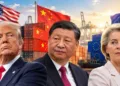
European Commission President Ursula von der Leyen, Chinese President Xi Jinping and US President Donald Trump

Trade Barriers, AI Battles and Military Containment: The European-US strategic front against China takes shape

Beyond the Thucydides Trap: Why the rise of India differs fundamentally from China

Load More

Latest News

Prime Minister Narendra Modi

“Makes every Indian proud”: PM Modi hails India’s 7.7 per cent GDP growth in FY 2025-26

Once known for maoist violence, Minpa now leads healthcare revolution with telemedicine services in Sukma

From Maoist Stronghold to Healthcare Hub: How Chhattisgarh’s Minpa is transforming through telemedicine & development

Dr Surendra Jain, Joint General secretary, VHP

VHP Demands Audit of Waqf Properties Amid Encroachment Claims: “Land should go to rightful owner,” says Surendra Jain

A Special NIA Court has framed charges against banned PFI and 20 office bearers, including E. Abubakar and O.M.A. Salam, under UAPA and IPC

PFI Terror Case: Special NIA court charges Abubakar, Salam & others for alleged conspiracy to wage war against India

Prime Minister Narendra Modi with women during an event (Old image used for representative purposes)

The Nari Shakti Decade: How 12 years of policy reforms under Modi govt transformed lives of women in Bharat

Ritabrata Banerjee, expelled by Mamata Banerjee from TMC, has been appointed as the Leader of the Opposition in Bengal assembly.

TMC House Divided: Mamata’s party battles Itself as LoP row exposes deepening cracks after BJP’s big blow

Lucknow’s UP 112 Headquarters hosts West Bengal team for policing innovation study

UP 112 Model: West Bengal police visits Lucknow to replicate Yogi’s emergency response model

Representative Image

Pakistan: POJK to go for polls on July 27 under shadow of JAAC agitation

Saokat Molla with Mamata Banerjee

West Bengal: NIA foils escape bid, tracks former TMC MLA Saokat Molla through third-party mobile network

Saurav Das, Chief Spokesperson of CJP

Exposing CJP’s Saurav Das: Inside his controversial commentary on Article 370, Umar Khalid & nationalism

Load More
  • Privacy
  • Terms
  • Cookie Policy
  • Refund and Cancellation
  • Delivery and Shipping

© Bharat Prakashan (Delhi) Limited.
Tech-enabled by Ananthapuri Technologies

  • Home
  • Search Organiser
  • Bharat
    • Assam
    • Bihar
    • Chhattisgarh
    • Jharkhand
    • Maharashtra
    • View All States
  • World
    • Asia
    • Africa
    • North America
    • South America
    • Europe
    • Australia
  • Editorial
  • Operation Sindoor
  • Opinion
  • Analysis
  • Defence
  • Culture
  • Sports
  • Business
  • RSS @ 100
  • Entertainment
  • More ..
    • Sci & Tech
    • Vocal4Local
    • Special Report
    • Education
    • Employment
    • Books
    • Interviews
    • Travel
    • Health
    • Politics
    • Law
    • Economy
    • Obituary
  • Subscribe Magazine
  • Read Ecopy
  • Advertise
  • Circulation
  • Careers
  • About Us
  • Contact Us
  • Policies & Terms
    • Privacy Policy
    • Cookie Policy
    • Refund and Cancellation
    • Terms of Use

© Bharat Prakashan (Delhi) Limited.
Tech-enabled by Ananthapuri Technologies