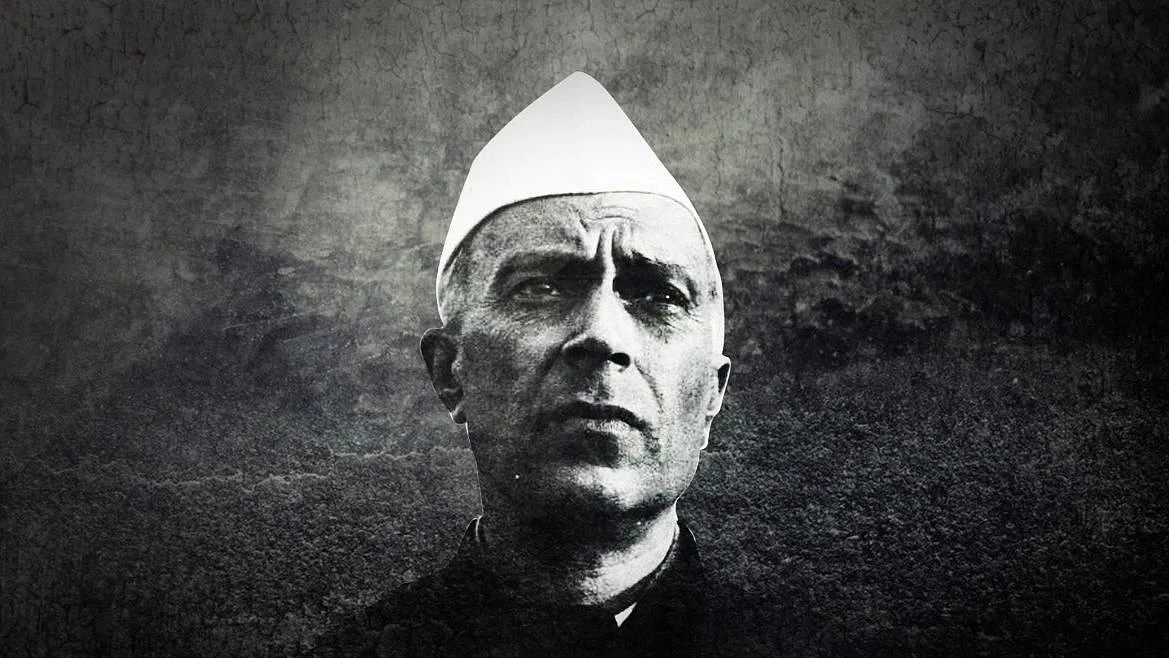
On June 4, 2025, a fresh wave of political controversy erupted in India when Bharatiya Janata Party (BJP) Member of Parliament Nishikant Dubey launched a scathing attack on the Gandhi-Nehru family, specifically targeting India’s first Prime Minister, Jawaharlal Nehru. Dubey’s accusations, shared via a post on X, labelled Nehru as “Surrender Nehru,” reigniting debates about the former prime minister’s handling of India’s foreign policy, particularly during the 1962 India-China War. By sharing historical letters and parliamentary statements, Dubey accused Nehru of mismanaging India’s territorial integrity and engaging in policies that allegedly compromised national interests.
This report delves into the details of Dubey’s claims, the historical context of the documents he cited, and the broader implications of this controversy.
Background of the Controversy
The debate stems from Dubey’s ongoing critique of the Congress party and the Gandhi-Nehru family, which he has accused of historical missteps that weakened India’s geopolitical standing. On June 3 and 4, 2025, Dubey posted on X, sharing excerpts from letters and parliamentary debates attributed to Nehru, particularly focusing on the 1962 war and India’s negotiations with China and Pakistan. His posts were aimed at Congress leader Rahul Gandhi, whom he mockingly addressed as “Rahul Baba,” accusing the Gandhi family of betraying India’s interests. The centrepiece of Dubey’s argument was a letter dated January 1, 1963, purportedly written by Nehru to the Chinese Prime Minister, which Dubey claimed demonstrated Nehru’s willingness to “surrender” to China.
In his X post, Dubey wrote, “Do you know about surrender, Rahul Baba? This is called surrender. This is a letter from your revered grandfather, the Iron Lady’s father Nehru ji, dated January 1963, after India lost the China war. Angrily, Nehru ji wrote to the Chinese Prime Minister that you have occupied 20 thousand kilometres of India’s eastern region and 6 thousand kilometres in the west, you have taken our 4 thousand soldiers hostage, yet we have made the Prime Minister of Sri Lanka our leader and sent him to you for surrender, waiting for your orders – Jawaharlal Nehru.”
सरेंडर जानते हो राहुल बाबा, सरेंडर इसको कहते हैं, आपके परम् पूज्य नाना यानि आयरन लेडी के पिता नेहरु जी का यह पत्र है जनवरी 1963 का भारत के चीन युद्ध के हारने के बाद का। घिघिया कर नेहरु जी चीन के प्रधानमंत्री को लिखे कि आपने भारत का पूर्व क्षेत्र में 20 हज़ार किलोमीटर और पश्चिम… pic.twitter.com/O2Y83dajqL
— Dr Nishikant Dubey (@nishikant_dubey) June 4, 2025
The 1963 Letter: Context and Content
The letter in question, dated January 1, 1963, was addressed from Nehru to the Chinese Prime Minister, responding to a message from December 30, 1962. The document, as shared by Dubey, provides insight into the tense diplomatic exchanges following India’s defeat in the 1962 Sino-Indian War. The war, fought over disputed border territories in Aksai Chin and the North-East Frontier Agency (now Arunachal Pradesh), resulted in significant territorial losses for India, with China occupying approximately 20,000 square kilometres in the eastern sector and 6,000 square kilometres in the western sector, as noted in the letter.
Nehru’s letter begins by acknowledging China’s communication and accuses China of distorting the historical context of the border dispute. He writes, “The main theme of the memorandum of your Foreign Office, dated 29th December which also runs through your message of 30th December, is that it is India and not China which is ‘reversing right and wrong’ and persisting in a position inconsistent with the peaceful settlement of the India-China differences over the border question. This is a distorted version of the factual history of the last few years recorded in the exchange of notes between India and China on the boundary question.”
Nehru goes on to recount his personal observations of Chinese incursions into Ladakh, stating, “In the course of the past 7 or 8 years, I have personally visited various parts of Ladakh on several occasions. During my earlier visits, there was no sign of Chinese forces there, nor was there any report about their coming into Ladakh. On later occasions, there were reports of their having entered Ladakh in various places. Still later, they had advanced still further.”
The letter also references the Colombo Proposals, an initiative by six non-aligned Afro-Asian countries to mediate the India-China conflict. Nehru notes, “I would, in this connection refer to the proposals made by the six non-aligned Afro-Asian countries who met at Colombo earlier last month. These have been conveyed to me and also to you and the Ceylon Prime Minister is now on a visit to Peking to explain these proposals and will be coming to Delhi about the 10th of January 1963.”
Dubey’s Allegations: Parsing the Claims
Dubey’s accusations hinge on several key points, which he supports with historical documents and parliamentary statements. These include:
1. Ignorance of Aksai Chin
Dubey claimed on June 3 that Nehru admitted in the Lok Sabha in 1963 that he was unaware of Aksai Chin’s existence before China’s occupation. This claim is based on a parliamentary statement where Nehru discussed the discovery of the Aksai Chin road built by China. Nehru clarified, “What happened was that in 1958—it was end of 1958, late autumn, we first heard of the Aksai Chin road being made. We did not know where it was exactly. We sent two sets of people separately to find out where it was, whether it was in our territory or not because Aksai Chin road spreads out behind that. It took months for them to come back because all these are real mountaineering expeditions.”
This statement suggests that Nehru was unaware of the precise location of the road initially, not the existence of Aksai Chin itself, as Dubey’s post implies.
2. Alleged Willingness to Cede Kashmir
Dubey further alleged that Nehru was open to ceding Kashmir to Pakistan, citing a statement where Nehru discussed India-Pakistan talks. In a letter shared by Dubey, dated August 13, 1963, the text criticises Pakistan for handing over parts of Jammu and Kashmir to China during ongoing negotiations. The letter states, “All this was done while our talks were going on. This is an indication of how unimportant it considered the talks. It was a very unusual thing that at the time when these talks were going on, Pakistan was busy handing over a large part of our territory to China, which had invaded our land.”
Nehru’s statements in Parliament, as cited by Dubey, emphasise India’s commitment to a peaceful resolution with Pakistan while rejecting unreasonable demands. Nehru said, “I feel we may have been wrong in minor things. But I think that throughout these many years Pakistan came into existence since and the Kashmir trouble arose, we have always looked forward to a settlement of it. But a settlement does not mean our doing something which is completely wrong from our point of view, Kashmir’s point of view and the people of Kashmir’s point of view.”
3. Acceptance of U.S. Mediation
Dubey’s post also highlighted Nehru’s willingness to accept U.S. mediation in India-Pakistan talks, framing it as a compromise of sovereignty. The August 1963 letter mentions discussions with U.S. Secretary of State Dean Rusk, where India expressed openness to mediation by a mutually acceptable party. The letter states, “In proof of the sincerity of our desire, we said that we would also be willing to accept the mediation of someone who was acceptable to both sides, although we had earlier rejected a similar proposal.” This reflects India’s diplomatic flexibility rather than a capitulation, as Dubey suggests.
4. Critique of Akhand Bharat
Dubey accused Nehru of dismissing the concept of Akhand Bharat (undivided India) as a “bad idea.” In the parliamentary debate, Nehru addressed the notion, saying, “Nobody here wants to do that and can do that, and it would be extreme folly if India ever tried to do that; it would ruin India, ruin Kashmir and Pakistan.” Nehru’s rejection of Akhand Bharat was rooted in his belief that pursuing such an idea would destabilize the region, a stance Dubey frames as anti-national.
The 1962 War and Its Aftermath
The 1962 Sino-Indian War was a defining moment in India’s post-independence history, exposing vulnerabilities in its military preparedness and foreign policy. China’s rapid advance into Indian territory, particularly in Aksai Chin and the eastern sector, led to a humiliating defeat for India. Nehru’s government faced intense criticism for its handling of the crisis, including the failure to anticipate Chinese aggression and the inadequate military response.
The letters and parliamentary statements cited by Dubey reflect the diplomatic efforts to navigate the aftermath of the war. Nehru’s correspondence with China shows a commitment to peaceful resolution, even as he acknowledged the aggression. His reference to the Colombo Proposals and willingness to discuss the border issue with an impartial tribunal like the International Court of Justice underscores a diplomatic approach rather than military escalation.
Similarly, the India-Pakistan talks in 1963 were complicated by Pakistan’s agreement with China, which ceded parts of Pakistan-occupied Kashmir to China. Nehru’s statements in Parliament highlight his frustration with Pakistan’s actions while emphasising India’s desire for a fair and peaceful settlement.
Political Reactions and Public Discourse
Dubey’s posts have sparked polarised reactions. BJP supporters have rallied behind his narrative, viewing it as a necessary critique of Congress’s historical leadership. On X, several users echoed Dubey’s sentiments, with one writing, “Nehru’s policies cost India dearly. Time to expose the truth about his failures.” Others, however, have accused Dubey of distorting history for political gain. A Congress supporter responded, “Nehru faced unprecedented challenges in a newly independent India. Cherry-picking quotes to malign him is cheap politics.”
Implications for Contemporary Politics
The “Surrender Nehru” debate is not just a historical revisit but a reflection of current political fault lines. The BJP’s focus on critiquing the Congress’s legacy, particularly the Nehru-Gandhi family, is a recurring strategy to consolidate its nationalist narrative. By framing Nehru as weak on national security, Dubey aims to contrast the BJP’s assertive stance with Congress’s historical record.
Nishikant Dubey’s “Surrender Nehru” campaign has reignited a contentious debate about Jawaharlal Nehru’s legacy, focusing on his handling of the 1962 war and India-Pakistan relations. By sharing historical documents, Dubey has accused Nehru of ignorance, weakness, and compromising India’s interests.
As India continues to grapple with its historical narrative, such debates underscore the enduring influence of the past on present-day politics. Whether Dubey’s allegations will reshape public perception of Nehru or merely deepen political divides remains to be seen.



![Former Jharkhand CM Shibu Soren [ANI/ Photo]](https://organiser.org/wp-content/uploads/2025/08/ani-20250804044002-e1754283735109-120x74.webp)