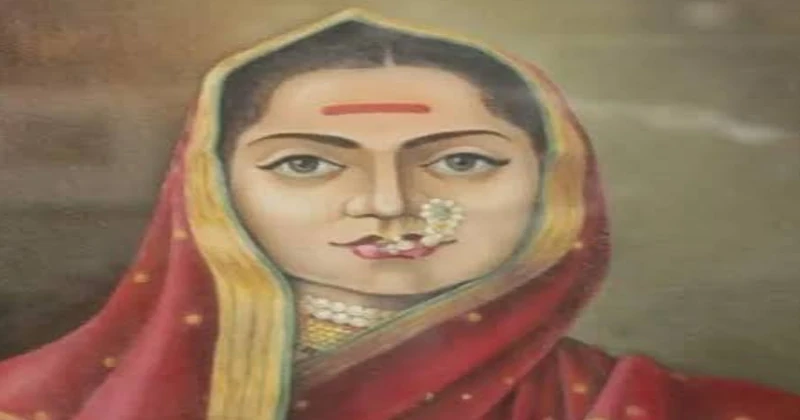
In a historical discourse often dominated by binary notions of power versus femininity, East versus West, and ruler versus subject, the life and reign of Lokmata Ahilyabai Holkar shatters the template. She was not merely a woman on the throne; she was an institution of dharma, an architect of civilisational renewal, and perhaps the most underrated philosopher-queen in global history. To reduce her legacy to temple restoration or social work is to miss the subtle brilliance of her statesmanship.
Born on May 31, 1725, in Chondi, a nondescript village in present-day Maharashtra, Ahilyabai was never meant by conventional standards to enter the corridors of power. However, the Bharatiya civilisational ethos has always made space for the “adhikarit stri”, the qualified woman, to rise, especially when the times demand it. Unlike modern feminist paradigms where empowerment is earned despite tradition, in the Indic worldview, Ahilyabai emerged as an empowered being through it.
Contrary to modern myths that women in pre-modern India had no space in governance or public life, Ahilyabai’s life stands as a monumental rebuttal. Widowed at a young age, she was expected, by societal standards, to recede into the shadows. But destiny and dharma had other plans. Under the patronage of her father-in-law, Malhar Rao Holkar, a formidable general in the Maratha Empire, Ahilyabai was trained in governance, diplomacy, and military affairs.
Upon the death of her husband and, later, Malhar Rao, she assumed the reins of the Holkar dynasty in 1767. She ruled from Maheshwar, which she transformed into a hub of culture, spirituality, and governance. Her reign was marked by justice, compassion, strategic acumen, and inclusive welfare, a far cry from the violence and conquest-led model of leadership often glorified in Western historical traditions. Of
To understand Ahilyabai is to understand what she built at Maheshwar, her capital on the banks of the Narmada. This was not merely a royal seat; it was a “Karma-Bhumi”, a living, civilizational centre where statecraft, culture, and spiritual aspiration coexisted. Her court was known to host scholars, artisans, and saints, as much as warriors and diplomats.
Her daily governance was interwoven with Tantra-Yukti (strategic logic) and Rajdharma (righteous rule)-principles laid out in ancient treatises like the Arthashastra and Shukraniti. She upheld justice with astonishing regularity, holding open darbars and encouraging people to petition her directly centuries before “participatory democracy” became a global buzzword.
“A ruler’s authority must be softer than a mother’s voice, but swifter than Dharma’s justice,” she reportedly told her ministers, a principle that shaped her judicial and administrative protocols”.
Her Strategic Mind: The Invisible Hand in Maratha Diplomacy
What is often missed in popular retellings is that Ahilyabai Holkar was not operating in isolation. The mid-18th century was a volatile time, as the Mughal decline, British ascent, Afghan incursions, and Maratha factionalism were tearing apart the subcontinent’s stability.
Ahilyabai’s decision to maintain a distance from internecine Maratha power politics while ensuring regional peace was both strategic and civilisational. She offered asylum to saints, repaired temples destroyed in centuries of invasions, and fortified trade routes across Central India, creating a model of decentralised prosperity that stood in contrast to the violent expansionism of contemporary powers.
She was known to intervene diplomatically in disputes between princely states, often sending emissaries not as conquerors but as Kshatriya mothers invoking dharma. This feminine, non-aggressive form of soft diplomacy is absent from Western political theory, yet it has proven effective and sustainable.
Ahilyabai as a Rajarshi: The Yoga of Rule
Ahilyabai’s discipline resembled the Rajarshi archetype, a concept in Indian political thought that embodies the philosopher-king. Rising at 4 a.m., she would meditate, attend temple rituals, and then sit for court proceedings. This was not ritualism; this was Sattvic Leadership, where inner clarity informed outer action.
She drew spiritual inspiration not only from Shaiva and Vaishnava sampradayas but also from Nath yogis, Advaita scholars, and Bhakti saints, building an inclusive civilisational idiom. Her court-funded interfaith community kitchens and even Islamic dargahs received endowments not as a political gimmick but as expressions of shared spiritual space.
Her governance was not secular in the Western sense but sacred in the Indic sense, where Sarva Dharma Sambhava was not appeasement but equilibrium.
The Temple Restorations: A Strategic, Not Sentimental Act
The restoration of temples like Kashi Vishwanath, Somnath, Dwarka, and Rameshwaram is often presented as a form of religious philanthropy. In truth, these were acts of civilisational reclamation. She understood that sacred geography shapes national identity. Where British officials and Mughal rulers left ruins or converted temples, Ahilyabai revived the cosmic blueprint of Bharatvarsha.
In doing so, she planted civilisational flags, not just physical markers, but consciousness anchors, across the Indian subcontinent. These acts were as much nation-building as spiritual.
Even today, the silver doors of Kashi Vishwanath carry her legacy. It is not just a door; it is a gateway to memory, proof that even under duress, Bharat’s feminine spirit can resurrect what invaders desecrate.
Womanhood Without Conflict: A Bharatiya Feminine Ideal
Unlike Western feminist icons whose path to power often required the emasculation of femininity, Ahilyabai remained deeply rooted in her role as a mother, a widow, a queen, and a yogini. Her empowerment did not require her to abandon these roles; she infused them with divinity.
She didn’t fight patriarchy; she outshone it through competence. Ministers who questioned her authority in her early years came to revere her as “Devi Ahilya”, a term earned, not inherited.
This is the Bharatiya Nari ideal, not one who imitates masculine traits but one who synthesises Shakti (energy), Buddhi (wisdom), and Karuna (compassion). It is not the absence of male dominance that defines her success, but rather its irrelevance in her moral and intellectual universe.
In a world seeking answers to leadership in chaos, ethics in politics, and feminine empowerment beyond material symbols, Ahilyabai Holkar stands not as a relic of the past but as a template for the future.
Even centuries later, the lands she touched remember her not only through monuments but also through the memories of those who knew her. The pilgrims who walk the ghats of Kashi may not know her name, but their feet rest upon stones she laid. The temples that ring with bhajans do so because she protected their silence through tumultuous times. And in Maheshwar, where the river Narmada flows as if in dialogue with the past, her name is still spoken not with reverence alone but with intimacy.
Devi Ahilyabai Holkar is not a historical episode. She is a civilisational lesson that true power is not seized but served, that womanhood is not a barrier but a bridge, and that Bharat’s future lies not in forgetting its past but in recovering its soul.
In Ahilyabai, Bharat found not just a queen but a mirror of its own divine feminine, its Shakti, its Shraddha, its Smriti. And through her, the world can finally begin to understand that the Bhartiya Nari has always been not beside the throne but often above it.
Her story must not be merely celebrated but taught in civilisational curriculum, studied in policy schools, and revered in public memory. In her life, Bharat did not just find a queen; she found a mirror of its highest possibilities.
“This is not feminist history. This is Rashtra Itihasa.”