War, in the conscience of a modern state, is never the preferred path. It carries with it the burden of destruction, the collapse of order, and the unravelling of human progress. Yet, history teaches us that peace sometimes emerges only through the crucible of conflict. The irony of war lies also in its unintended gifts. Some of humanity’s most significant inventions: wristwatches, life-saving medicines, X-ray, GPS and internet owe their origins to warring times. Even the sacred Hindu scripture, the Bhagavad Gita, was revealed amidst the echoes of conch shells and war drums on the fields of Kurukshetra. It is there that Bhagwan Krishna, embodying both divine wisdom and political realism, delivered the essence of Dharma. Peace must be pursued with all effort, but when righteousness is threatened, war must not be shunned, it must be embraced as a moral duty.
As realpolitik and restraint form the basis of Bharatiya policy, it is a long-standing desire of Bharat to maintain peace with Pakistan. Often, this kindness has been falsely seen as a sign of weakness. Infiltrations, attacks and provocations have continued from Pakistan. When terrorists arrived in Pahalgam and killed Hindus for no reason, it went beyond just a terrorist attack. It signalled that war had been declared. Once peace is trampled upon in such a cruel way, a nation has to act, not out of anger, but to make things right again. Bharat was shaken by the events of the Pahalgam massacre. Even compared to the actions of a rogue state like Pakistan, this brutality was completely out of the ordinary. It was necessary to respond steadily and decisively, at least until we reached the point of an all-out war. Bharat avoided fighting war and instead preferred subduing the enemy through strategy. In quick succession, Bharat broke the Indus Waters Treaty, lowered diplomatic relations and blocked trade and visas. Stopping the flow of Pakistani content, influencers and media forced the adversary to face isolation in diplomatic matters and the economy.
The Bharatiya Stand
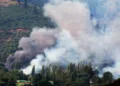
Still, the strongest impact was made by Operation Sindoor. Military operations deep within Pakistan’s borders were carried out by flying jets. Bharat deployed drones and missiles to attack and destroy not just terrorists, but their supporters as well, without soldiers crossing over the Pakistani border. The time bombings were carried out against nine major terror camps and in most cases, their reactions from Pakistan were stopped. It was obvious to all that Bharat would not let the killers of its people go unpunished, and allow the wiped sindoor of widows go unacknowledged. The strike by Bharat caused disturbances in Sindh and Balochistan, making it harder for Pakistan to stay stable. At the same time, New Delhi chose to exercise restraint, skipping civilian bombings and no effort to take over part of the territory. This discipline earned Bharat rare global support, even silencing traditionally critical voices like the OIC.
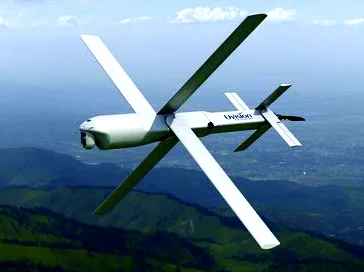
Bharatiya diplomats leveraged international forums to expose Pakistan’s terror links, firmly branding it a state sponsor of terrorism. Meanwhile, carefully curated high-definition footage from the battlefield attacking terrorist camps dismantled Pakistan’s usual victimhood narrative. Bharatiya strikes extended far beyond the borders, crippling key airbases in Skardu, Jacobabad, Bholari, and even near Islamabad. Within 72 hours, Bharat demonstrated it could reach and breach every corner of nuclear-armed Pakistan, using its own advanced weaponry. Chinese, Turkish and US proved ineffective against Bharat’s air defenses, underscoring its indigenous strength. Interpreting Sun Tzu through a modern lens, Bharat executed a strategy of decapacitation, degradation, and deterrence, with surgical precision and minimal civilian harm.
The Might of Bharat
During this conflict, one of Bharat’s most significant—yet often overlooked—strengths was its internal unity. In contrast to the domestic disarray seen during the 1962 war with China or the politically charged atmosphere of the Kargil conflict in 1999, this time the nation stood remarkably united. Civil society, political opposition, and the Bharatiya diaspora found common ground, reflecting a rare sense of national cohesion. Bharat’s traditional stance of strategic restraint appeared to have transformed into a more assertive posture. The message sent to the world was unambiguous: Bharat would no longer be cowed by the specter of nuclear threats or suffer the slow drain of hybrid warfare without response. Pakistan’s military establishment and its intelligence agency, the ISI, came out of the confrontation weakened and discredited. Meanwhile, Bharat’s homegrown defense technologies demonstrated impressive performance—often surpassing imported systems—capturing the attention of global defense markets.
As expected, China aligned itself with Pakistan, guided by its strategic interests in the region. The United States, staying true to its pattern of diplomatic ambiguity, avoided siding with India and instead urged both parties to halt hostilities. However, India notably refused to use the word “ceasefire,” preferring instead to describe the development as a “mutual understanding” between the two countries. Predictably, Pakistan declared victory—a familiar script—likely preparing to shower its military brass with honours. In Bharat, public sentiment was mixed: while there was a sense of national pride, there was also a subtle frustration that a decisive opportunity to reshape the regional power dynamic had perhaps been missed. Yet Bharat’s goal was never about capturing territory; it was about deterrence, delivering a strong enough response to make any future provocation from Pakistan exceedingly costly. Remarkably, daily life in most parts of Bharat remained unaffected by the conflict. Flights operated as usual, the skies remained open, and the rhythm of everyday life continued with calm resolve, unfazed by the backdrop of war.
Bharat: A Formidable Force
In the true Kautilyan spirit, Bharat wielded the Danda, without overreach, guided by the principles of Dharmayuddha. Strategic measures like the suspension of the Indus Waters Treaty, trade embargoes, and cultural bans remain firmly in place, upheld under a carefully calibrated “mutual understanding,” not formal peace. Bharat continues to reject any third-party mediation on Kashmir, including the US overtures, staying consistent with its sovereign stance. The inauguration of the BrahMos production facility in Lucknow reinforces Bharat’s emergence as a formidable defense power, sending a clear signal to global markets about its indigenous capability.
Going forward, Bharat has drawn a red line that any act of terror will be treated as an act of war. Bharat did not seek this war. However, when she was forced into it, it did not just respond. She stood tall without any foreign support and will continue to do so as Operation Sindoor is far from over.