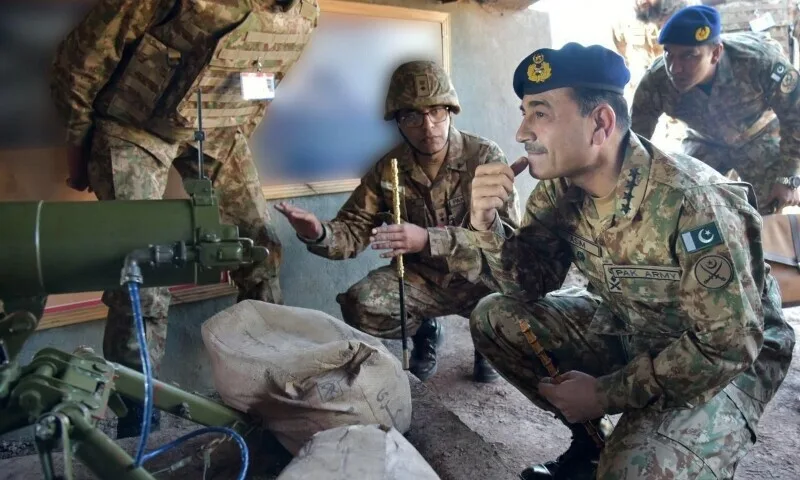
How did four IAF missile strikes on May 10 crush Pakistan’s operation Bunyan al-Marsoos within hours?
June 6, 2026
  • Read Ecopy
  • Circulation
  • Advertise
  • Careers
  • About Us
  • Contact Us
Android AppiPhone AppArattai
Organiser
  • ‌
  • Bharat
    • Assam
    • Bihar
    • Chhattisgarh
    • Jharkhand
    • Maharashtra
    • View All States
  • World
    • Asia
    • Europe
    • North America
    • South America
    • Africa
    • Australia
  • Editorial
  • International
  • Opinion
  • RSS @ 100
  • More
    • Op Sindoor
    • Analysis
    • Sports
    • Defence
    • Politics
    • Business
    • Economy
    • Culture
    • Special Report
    • Sci & Tech
    • Entertainment
    • G20
    • Azadi Ka Amrit Mahotsav
    • Vocal4Local
    • Web Stories
    • Education
    • Employment
    • Books
    • Interviews
    • Travel
    • Law
    • Health
    • Obituary
  • Subscribe
    • Subscribe Print Edition
    • Subscribe Ecopy
    • Read Ecopy
  • ‌
  • Bharat
    • Assam
    • Bihar
    • Chhattisgarh
    • Jharkhand
    • Maharashtra
    • View All States
  • World
    • Asia
    • Europe
    • North America
    • South America
    • Africa
    • Australia
  • Editorial
  • International
  • Opinion
  • RSS @ 100
  • More
    • Op Sindoor
    • Analysis
    • Sports
    • Defence
    • Politics
    • Business
    • Economy
    • Culture
    • Special Report
    • Sci & Tech
    • Entertainment
    • G20
    • Azadi Ka Amrit Mahotsav
    • Vocal4Local
    • Web Stories
    • Education
    • Employment
    • Books
    • Interviews
    • Travel
    • Law
    • Health
    • Obituary
  • Subscribe
    • Subscribe Print Edition
    • Subscribe Ecopy
    • Read Ecopy
Organiser
  • Home
  • Bharat
  • World
  • Operation Sindoor
  • Editorial
  • Analysis
  • Opinion
  • Culture
  • Defence
  • International Edition
  • RSS @ 100
  • Magazine
  • Read Ecopy
Home Bharat

How did four IAF missile strikes on May 10 crush Pakistan’s operation Bunyan al-Marsoos within hours?

Four precision missile strikes by the Indian Air Force on May 10 crippled Pakistan’s air defenses, forcing a desperate ceasefire plea within hours

WEBDESKWEBDESK
May 24, 2025, 04:00 pm IST
in Bharat, World, South Asia, Asia
Follow on Google News
Operation Bunyan al-Marsoos Folds in Hours

Operation Bunyan al-Marsoos Folds in Hours

FacebookTwitterWhatsAppTelegramEmail

India’s armed forces delivered a crushing blow to Pakistan’s air defences and military infrastructure on May 10, 2025, forcing Islamabad to seek an urgent ceasefire through U.S. intervention after its retaliatory Operation Bunyan al-Marsoos collapsed within eight hours. With the Indian Navy poised to strike the strategic Karachi Naval Port, Pakistan’s military leadership scrambled to secure a no-fire pact, halting further escalation, according to sources familiar with the matter quoted in media reports.

The conflict, rooted in India’s Operation Sindoor, was launched in response to the April 22, 2025, Pahalgam terrorist attack in Jammu and Kashmir, which claimed 26 civilian lives. India accused Pakistan of supporting cross-border terrorism. On May 7, the Indian Air Force (IAF) initiated Operation Sindoor, targeting nine terrorist camps in Pakistani-occupied Kashmir and Punjab province with precision strikes using Rafale aircraft armed with SCALP missiles, BrahMos cruise missiles, and Indo-Israeli SkyStriker loitering munitions. Seven of these camps, including high-value targets in Muridke and Bahawalpur, were obliterated with pinpoint accuracy.

Pakistan’s response, codenamed Operation Bunyan al-Marsoos (Arabic for “Unbreakable Wall”), began at 1:00 a.m. on May 10, with Islamabad vowing to target Indian air bases over the next 48 hours. However, the operation unraveled rapidly as India launched four devastating air strikes that same night, crippling Pakistan’s military capabilities.

IAF’s Relentless Assault

The IAF’s strikes on May 10 targeted key Pakistani air bases, including Nur Khan in Chaklala, Jacobabad, and Bholari. Rafale-launched SCALP missiles and SU-30 MKI-launched BrahMos missiles destroyed the northern air command-control network at Nur Khan in the first strike alone, severely hampering Pakistan’s ability to coordinate its air defences. The IAF employed a tandem strategy, using SCALP and BrahMos missiles to ensure no target was missed, according to defence sources quoted in a report by HT.

India’s S-400 air defence system, deployed at Adampur, played a pivotal role, engaging 11 times during Operation Sindoor. In a remarkable feat, it destroyed a Pakistani SAAB-2000 airborne early warning system located 315 kilometers inside Pakistan’s territory.

Indian sources also confirmed the destruction of a C-130J medium-lift transport aircraft, one JF-17 fighter, and two F-16 jets, both in the air and on the ground, further weakening Pakistan’s air force. Additionally, a HARPY kamikaze drone took out a Chinese-made LY-80 air defence system in Lahore, while an Indian missile neutralised Pakistan’s prized HQ-9 system (comparable to Russia’s S-300) in Malir, Karachi.

Pakistan’s Short-Lived Retaliation

Pakistan’s Operation Bunyan al-Marsoos aimed to strike 26 Indian military targets, including air bases in Suratgarh, Sirsa, and Udhampur, as well as BrahMos storage facilities in Beas and Nagrota did not even lasted for a few hours.

Pakistani state media claimed significant damage, including the destruction of India’s S-400 system in Adampur using JF-17 Thunder hypersonic missiles and a cyberattack that disrupted 70 per cent of India’s power grid. However, Indian officials, including Foreign Secretary Vikram Misri and Colonel Sofia Quraishi, dismissed these claims as “malicious misinformation,” releasing time-stamped images showing minimal damage to Indian air bases in Udhampur, Pathankot, Adampur, and Bhuj.

By 9:30 a.m. on May 10, Pakistan’s operation had faltered under the weight of India’s relentless counterstrikes.

Intercepted communications revealed Pakistan’s initial bravado gave way to desperation as its air bases and assets were decimated. Lieutenant General Ahmed Sharif Chaudhry, Pakistan’s military spokesperson, called India’s actions “blatant acts of aggression” but offered no evidence to support claims of successful retaliatory strikes.

Karachi Naval Port in the Crosshairs

The Indian Navy, deploying 36 warships, including an INS Vikrant-led Carrier Battle Group with seven Kolkata and Visakhapatnam-class destroyers, seven frigates, and six submarines, positioned itself 260 miles off Pakistan’s Makran Coast on May 10, ready to strike the Karachi Naval Port with BrahMos missiles.

Pakistan’s Director General of Military Operations (DGMO) warned of retaliation if India proceeded, but by the afternoon, the same official was requesting a no-fire pact to halt the conflict. India’s military and political leadership remained undeterred by Pakistan’s threats, but the Navy held back from striking the port following the ceasefire request.

Topics: IAF missile strikesIndia-Pakistan tensionsOperation SindoorBunyan Al Marsoos
ShareTweetSendShareSend
✮ Subscribe Organiser YouTube Channel. ✮
✮ Join Organiser's WhatsApp channel for Nationalist views beyond the news. ✮
Previous News

BJP’s Nishikant Dubey slams Indira Gandhi for giving away 828 sq km of Rann of Kutch in Gujarat to Pakistan in 1968

Next News

Baloch American Congress President urges PM Modi to back free Balochistan movement

Related News

Saurav Das, Chief Spokesperson of CJP

Exposing CJP’s Saurav Das: Inside his controversial commentary on Article 370, Umar Khalid & nationalism

As Khalistani networks seek new platforms beyond the West, Azerbaijan has emerged as a key venue for conferences, campaigns and narratives aligned with the Pakistan-Turkey axis against India.

Khalistan’s New Grazing Ground: Azerbaijan emerges as new hub for Turkey-Pakistan backed anti-India networks

Bangladesh’s reported JF-17 push has triggered fresh scrutiny after India’s Ops Sindoor exposed the vulnerabilities of Pakistani-Chinese defence systems and precision strike capabilities

Shadows of Operation Sindoor: Questions loom over Bangladesh’s JF-17 ambitions amid Sino-Pakistani tech vulnerabilities

Rajnath Singh releases book on Operation Sindoor; The publication chronicles unparalleled valour of the Indian soldiers

Operation Safed Sagar; a turning point in the history of military aviation

Operation Safed Sagar: How Kargil war shaped India’s precision strike doctrine

1 Year of Operation Sindoor | India’s Strategic Shift: A step in the right direction

Load More

Latest News

A series of high-level engagements signals New Delhi's growing focus on building interoperable security networks across the Indo-Pacific

India strengthens Indo-Pacific security architecture with new defence and maritime partnerships

Prime Minister Narendra Modi

“Makes every Indian proud”: PM Modi hails India’s 7.7 per cent GDP growth in FY 2025-26

Once known for maoist violence, Minpa now leads healthcare revolution with telemedicine services in Sukma

From Maoist Stronghold to Healthcare Hub: How Chhattisgarh’s Minpa is transforming through telemedicine & development

Dr Surendra Jain, Joint General secretary, VHP

VHP Demands Audit of Waqf Properties Amid Encroachment Claims: “Land should go to rightful owner,” says Surendra Jain

A Special NIA Court has framed charges against banned PFI and 20 office bearers, including E. Abubakar and O.M.A. Salam, under UAPA and IPC

PFI Terror Case: Special NIA court charges Abubakar, Salam & others for alleged conspiracy to wage war against India

Prime Minister Narendra Modi with women during an event (Old image used for representative purposes)

The Nari Shakti Decade: How 12 years of policy reforms under Modi govt transformed lives of women in Bharat

Ritabrata Banerjee, expelled by Mamata Banerjee from TMC, has been appointed as the Leader of the Opposition in Bengal assembly.

TMC House Divided: Mamata’s party battles Itself as LoP row exposes deepening cracks after BJP’s big blow

Lucknow’s UP 112 Headquarters hosts West Bengal team for policing innovation study

UP 112 Model: West Bengal police visits Lucknow to replicate Yogi’s emergency response model

Representative Image

Pakistan: POJK to go for polls on July 27 under shadow of JAAC agitation

Saokat Molla with Mamata Banerjee

West Bengal: NIA foils escape bid, tracks former TMC MLA Saokat Molla through third-party mobile network

Load More
  • Privacy
  • Terms
  • Cookie Policy
  • Refund and Cancellation
  • Delivery and Shipping

© Bharat Prakashan (Delhi) Limited.
Tech-enabled by Ananthapuri Technologies

  • Home
  • Search Organiser
  • Bharat
    • Assam
    • Bihar
    • Chhattisgarh
    • Jharkhand
    • Maharashtra
    • View All States
  • World
    • Asia
    • Africa
    • North America
    • South America
    • Europe
    • Australia
  • Editorial
  • Operation Sindoor
  • Opinion
  • Analysis
  • Defence
  • Culture
  • Sports
  • Business
  • RSS @ 100
  • Entertainment
  • More ..
    • Sci & Tech
    • Vocal4Local
    • Special Report
    • Education
    • Employment
    • Books
    • Interviews
    • Travel
    • Health
    • Politics
    • Law
    • Economy
    • Obituary
  • Subscribe Magazine
  • Read Ecopy
  • Advertise
  • Circulation
  • Careers
  • About Us
  • Contact Us
  • Policies & Terms
    • Privacy Policy
    • Cookie Policy
    • Refund and Cancellation
    • Terms of Use

© Bharat Prakashan (Delhi) Limited.
Tech-enabled by Ananthapuri Technologies