Tamil Nadu: SC upholds maternity leave as reproductive right saying, it can't be restricted by state’s two-child policy
June 10, 2026
  • Read Ecopy
  • Circulation
  • Advertise
  • Careers
  • About Us
  • Contact Us
Android AppiPhone AppArattai
Organiser
  • ‌
  • Bharat
    • Assam
    • Bihar
    • Chhattisgarh
    • Jharkhand
    • Maharashtra
    • View All States
  • World
    • Asia
    • Europe
    • North America
    • South America
    • Africa
    • Australia
  • Editorial
  • International
  • Opinion
  • RSS @ 100
  • More
    • Op Sindoor
    • Analysis
    • Sports
    • Defence
    • Politics
    • Business
    • Economy
    • Culture
    • Special Report
    • Sci & Tech
    • Entertainment
    • G20
    • Azadi Ka Amrit Mahotsav
    • Vocal4Local
    • Web Stories
    • Education
    • Employment
    • Books
    • Interviews
    • Travel
    • Law
    • Health
    • Obituary
  • Subscribe
    • Subscribe Print Edition
    • Subscribe Ecopy
    • Read Ecopy
  • ‌
  • Bharat
    • Assam
    • Bihar
    • Chhattisgarh
    • Jharkhand
    • Maharashtra
    • View All States
  • World
    • Asia
    • Europe
    • North America
    • South America
    • Africa
    • Australia
  • Editorial
  • International
  • Opinion
  • RSS @ 100
  • More
    • Op Sindoor
    • Analysis
    • Sports
    • Defence
    • Politics
    • Business
    • Economy
    • Culture
    • Special Report
    • Sci & Tech
    • Entertainment
    • G20
    • Azadi Ka Amrit Mahotsav
    • Vocal4Local
    • Web Stories
    • Education
    • Employment
    • Books
    • Interviews
    • Travel
    • Law
    • Health
    • Obituary
  • Subscribe
    • Subscribe Print Edition
    • Subscribe Ecopy
    • Read Ecopy
Organiser
  • Home
  • Bharat
  • World
  • Operation Sindoor
  • Editorial
  • Analysis
  • Opinion
  • Culture
  • Defence
  • International Edition
  • RSS @ 100
  • Magazine
  • Read Ecopy
Home Bharat

Tamil Nadu: SC upholds maternity leave as reproductive right saying, it can’t be restricted by state’s two-child policy

Supreme Court of India has ruled that maternity benefits, including leave, are integral to reproductive rights and cannot be restricted by State policies like Tamil Nadu’s two-child norm. The Court set aside a Madras High Court order denying maternity leave to a government teacher for her third child, reinforcing women’s rights to equality and dignity

WEBDESKWEBDESK
May 24, 2025, 11:30 am IST
in Bharat, Law, Tamil Nadu
Follow on Google News
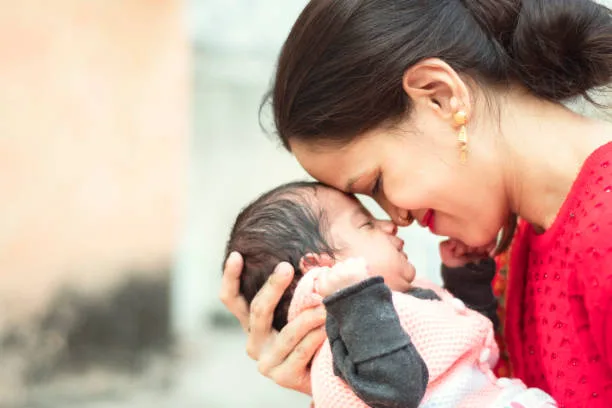
Indian woman holding infant baby in hand (Representative image, source: istock)

Indian woman holding infant baby in hand (Representative image, source: istock)

FacebookTwitterWhatsAppTelegramEmail

The Supreme Court of India has set aside a Madras High Court Division Bench order that denied maternity leave to a government teacher for the birth of her third child, citing a state policy restricting maternity benefits to two children. The decision, delivered by a bench comprising Justice Abhay Oka and Justice Ujjal Bhuyan, establishes maternity leave as an integral component of reproductive rights, which are now recognised as part of international human rights law, including the rights to health, privacy, equality, non-discrimination, and dignity.

The Court’s judgment, authored by Justice Bhuyan, declared, “We have delved into the concept of reproductive rights and have held that maternity benefits are a part of reproductive rights, and maternity leave is integral to maternity benefits.

Therefore, the impugned order has been set aside.” The ruling overturns the Division Bench’s stance that maternity leave is merely a statutory right or a benefit tied to service conditions, not a fundamental right.

Case Background

The case originated when a government teacher, whose identity remains undisclosed, approached the Madras High Court after the Tamil Nadu State government rejected her request for maternity leave following the birth of her third child. The petitioner, who joined government service after her divorce from her first marriage, had two children from that wedlock, both of whom are in the custody of their father. After remarrying in 2018, she gave birth to her third child, the first born during her tenure as a government servant, and sought maternity leave to care for the child, who is in her custody.

The petitioner’s initial plea was upheld by a single judge of the Madras High Court, Justice V. Parthiban, who ruled in her favour in 2021. Justice Parthiban relied on Section 5 of the Maternity Benefit Act, 1961, which he interpreted as not imposing a limit on the number of deliveries for which maternity benefits can be claimed. The Act distinguishes between women with fewer than two surviving children, who are entitled to 26 weeks of maternity leave, and those with two or more, who are eligible for 12 weeks.

The judge clarified that “surviving children” refers to children in the custody of the woman seeking benefits. Since the petitioner’s two children from her first marriage were not in her custody, and she had not availed maternity leave for their births (as they were born before her entry into service), Justice Parthiban ruled she was entitled to leave for her third child.

Additionally, the single judge noted that even if Tamil Nadu’s service rules imposed a two-child norm for maternity benefits, such rules would be void under Article 254 of the Constitution, as they conflict with the Maternity Benefit Act, which has overriding effect under Section 27. He directed the State to grant the petitioner one year of maternity leave, from October 11, 2021, to October 10, 2022.

State’s Appeal and Division Bench Ruling

The Tamil Nadu government challenged the single judge’s order before a Division Bench of the Madras High Court, which overturned the decision. The Division Bench held that the petitioner was not entitled to maternity leave for her third child due to the State’s two-child norm policy, aimed at controlling population growth.

The bench further ruled that maternity leave is a statutory right or a benefit derived from service conditions, not a fundamental right. Citing a precedent from the Uttarakhand High Court in State of Uttarakhand v. Smt. Urmila Manish and Ors., the Division Bench argued that the Maternity Benefit Act does not apply to government servants governed by separate service rules. Consequently, the petitioner’s claim was dismissed, and the single judge’s order was quashed.

Supreme Court’s Reasoning

The Supreme Court, in its ruling, rejected the Division Bench’s interpretation, emphasising the broader framework of reproductive rights under international human rights law. The Court noted that maternity benefits, including leave, are essential to ensuring a woman’s right to health, privacy, equality, non-discrimination, and dignity.

Justice Bhuyan’s judgment underscored that the petitioner’s two children from her first marriage, born before her entry into government service and not in her custody, should not bar her from claiming maternity benefits for her third child, the first born during her service and in her custody.

The Court also addressed the State’s two-child norm policy, acknowledging its objective of controlling population growth as “laudable.” However, it held that this policy should not undermine the equally important goal of providing maternity benefits to women employees.

“The object of having a two-child norm as part of measures to control population growth in the country and the object of providing maternity benefit to women employees, including maternity leave in circumstances such as in the present case, are not mutually exclusive,” the judgment stated. The Court urged a “purposive and rational” harmonization of these objectives to achieve social goals.

Implications of the Ruling

This decision marks a significant step in recognising maternity benefits as an extension of fundamental reproductive rights, challenging restrictive State policies that limit such benefits based on the number of children. By affirming that the Maternity Benefit Act overrides conflicting State service rules, the Supreme Court has reinforced the Act’s primacy in ensuring equitable treatment for women employees. The ruling also clarifies that the term “surviving children” in the Act pertains to children in the custody of the woman claiming benefits, providing a nuanced interpretation that considers familial circumstances.

The Tamil Nadu government has been directed to comply with the Supreme Court’s order and grant the petitioner maternity leave as per the provisions of the Maternity Benefit Act.


Topics: Maternity benefitsSupreme CourtTamil NaduMadras High Court
ShareTweetSendShareSend
✮ Subscribe Organiser YouTube Channel. ✮
✮ Join Organiser's WhatsApp channel for Nationalist views beyond the news. ✮
Previous News

Kerala: Shashi Tharoor slams govt’s Rs 10 crore aid to Turkey calling it a, “Misplaced Generosity”

Next News

Delhi Police crack down on illegal immigration: 121 suspected Bangladeshi nationals detained in week-long operation

Related News

Ex-DMK Minister Senthil Balaji (Right Side-File Photo)

Tamil Nadu: CBI books Rs 397 cr transformer tender scam from ex-DMK Minister Senthil Balaji’s tenure (2021-2023)

‘Every grave or dargah is not automatically Waqf property’: Madras High Court’s landmark verdict

Thiruparankundram Karthigai Deepam issue: TVK follows DMK line of no lightening at temple, BJP alleges betrayal

Tamil Nadu: CM Joseph clears move to prosecute former minister and DMK leader Senthil Balaji in cash-for-jobs case

Tamil Nadu: TVK government registers FIR against former DMK minister KN Nehru in cash-for-jobs case

K Annamalai Resigns from BJP, Party accepts his resignation

Ex- Tamil Nadu party chief K Annamalai quits from BJP, Nitin Nabin accepts resignation

Load More

Latest News

India Deploys 12 Nuclear Warheads: Heralds doctrinal shift to script strategic deterrence against multi-front threat

J&K: Zojila tunnel clears key hurdle; Signals new era of connectivity for Ladakh

How Cockroach politics is hollowing out Bharatiya democratic culture

RSS centenary year is a time for renewed resolve and greater commitment to nation-building: Dr Mohan Bhagwat

Ex-DMK Minister Senthil Balaji (Right Side-File Photo)

Tamil Nadu: CBI books Rs 397 cr transformer tender scam from ex-DMK Minister Senthil Balaji’s tenure (2021-2023)

Border Security Force (BSF) officials inspect the Single Row Fencing (SRF) at a Border Out Post area (India-Bangladesh border)

Infiltration and Border Management: Saving the Siliguri corridor

External Affairs Ministry spokesperson Randhir Jaiswal, slams Pakistan over the recent killings in POJK

‘Hope Pakistan is held accountable’: India reacts after 20 killed in Pakistan Occupied Jammu & Kashmir

China’s anti-BLA offensive hits snag as UN members demand proof

UN Setback for China and Pakistan: US and allies stall move to ban Baloch Liberation Army

West Asia Conflict: Collective response to energy crisis

Atul Limaye Ji Sah Sarkaryavah, Rashtriya Swayamsevak Sangh while addressing a Pramukh Jan Gosthi Rashtriya at Raipur, Chhattisgarh

Chhattisgarh: Society must lead its own transformation through collective initiative: Atul Limaye

Load More
  • Privacy
  • Terms
  • Cookie Policy
  • Refund and Cancellation
  • Delivery and Shipping

© Bharat Prakashan (Delhi) Limited.
Tech-enabled by Ananthapuri Technologies

  • Home
  • Search Organiser
  • Bharat
    • Assam
    • Bihar
    • Chhattisgarh
    • Jharkhand
    • Maharashtra
    • View All States
  • World
    • Asia
    • Africa
    • North America
    • South America
    • Europe
    • Australia
  • Editorial
  • Operation Sindoor
  • Opinion
  • Analysis
  • Defence
  • Culture
  • Sports
  • Business
  • RSS @ 100
  • Entertainment
  • More ..
    • Sci & Tech
    • Vocal4Local
    • Special Report
    • Education
    • Employment
    • Books
    • Interviews
    • Travel
    • Health
    • Politics
    • Law
    • Economy
    • Obituary
  • Subscribe Magazine
  • Read Ecopy
  • Advertise
  • Circulation
  • Careers
  • About Us
  • Contact Us
  • Policies & Terms
    • Privacy Policy
    • Cookie Policy
    • Refund and Cancellation
    • Terms of Use

© Bharat Prakashan (Delhi) Limited.
Tech-enabled by Ananthapuri Technologies