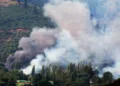
When the sacred soil of Bharat is soaked with the blood of her martyrs—be it Pulwama, Pahalgam, or the Mumbai 26/11 attacks—the so-called left- liberal intelligentsia maintains a deafening silence. No slogans of peace echo then. Their pens do not flare with indignation; their tongues do not utter a single word in the name of humanity. And yet, the moment the Indian Army retaliates, when it strikes back with precision and purpose, this very group suddenly transforms into self-proclaimed ambassadors of ‘world peace’.
Suddenly, social media is flooded with anti-war rhetoric. Seminar panels buzz with discussions on ‘human rights’ and ‘non-violence. The same voices that stayed silent in the face of terrorism now speak of restraint and diplomacy. One is left to wonder—whose humanity are they advocating for? Is this selective peace narrative reserved only for those who bleed Bharat, not for those who bleed for Bharat?
This double standard is more than just intellectual dishonesty; it is a dangerous hypocrisy. The same people who questioned “Where were the security forces?” after the Pahalgam terrorist attack are now leading protests against the Indian Army’s counter-offensives. When they attacked our countrymen, soldiers, these activists did not shed a single tear. But when the army retaliates, suddenly ‘human rights and ‘peace’ become their rallying cry.
The recent terror attack in Pahalgam, where several innocent Indians lost their lives, revealed clear evidence of links with Hamas, the Palestinian terrorist organization known globally for its fundamentalist ideology and violent methods. And yet, some among us continue to weep for Palestine, romanticizing their struggle, while being completely unmoved by the loss of Indian lives. Their hearts bleed selectively.
This trend is not new. Over the years, India has seen a section of the so-called progressive class sympathize with global and domestic terror outfits. These are the same people who once raised slogans like ‘Kashmir ki Azadi’ or ‘Manipur ki Azadi’, but never utter a word about the oppression in Balochistan. They remain silent on the persecution of Hindus in Bangladesh. Their protests are conveniently limited to issues that suit their ideological agenda.
This cherry-picked empathy isn’t humanitarianism; it’s political posturing. To preach peace only after Bharat retaliates, but remain mute when Bharat is attacked, is not just cowardice—it is betrayal. This is not a call for universal peace; this is a one-sided narrative aimed at weakening Bharat, by staying inside Bharat. Such incidents are reminiscent of Brigadier Rudra Pratap Singh’s dialogue from the movie ‘Shaurya’, “Dushman sirf border ke uss paar nahi hota … ghar ke andar bhi hota hai.”
Bharat has always stood for peace. In our long history, we have never been the aggressor. But peace is not synonymous with surrender. When attacked, India has always responded with resilience and justice. As Rabindranath Tagore once wrote: “Where forgiveness is a sign of weakness, O Rudra, let me be ruthless at your command.” (Translate from original Bengali writing)
True peace can only be sustained on the firm foundation of strength. Forgiveness that stems from fear does not inspire respect—it merely emboldens the enemy. In the face of relentless terror, Bharat must respond in the language that such forces understand. The Indian Army’s swift, resolute actions are not merely commendable—they demand united national support. This is not a show of aggression, but a necessary assertion of sovereignty and self-defence.
India’s independence wasn’t won by appeasement but through struggle. Our revolutionaries didn’t beg for peace—they took up arms in defence of justice. From Bhagat Singh to Subhas Chandra Bose, they knew that only through strength can peace and dignity be secured. That legacy lives on in our armed forces today.
We are children of a civilization whose sages declared ‘Vasudhaiva Kutumbakam’—the world is one family. This was not a call for passive surrender but a vision of universal harmony. Yet harmony does not come at the cost of national self-respect. When attacked, it becomes a sacred duty to defend the motherland.
In this context, the recent statement by Swami Suviranandaji, General Secretary of the Ramakrishna Math and Mission, holds special relevance. He stated:
“If anyone dares to harm India even slightly, India will not remain silent. She will strike back. There is no sin in this from either a spiritual or scriptural standpoint.”
His words are a reminder that protecting dharma and the nation are not contrary to spiritual ideals. Rather, they are in perfect harmony with them.
Today, some people present peace as a one-sided affair, almost akin to moral surrender. They cherry-pick scriptures, half-truths, and diluted ideals to spread the notion that war is always immoral. But our scriptures proclaim: “Dharmo rakshati rakshitah”—those who protect dharma are protected by dharma. Even our deities, known for their grace and compassion, are always depicted with weapons in hand. These are not symbols of violence, but of strength—the strength needed to uphold righteousness. Peace is not mere absence of war; it is the presence of justice, secured by power.
In the Mahabharata, war became inevitable to uphold justice. Even after Lord Krishna’s efforts for peace failed, the Pandavas had to go to war. Arjuna, hesitant and grief-stricken, was reminded by Krishna:
“Hato va prapsyasi swargam
jitva va bhokshyase mahim
tasmad uttishtha kaunteya
yuddhaya krita-nishchayah”
(Bhagavad Gita, Chapter 2, Verse 37)
That means, if you fight, you will either be slain on the battlefield and go to the celestial abodes, or you will gain victory and enjoy the kingdom on earth. Therefore, arise with determination, O son of Kunti, and be prepared to fight.
This verse is profoundly relevant today. When righteousness is threatened, inaction is not an option. Standing up for the nation is not aggression; it is dharma. History also teaches us that peace has never been achieved through mere appeals or pacifist declarations. Nations that have secured lasting peace and stability did so through strength, resolute purpose, and an unwavering commitment to defend their sovereignty. Appeasement has consistently emboldened aggressors. A stark example is Tibet—its reliance on spiritual diplomacy and faith in dialogue with China in 1950 failed to safeguard its autonomy. China invaded and annexed Tibet, and to this day, the Tibetan people continue their struggle to preserve their identity under foreign occupation.
Drawing from Bhartiya’s rich civilizational legacy, Kautilya’s strategic doctrine, as outlined in the ‘Arthashastra’, offers timeless insight into statecraft and national defence. His four-fold approach—Sama (conciliation), Dana (offering gifts), Danda (punitive action) and Bheda (creating dissension), —was not merely a tactical playbook, but a comprehensive framework aimed at safeguarding national interests while striving for lasting peace. These strategies emphasize that a wise state must first seek resolution through dialogue and diplomacy, but must also be prepared to act decisively when these efforts fail.
Bharat is currently following this path. We did not initiate conflict; we are defending ourselves. To obstruct this self-defence in the name of peace is to stand on the side of injustice.
As the Rigveda says:
“Sangachhadhwam samvadadhwam sam vo manansi janatam.”
— “Let us walk together, speak together, and let our minds be united.”
This must be our national mantra today. Our country faces threats not only from beyond the borders but from within as well—ideological confusion, selective morality, and political opportunism. What we need now is unity, strength, and unwavering patriotism.