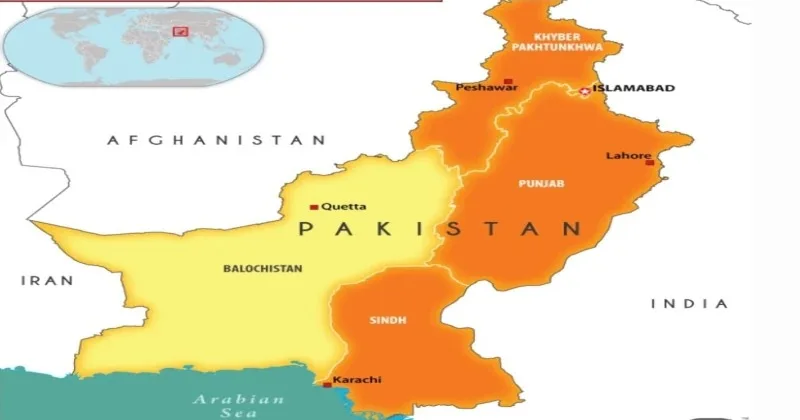
If Pakistan were to disintegrate into separate autonomous nation-states, Balochistan, Sindhudesh, and possibly a Khyber Pakhtunkhwa-Afghanistan merger, with Punjab under Khalistani governance, and Pakistan-occupied J&K (PoJK) returning to India; the geopolitical wave would be significant. While some observers may see opportunities for regional peace and prosperity, the risks of chaos, new extremisms, and international intervention could overshadow any initial optimism.
The potential consequences of such a historic realignment through key lenses will be observed regional stability, trade and commerce, economic resilience, counter-terrorism, peace, prosperity, and equally, the risks and threats of such fragmentation.
Any prospective breakup of Pakistan poses a perplexing regional stability question: Is the region about to undergo a new order, or is anarchy on the rise? Should the dissolution of Pakistan take place, the said act would definitely have meaningful effects on cross-border terrorist activities, which could clog up a smooth relationship between India and Afghanistan. New geographical units, such as Balochistan and Sindhudesh, could go to the root of legitimate grievances at the regional level against Punjabi hegemony by providing local autonomy as an internal settlement of the issue. India, on the other hand, will gain some extra leverage regarding consolidated Kashmir whilst resolving a long-pending dispute.
In contrast, the fragmentation of Pakistan could result in violent power vacuums, civil wars, and ethnic and sectarian strife fueled by an intense fight for power among militia and warlords, as they vie for influence and control. Instability in Punjab could jeopardise India’s border and security concerns. Khyber Pakhtunkhwa could spiral into an even worse situation, further under Taliban control. Even countries such as China and Iran, with vested interests in a highly unstable Balochistan, could intervene or provide separate foreign power negotiations that could create influence zones, such as Libya after Gaddafi or Iraq after Saddam.
The prospect of a free Balochistan and Sindhudesh would mean peace in the region, and its abundant resources would lead to a substantial focus from foreign investors, which were curtailed by the Pakistani military presence. With Gwadar Port freed from military control and militarisation, the Makran coast would become a trade hub in national and international markets, promoting international trade and maritime trade at the regional level. This would provide India with direct access to Central Asia through Afghanistan and positively impact existing projects such as the Chabahar Port project, along with transit to Iran. However, it can be postulated that this level of transition could create significant economic upheaval, which could otherwise obliterate the economic livelihoods of citizens and any connections essential for commerce to continue. Combined with such changes, this could result in substantial concern from international investors. All this could happen should the collapse of existing currencies or malfeasance in banking and abandonment of trade protocols due to the remapping of borders take place.
China, unwilling to forfeit its $60 billion CPEC investment, may retaliate, risking regional conflict and further complicating the economic landscape.
The possible end of Pakistan’s economic centralisation could bring a new era for regions like Sindh and Balochistan, with their ability to manage their resources in a way that works for them. These new states could gain international recognition and resources and strike trade deals with India, the West, and regional competitors, developing economic models that address their needs in a way that is responsive, particularly with a resource-rich region like Balochistan.
But the consequences could be dire. If the Pakistani rupee collapses, or the IMF defaults, and the fiscal structures begin to fail, the fallout could lead to some form of hyperinflation or economic dissolution in the region, resulting in mass unemployment, the loss of state subsidies, and social unrest that may lead to migrations that could disrupt regional neighbours.
India may have to compensate for the economic and humanitarian fallout, including refugees, putting pressure on India’s fiscal health as well.
The break-up of Pakistan could offer a major foothold in the war on terror by taking apart some infrastructure, which is ISI-led, that supports groups such as Jaish-e-Mohammed and Lashker-e-Taiba. If these sanctuaries and funds are dismantled, their operations will be able to function less, and the militant landings will be cast-off with the joining of India with Pakistan-occupied J&K (PoJK). Further, without Pakistani patronage, these terror groups would find themselves pressured even more by sovereign governments unwilling to harbour these groups.
However, ungoverned spaces in a collapsed state can be great dangers, setting the re-emergence of terrorism following the trail of Syria and Iraq into motion. Setbacks could create new swallow-holds for jihadist groups in Taliban terri-prize, while ISIS, a transnational terror outfit, sees these pockets of instability as an opportunity.
A collapsed nuclear Pakistan poses catastrophic dangers from the standpoint of loose nukes and WMD proliferation to create an impelling global emergency intervention.
The prospect of peace in the region rests on reconfigured diplomatic relations after Pakistan may have fragmented with the military’s diminished aspiration to do so. India, now free from the military shadow and with a free hand, can sustain strong trade, cultural, and people-to-people contacts with its new neighbours. This paradigm shift could, thus, settle the Kashmir issue, on which Indian Kashmir could then concentrate on development. Likewise, in Afghanistan, the absence of Pakistani-sponsored influence might bring stability to governance and reduce the sway of the ISI-backed Taliban.
At any rate, peace is no easy road. Should the breakup be marred by violent internecine struggles or foreign machinations for their ends, such a move will throw the region into utter chaos, deepening age-old rivalries and continuing further forays of violence.
Peace calls for a strong governance framework that none of the prospective states possesses to immediately oversee and handle the transition.
The possible breakup of Pakistan may lead to a new South Asian compact to bring about common prosperity and lessen historic enmities. By so doing, India could act as an anchor for peace and commerce, linking Southeast Asia, Central Asia, and the Middle East through regional partnerships. Independent regions such as Balochistan and Sindhudesh may grow as commercial corridors while a renewed India-Afghanistan connection enables economic integration in Central Asia.
Nevertheless, in order for this prosperity to materialise, peace, good governance, and trust among regions must be sustained, each of which is not guaranteed. Also, proxy conflicts, foreign intervention, and weak democracies could pull the region into turmoil, incurring substantial costs and damaging development. And on top of this, India will also bear, in large part, the responsibility for regional leadership, dealing with refugees, counter-terrorism, and complicated diplomatic relations. Such challenges make it harder than it needs to be for India’s development agenda.
The potential disaggregation of Pakistan offers possibilities for peace, development, and counter-terrorism in the region, if done peacefully, orderly, and with some initial international support. But history has shown examples of violent state collapses — Yugoslavia, Iraq, and Syria — and the aftermath of violent conflicts like those examples can last a very long time. For India, this scenario presents possible future opportunities presenting strategic advantages. However, it will require more than some diplomatic maturity, a healthy dose of military prudence, and regional leadership. The international community must be prepared to be proactive, not just in terms of chaos management but also in facilitating lasting peace and prosperity in post-Pakistan South Asia, in service of a club of countries with a secured future in the region.