Columbia University revises seminar description equating Hindu nationalism with Pakistan's terrorism after protest
June 7, 2026
  • Read Ecopy
  • Circulation
  • Advertise
  • Careers
  • About Us
  • Contact Us
Android AppiPhone AppArattai
Organiser
  • ‌
  • Bharat
    • Assam
    • Bihar
    • Chhattisgarh
    • Jharkhand
    • Maharashtra
    • View All States
  • World
    • Asia
    • Europe
    • North America
    • South America
    • Africa
    • Australia
  • Editorial
  • International
  • Opinion
  • RSS @ 100
  • More
    • Op Sindoor
    • Analysis
    • Sports
    • Defence
    • Politics
    • Business
    • Economy
    • Culture
    • Special Report
    • Sci & Tech
    • Entertainment
    • G20
    • Azadi Ka Amrit Mahotsav
    • Vocal4Local
    • Web Stories
    • Education
    • Employment
    • Books
    • Interviews
    • Travel
    • Law
    • Health
    • Obituary
  • Subscribe
    • Subscribe Print Edition
    • Subscribe Ecopy
    • Read Ecopy
  • ‌
  • Bharat
    • Assam
    • Bihar
    • Chhattisgarh
    • Jharkhand
    • Maharashtra
    • View All States
  • World
    • Asia
    • Europe
    • North America
    • South America
    • Africa
    • Australia
  • Editorial
  • International
  • Opinion
  • RSS @ 100
  • More
    • Op Sindoor
    • Analysis
    • Sports
    • Defence
    • Politics
    • Business
    • Economy
    • Culture
    • Special Report
    • Sci & Tech
    • Entertainment
    • G20
    • Azadi Ka Amrit Mahotsav
    • Vocal4Local
    • Web Stories
    • Education
    • Employment
    • Books
    • Interviews
    • Travel
    • Law
    • Health
    • Obituary
  • Subscribe
    • Subscribe Print Edition
    • Subscribe Ecopy
    • Read Ecopy
Organiser
  • Home
  • Bharat
  • World
  • Operation Sindoor
  • Editorial
  • Analysis
  • Opinion
  • Culture
  • Defence
  • International Edition
  • RSS @ 100
  • Magazine
  • Read Ecopy
Home Bharat

Columbia University revises seminar description equating Hindu nationalism with Pakistan’s terrorism after protest

Columbia University’s seminar, “Rapid Response: The India-Pakistan Conflict,” drew ire from Indian students for equating Hindu nationalism with Pakistan’s terrorism while omitting a deadly Pahalgam attack. The swift backlash, led by a petition with over 100 signatures, prompted an apology and a reframing of the event to focus on geopolitical dynamics

WEBDESKWEBDESK
May 13, 2025, 10:00 am IST
in Bharat, South America, World
Follow on Google News
Columbia University revises seminar description after Indian students protest equating Hindu nationalism with Pakistan’s terrorism

Columbia University revises seminar description after Indian students protest equating Hindu nationalism with Pakistan’s terrorism

FacebookTwitterWhatsAppTelegramEmail

A Columbia University seminar titled “Rapid Response: The India-Pakistan Conflict,” organised by the Institute of Global Politics (IGP) at the School of International and Public Affairs (SIPA), ignited significant controversy within the Indian community on campus due to its initial framing.

The event, held on the evening of May 12 (India time), drew sharp criticism for equating “Hindu nationalism in India” with “Islamism in Pakistan’s military-intelligence community” as root causes of the conflict, while omitting a recent terrorist attack in Jammu and Kashmir. Following a swift and forceful response from Indian students, alumni, and faculty, the IGP revised the seminar’s description.

Controversy Over Seminar Framing

The seminar, intended to address escalating tensions between India and Pakistan, initially described “Hindu nationalism” and “Islamism in Pakistan’s military-intelligence community” as parallel drivers of the conflict. This framing provoked outrage for drawing a false equivalence between India’s democratic governance and Pakistan’s documented support for terrorism.

Notably, the original description failed to mention the April 22, 2025, terrorist attack in the Baisaran Valley of Pahalgam, Jammu and Kashmir, where The Resistance Front (TRF), a front for the Pakistan-based Lashkar-e-Taiba (LeT), killed 26 civilians, primarily targeting victims based on their religious identity in a religiously motivated massacre.

Aaditya Tiwari, a Columbia SIPA alumnus, brought attention to the omission on X, stating, “Columbia’s event description failed to mention the religiously motivated massacre, instead choosing to cite ‘Hindu nationalism’ as a root cause of the conflict—drawing false equivalence between a democracy and a terror-sponsoring state.” Tiwari’s post sparked a broader conversation within the Indian community at Columbia, amplifying concerns about biased academic narratives in Western institutions.

At @Columbia , @ColumbiaIGP is organizing a seminar on ‘The India-Pakistan conflict’ which sparked controversy after its organizers equated “Hindu nationalism in India” with “Islamism in Pakistan’s military-intelligence”. This drew widespread criticism from Indian community. pic.twitter.com/Sfg2BcnJzL

— Aaditya भारत (བྷཱ་རཏ) Tiwari (@aaditya_bharat1) May 12, 2025 

Petition and Community Response

In response to the controversy, Tiwari and fellow SIPA alumnus Tarang Singhal spearheaded a petition titled “Statement by Indian Students, Alumni, and Faculty of Columbia University on the Framing of the Upcoming IGP Rapid Response Seminar.”

The petition, supported by over 100 Indian students, alumni, and faculty, condemned the seminar’s framing as “analytically flawed and morally irresponsible.” It argued that equating Hindu nationalism with Pakistan’s state-backed terrorism conflated India’s democratic dynamics with a nation known for supporting groups like LeT, responsible for attacks such as the 2008 Mumbai massacre and the recent Pahalgam attack.

The petition emphasised the gravity of the Pahalgam attack, stating, “This was not an ambiguous episode of ‘conflict’—this was a massacre of innocent civilians based on their faith.”

It accused Columbia of “obfuscating the truth” and contributing to a “growing and dangerous pattern” in Western academia that portrays Hindus and Hindu identity through a lens of suspicion. The petitioners demanded a revision of the seminar’s description to reflect the role of Pakistan-backed terrorism in the conflict accurately and to avoid misleading equivalences.

Within 48 hours, the petition gained significant traction, circulating widely on social media and among Columbia’s academic community. The pressure prompted the IGP to revise the seminar’s description on May 10, removing the controversial comparison and reframing the discussion to focus on the broader geopolitical implications of the India-Pakistan conflict.

@ColumbiaIGP responded:
“It was never our intention to suggest equivalence between Hindu nationalism and state-sponsored terrorism. We regret the inadvertent effects of the initial phrasing.” pic.twitter.com/YrW8KJxkLk

— Aaditya भारत (བྷཱ་རཏ) Tiwari (@aaditya_bharat1) May 12, 2025 

IGP’s Apology and Revised Framing

In a statement shared by Tiwari on X, the IGP acknowledged the backlash and clarified its position: “It was never our intention to suggest equivalence between Hindu nationalism and state-sponsored terrorism. We regret the inadvertent effects of the initial phrasing.”

The revised seminar description emphasised the need for a nuanced analysis of the India-Pakistan conflict, including the impact of recent events like the Pahalgam attack, without drawing parallels between India’s internal political dynamics and Pakistan’s military-intelligence support for terrorist groups. The updated framing also highlighted the role of international diplomacy in de-escalating tensions, aligning with the seminar’s goal of fostering informed discussion.

Seminar Details and High-Profile Panel

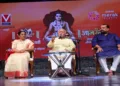
The seminar proceeded as scheduled on May 12, featuring a distinguished panel of experts and former U.S. officials. The panellists included, Shamila Chaudhary, former National Security Council Director for Pakistan and Afghanistan, Jon Finer, former Principal Deputy National Security Advisor and IGP Carnegie Distinguished Fellow, Rajan Menon, Emeritus Anne and Bernard Spitzer Chair in Political Science at the City College of New York, Mike Pompeo, 70th U.S. Secretary of State and IGP Carnegie Distinguished Fellow and Rumela Sen, Lecturer and Arnold A. Saltzman Institute of War and Peace Studies Affiliated Faculty Member.

Details of the Seminar

The discussion was moderated by Stephen Biddle, Professor of International and Public Affairs, with introductory remarks delivered by Hillary Rodham Clinton, Professor of International and Public Affairs and 67th U.S. Secretary of State.

Broader Implications and Community Reflections

The controversy surrounding the seminar has sparked a broader debate about the portrayal of India and Hindu identity in Western academic institutions. Critics argue that narratives equating Hindu nationalism with state-sponsored terrorism reflect a lack of understanding of India’s complex socio-political landscape and risk perpetuating stereotypes.

The Pahalgam attack, in particular, highlighted the ongoing threat of Pakistan-backed terrorism, a factor that many felt was inadequately addressed in the seminar’s original framing.

The incident also raises questions about the role of Western academia in shaping global perceptions of conflicts like India-Pakistan tensions. Observers note that oversimplified or biased framings can distort public understanding and undermine efforts to address root causes, such as state-sponsored terrorism. The petition’s emphasis on the Pahalgam attack underscored the need for academic discussions to prioritise factual accuracy and contextual nuance.


Topics: Columbia UniversityPakistan TerrorismPahalgam Terror AttackOperation SindoorColumbia University SeminarHindu Nationalism
ShareTweetSendShareSend
✮ Subscribe Organiser YouTube Channel. ✮
✮ Join Organiser's WhatsApp channel for Nationalist views beyond the news. ✮
Previous News

Sanatan’s way of retaliation to hit hard & devastate Islamist jihadists, green-loving terrorist state Pakistan

Next News

India-UK FTA: Benchmark amidst global trade turbulence

Related News

Saurav Das, Chief Spokesperson of CJP

Exposing CJP’s Saurav Das: Inside his controversial commentary on Article 370, Umar Khalid & nationalism

As Khalistani networks seek new platforms beyond the West, Azerbaijan has emerged as a key venue for conferences, campaigns and narratives aligned with the Pakistan-Turkey axis against India.

Khalistan’s New Grazing Ground: Azerbaijan emerges as new hub for Turkey-Pakistan backed anti-India networks

Bangladesh’s reported JF-17 push has triggered fresh scrutiny after India’s Ops Sindoor exposed the vulnerabilities of Pakistani-Chinese defence systems and precision strike capabilities

Shadows of Operation Sindoor: Questions loom over Bangladesh’s JF-17 ambitions amid Sino-Pakistani tech vulnerabilities

Rajnath Singh releases book on Operation Sindoor; The publication chronicles unparalleled valour of the Indian soldiers

Operation Safed Sagar; a turning point in the history of military aviation

Operation Safed Sagar: How Kargil war shaped India’s precision strike doctrine

QUAD stronlgy condemns the Pahalgam terror attack

Quad Foreign Ministers Meet: Members condemn Pahalgam terror attack; Raise concerns over coercion in South China Sea

Load More

Latest News

Visuals from the site of protest in Jantar Mantar

From ‘Azadi’ slogans to disrespect of national flag: Inside the Cockroach Janta Party protest at Jantar Mantar

Chairman of the Rastriya Swatantra Party of Nepal Rabi Lamichhane meets PM Modi in New Delhi

From the China Card to Development Diplomacy: Nepal opens a new chapter in its political reset with India

'Stand Up for Abhishek': Expelled TMC MLA Claims Party Was Asked to Applaud Mamata's Nephew After Crushing Election Defeat

West Bengal: Expelled TMC MLA Ritabrata claims party was asked to applaud Mamata’s nephew after crushing defeat

Forced to Remove the “Faith”: How Hindu students are targeted at exam centres

A representative image generated using AI

Gujarat: Parsi woman Married to a Muslim man cremated with Hindu rites after VHP’s intervention

She showed the "Made in Pakistan" label attached to the bedsheet

Made in Pakistan bedsheet sold at Pune religious fair? Viral video triggers investigation

India's first Prime Minister Jawahar Lal Nehru and India's current Prime Minister Narendra Modi

From ‘Ship to Mouth’ under Nehru to free rations for 80 crore under Modi: Inside India’s food security revolution

Picture from the site of protest

22 million followers, a few hundred on ground: Cockroach Janta Party faces its first reality check at Jantar Mantar

Uttar Pradesh CM Yogi Adityanath

From lawlessness to good governance: How Uttar Pradesh rewrote its law and order story under Yogi Adityanath

Govt mulls Budget press printing for NEET- UG RE-exam question papers (This is an AI generated image)

NEET-UG Re-Exam Security Overhaul: Government mulls budget press printing, IAF transportation to prevent paper leaks

Load More
  • Privacy
  • Terms
  • Cookie Policy
  • Refund and Cancellation
  • Delivery and Shipping

© Bharat Prakashan (Delhi) Limited.
Tech-enabled by Ananthapuri Technologies

  • Home
  • Search Organiser
  • Bharat
    • Assam
    • Bihar
    • Chhattisgarh
    • Jharkhand
    • Maharashtra
    • View All States
  • World
    • Asia
    • Africa
    • North America
    • South America
    • Europe
    • Australia
  • Editorial
  • Operation Sindoor
  • Opinion
  • Analysis
  • Defence
  • Culture
  • Sports
  • Business
  • RSS @ 100
  • Entertainment
  • More ..
    • Sci & Tech
    • Vocal4Local
    • Special Report
    • Education
    • Employment
    • Books
    • Interviews
    • Travel
    • Health
    • Politics
    • Law
    • Economy
    • Obituary
  • Subscribe Magazine
  • Read Ecopy
  • Advertise
  • Circulation
  • Careers
  • About Us
  • Contact Us
  • Policies & Terms
    • Privacy Policy
    • Cookie Policy
    • Refund and Cancellation
    • Terms of Use

© Bharat Prakashan (Delhi) Limited.
Tech-enabled by Ananthapuri Technologies