Operation Sindoor: India’s Bold Response Beyond Pahalgam
August 5, 2026
  • Read Ecopy
  • Circulation
  • Advertise
  • Careers
  • About Us
  • Contact Us
Android AppiPhone AppArattai
Organiser
  • ‌
  • Bharat
    • Assam
    • Bihar
    • Chhattisgarh
    • Jharkhand
    • Maharashtra
    • View All States
  • World
    • Asia
    • Europe
    • North America
    • South America
    • Africa
    • Australia
  • Editorial
  • International
  • Opinion
  • RSS @ 100
  • More
    • Op Sindoor
    • Analysis
    • Sports
    • Defence
    • Politics
    • Business
    • Economy
    • Culture
    • Special Report
    • Sci & Tech
    • Entertainment
    • G20
    • Azadi Ka Amrit Mahotsav
    • Vocal4Local
    • Web Stories
    • Education
    • Employment
    • Books
    • Interviews
    • Travel
    • Law
    • Health
    • Obituary
  • Subscribe
    • Subscribe Print Edition
    • Subscribe Ecopy
    • Read Ecopy
  • ‌
  • Bharat
    • Assam
    • Bihar
    • Chhattisgarh
    • Jharkhand
    • Maharashtra
    • View All States
  • World
    • Asia
    • Europe
    • North America
    • South America
    • Africa
    • Australia
  • Editorial
  • International
  • Opinion
  • RSS @ 100
  • More
    • Op Sindoor
    • Analysis
    • Sports
    • Defence
    • Politics
    • Business
    • Economy
    • Culture
    • Special Report
    • Sci & Tech
    • Entertainment
    • G20
    • Azadi Ka Amrit Mahotsav
    • Vocal4Local
    • Web Stories
    • Education
    • Employment
    • Books
    • Interviews
    • Travel
    • Law
    • Health
    • Obituary
  • Subscribe
    • Subscribe Print Edition
    • Subscribe Ecopy
    • Read Ecopy
Organiser
  • Home
  • Bharat
  • World
  • Operation Sindoor
  • Editorial
  • Analysis
  • Opinion
  • Culture
  • Defence
  • International Edition
  • RSS @ 100
  • Magazine
  • Read Ecopy
Home Bharat

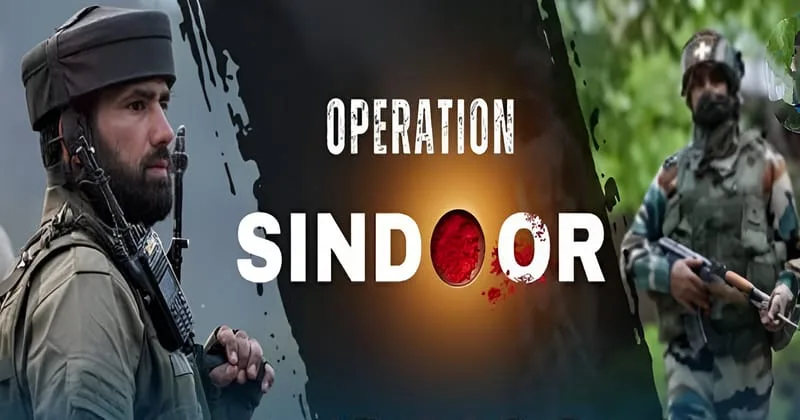
Operation Sindoor: India’s bold military response beyond the Pahalgam attack; Know the key takeaways

India’s Operation Sindoor marks a bold military response to decades of Pakistan-backed terrorism, extending beyond the recent Pahalgam attack. The strikes delivered a clear message—India will act decisively while maintaining strategic restraint

WEBDESKWEBDESK
May 9, 2025, 02:40 pm IST
in Bharat
Follow on Google News
Representative image

Representative image

FacebookTwitterWhatsAppTelegramEmail

The Indian Armed Forces launched Operation Sindoor in the early hours of May 7, aiming to deliver justice for the victims of the Pahalgam terror attack and their families.

According to a government briefing, nine terrorist camps located in Pakistan-occupied Kashmir (PoK) and within Pakistan were precisely targeted and successfully destroyed.

What message did this military action send? Here are three key takeaways from Operation Sindoor:

India’s response on May 7, through Operation Sindoor, went far beyond avenging last month’s Pahalgam terror attack. Instead of limiting the action to a single incident, the operation is a long-overdue answer to decades of Pakistan-sponsored terrorism.

Groups such as Jaish-e-Mohammed (JeM) and Lashkar-e-Taiba (LeT) both have repeatedly orchestrated attacks on Indian soil. India highlighted Pakistan’s persistent failure to act against these organisations, citing the example of Sajid Mir, the LeT operative behind the 26/11 Mumbai attacks, whom Pakistan initially declared dead, only to later arrest in 2022 under pressure from the Financial Action Task Force (FATF).

By simultaneously striking multiple targets, India exposed Pakistan’s attempts to isolate the Pahalgam incident and deny links to newer proxy groups like The Resistance Front (TRF). These proxies were created by LeT and JeM to distance themselves from direct claims and evade global scrutiny by portraying attacks as part of an independent Kashmiri resistance.

Operation Sindoor, therefore, was a broad-spectrum offensive targeting both permanent and temporary infrastructure of terrorist networks, including JeM, LeT, and Hizbul Mujahideen across Pakistan. Key sites hit included JeM’s Markaz Subhan Allah in Bahawalpur, LeT’s Markaz Taiba in Muridke, and HM’s Mehmoona Joya facility in Sialkot.

Secondly, India has, for the moment, limited its military action to terrorist infrastructure across the Line of Control (LoC) and the International Border (IB), while deliberately avoiding direct strikes on Pakistani military targets.

This approach reflects a continued strategic doctrine seen during the 2016 surgical strikes and the 2019 Balakot airstrikes: India reserves the right to use military force against sub-conventional threats (i.e., terrorist infrastructure), while avoiding escalation by not targeting conventional military assets. The clear message is that India seeks to maintain escalation control, distinguishing between terrorists and the Pakistani state’s military institutions — at least in terms of direct targeting. That said, the scope and depth of India’s response have significantly evolved.

Also Read: ‘Pakistan will never forget’: Virendra Sehwag and Neeraj Chopra hail Indian Armed Forces for the precision strikes

In 2016, surgical strikes were confined to terror launch pads across the LoC in Pakistan-occupied Kashmir.
In 2019, India struck a major JeM camp in Balakot, located deep inside undisputed Pakistani territory across the LoC.

And now, with Operation Sindoor, India has gone even further, striking multiple terror targets deep within Pakistan, both across the LoC and the IB, expanding the geographical scope of its operations.
This evolution was mirrored in official statements. In 2019, India’s Foreign Secretary described the Balakot strike as a “non-military preemptive action” against a JeM facility. Six years later, on May 7, the Ministry of Defence emphasised the same principle, stating clearly in its press release that “no Pakistani military facilities have been targeted.”

Third, while launching strikes on Pakistan, India has made it clear that it is not pursuing a full-scale war — but what comes next remains uncertain. By describing Operation Sindoor as “focused, measured, and non-escalatory,” India has sent a deliberate message to both Pakistan and the international community: its intent is to dismantle terrorist infrastructure, not to ignite a broader conventional conflict. However, the operation has significantly weakened Pakistan’s deterrence posture and undermined the credibility of its repeated threats issued between April 23 and May 6.

Should Pakistan choose to retaliate, any response now carries the risk of serious escalation. A misstep could prompt India to go beyond targeting terror camps, potentially striking Pakistan Army assets if provoked beyond its tolerance threshold.

 

Topics: Indian Armycross border terrorismPahalgam AttackOperation SindoorIndia Strikes BackPakistan Terror Camps
ShareTweetSendShareSend
✮ Subscribe Organiser YouTube Channel. ✮
✮ Join Organiser's WhatsApp channel for Nationalist views beyond the news. ✮
Previous News

Jihadi Army: Pakistan ups terror infiltration after failed drone, missile strikes; BSF kills 7 in Samba

Next News

Amidst ongoing tension between India & Pakistan, AIMPLB calls for dialogue, to continue with ‘Anti-Waqf Campaign’

Related News

Protestors at Jantar Mantar in Delhi

Delhi Police probes digital campaign around Jantar Mantar protests; 400 Pak-linked social media handles under scanner

A calf injured in Pakistan shelling during Operation Sindoor walks again after receiving the innovative 'Krishna Limb'

From Operation Sindoor Trauma to Hope: Gauri the calf overcomes Pakistan shelling injuries with ‘Krishna Limb’

Operation Sindoor boosts global confidence in India's indigenous Akash missile family as export momentum gathers pace

India’s combat-proven Akash air defence system attracts fresh export interest from three countries

Drass, Jul 25 (ANI): A view of rows of memorial headstones adorned with National flags as preparations underway ahead of the 27th Kargil Vijay Diwas on July 26, in Drass on Saturday. (ANI Video Grab)

July 26: Kargil Vijay Diwas — A Saga of the valour and strategic brilliance of Indian soldiers

Permanent Representative of India to the United Nations Parvathaneni Harish speaks at United Nations Security Council session

India rejects Pakistan at UN: Links Indus Waters Treaty to cross-border terrorism, reaffirms J&K stand

Delhi Police claimed 480 Pakistan-linked accounts spread fake content during the NEET-UG protests

Operation Sindoor Network Now Targeting NEET-UG Protests? Delhi police blocks 480 Pakistan-linked accounts

Load More

Latest News

Representative Image

Pakistan’s UNSC push on Indus Waters Treaty faces legal dead end as India stands firm on bilateral framework

(Left) PPP Chairman Bilawal Bhutto Zardari (Right) Pakistan PM Shehbaz Sharif (This is an AI generated image)

PoJK Polls: PPP Chairman Bilawal Bhutto Zardari says,”PM Shehbaz’s days are numbered, alleges widespread rigging”

Representative Image

India creates healthcare history: Crosses 20,000 organ transplants in a year, emerges global leader donor transplants

Beyond the Noise: Why Bharat’s Gen Z must not be defined by street anarchy

Koukoor Dargah in Medchal district, Telangana

Telangana: Police arrest Nazar in Medak after wife alleges he posed as an orphan, used fake Hindu name to marry her

Seva Bharati karyakartas engaged in relief and rescue operations across flood-hit districts in Kerala.

Keralam Floods: Seva Bharati steps up relief and rescue operations across flood-hit districts

WA Groups under radar over Delhi Police as they probe CJP Protest

‘Chalo Sansad’ Probe Expands: Leaked WhatsApp chats reveal pre-planning to use Briar, BitChat if net was disrupted

Pakistan PM Shahbaz Sharif (Right)

Pakistan reportedly blocks Al Jazeera after PoJK election coverage, accuses network of “yellow journalism”

Bird-eye view of the Excavated remains at Sarnath (Source-Archaeological Survey of India)

Sarnath included in UNESCO World Heritage Site: Timeless message, lately recognition

US-based report exposes the reality of PoJK, raises serious questions over democracy, human rights and autonomy

Load More
  • Privacy
  • Terms
  • Cookie Policy
  • Refund and Cancellation
  • Delivery and Shipping

© Bharat Prakashan (Delhi) Limited.
Tech-enabled by Ananthapuri Technologies

  • Home
  • Search Organiser
  • Bharat
    • Assam
    • Bihar
    • Chhattisgarh
    • Jharkhand
    • Maharashtra
    • View All States
  • World
    • Asia
    • Africa
    • North America
    • South America
    • Europe
    • Australia
  • Editorial
  • Operation Sindoor
  • Opinion
  • Analysis
  • Defence
  • Culture
  • Sports
  • Business
  • RSS @ 100
  • Entertainment
  • More ..
    • Sci & Tech
    • Vocal4Local
    • Special Report
    • Education
    • Employment
    • Books
    • Interviews
    • Travel
    • Health
    • Politics
    • Law
    • Economy
    • Obituary
  • Subscribe Magazine
  • Read Ecopy
  • Advertise
  • Circulation
  • Careers
  • About Us
  • Contact Us
  • Policies & Terms
    • Privacy Policy
    • Cookie Policy
    • Refund and Cancellation
    • Terms of Use

© Bharat Prakashan (Delhi) Limited.
Tech-enabled by Ananthapuri Technologies