India shoots down Pak missile using S-400: All about one of the deadliest surface-to-air missiles in the world
June 6, 2026
  • Read Ecopy
  • Circulation
  • Advertise
  • Careers
  • About Us
  • Contact Us
Android AppiPhone AppArattai
Organiser
  • ‌
  • Bharat
    • Assam
    • Bihar
    • Chhattisgarh
    • Jharkhand
    • Maharashtra
    • View All States
  • World
    • Asia
    • Europe
    • North America
    • South America
    • Africa
    • Australia
  • Editorial
  • International
  • Opinion
  • RSS @ 100
  • More
    • Op Sindoor
    • Analysis
    • Sports
    • Defence
    • Politics
    • Business
    • Economy
    • Culture
    • Special Report
    • Sci & Tech
    • Entertainment
    • G20
    • Azadi Ka Amrit Mahotsav
    • Vocal4Local
    • Web Stories
    • Education
    • Employment
    • Books
    • Interviews
    • Travel
    • Law
    • Health
    • Obituary
  • Subscribe
    • Subscribe Print Edition
    • Subscribe Ecopy
    • Read Ecopy
  • ‌
  • Bharat
    • Assam
    • Bihar
    • Chhattisgarh
    • Jharkhand
    • Maharashtra
    • View All States
  • World
    • Asia
    • Europe
    • North America
    • South America
    • Africa
    • Australia
  • Editorial
  • International
  • Opinion
  • RSS @ 100
  • More
    • Op Sindoor
    • Analysis
    • Sports
    • Defence
    • Politics
    • Business
    • Economy
    • Culture
    • Special Report
    • Sci & Tech
    • Entertainment
    • G20
    • Azadi Ka Amrit Mahotsav
    • Vocal4Local
    • Web Stories
    • Education
    • Employment
    • Books
    • Interviews
    • Travel
    • Law
    • Health
    • Obituary
  • Subscribe
    • Subscribe Print Edition
    • Subscribe Ecopy
    • Read Ecopy
Organiser
  • Home
  • Bharat
  • World
  • Operation Sindoor
  • Editorial
  • Analysis
  • Opinion
  • Culture
  • Defence
  • International Edition
  • RSS @ 100
  • Magazine
  • Read Ecopy
Home Bharat

India shoots down Pak missile using S-400: All about one of the deadliest surface-to-air missiles in the world

The escalating conflict between India and Pakistan has once again put the Indian Air Force’s S-400 missile defence system in the spotlight. Following Pakistan's aerial attacks on military sites in northern and western India, the advanced Russian-made system, known as "Sudarshan Chakra," played a critical role in neutralising the threats.

Shashank Kumar DwivediShashank Kumar Dwivedi
May 8, 2025, 11:55 pm IST
in Bharat, Defence
Follow on Google News
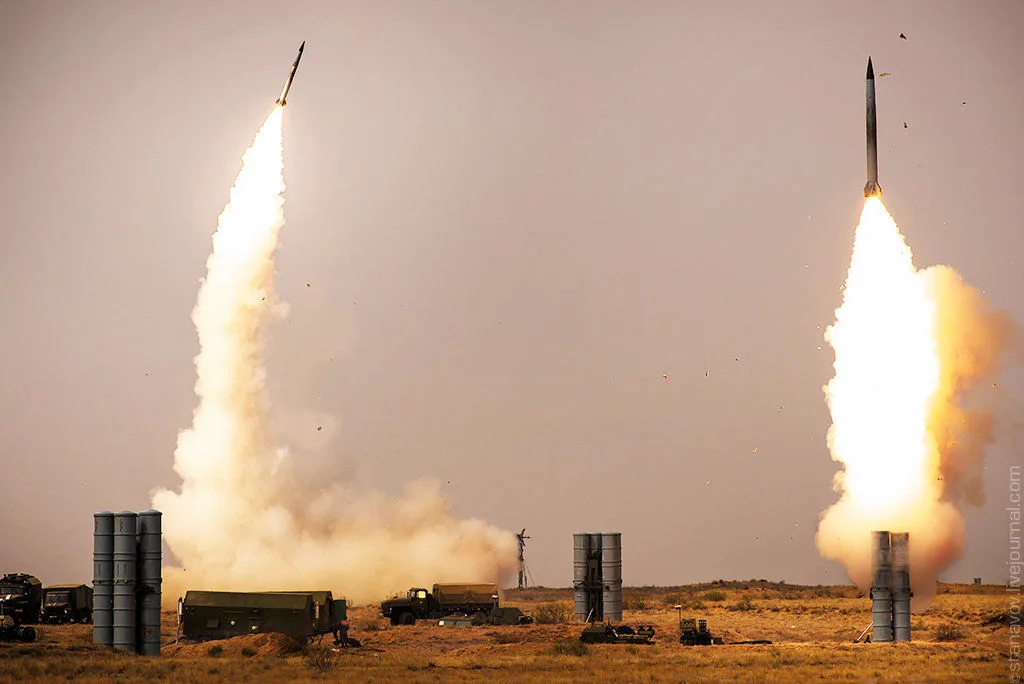
S-400 Air Defense Syatem

S-400 Air Defense Syatem

FacebookTwitterWhatsAppTelegramEmail

Following Pakistan’s aerial attacks targeting military sites in northern and western India, the advanced Russian-made system, S-400, dubbed “Sudarshan Chakra,” proved crucial in neutralising the threat. As tensions persist, India’s strategic use of the S-400 highlights its pivotal role in safeguarding national security.

The Indian Air Force’s deployment of the Russian-made S-400 missile defence system has proven crucial in countering aerial threats from Pakistan. The recent escalation in cross-border hostilities highlights the system’s strategic importance. This report delves into the features of the S-400 system, its role in thwarting Pakistan’s attempts, and its significance for India’s national security.

Pakistan’s escalation bid and India’s countermeasure

The S-400 missile defence system played a pivotal role in negating Pakistan’s escalation attempts last night. Pakistan’s offensive, marked by drones and missile attacks targeting key Indian military installations, came just a day after India’s precision strikes on four terrorist camps in Pakistan and five in Pakistan-occupied Kashmir (PoK) during Operation Sindoor.

The Pakistani attack targeted military locations in northern and western India, including Awantipora, Srinagar, Jammu, Pathankot, Amritsar, Ludhiana, and Bhuj. In response, the Indian Air Force deployed the S-400 systems, effectively neutralising the incoming threats. In a swift counterstrike, Indian forces also targeted and neutralised a Pakistani air defence radar near Lahore.

Background of S-400 deployment

India’s acquisition of the S-400 missile defence system from Russia marks a significant advancement in its aerial defence capabilities. The system, known in the Indian military as “Sudarshan Chakra,” is renowned for its long-range tracking and interception abilities.

The S-400 can track targets up to 600 km away and intercept hostile aircraft, drones, and missiles at a range of up to 400 km. It consists of three components: missile launchers, a powerful radar system, and a command center. The system’s ability to hit fast-moving intermediate-range ballistic missiles and engage multiple targets simultaneously makes it one of the most advanced surface-to-air missile (SAM) systems globally.

Key features of the S-400 system

1.      Long-Range Tracking and Interception: Capable of detecting aerial targets up to 600 km and engaging threats within a 400 km radius.

2.      Versatility: Can counter aircraft, UAVs, cruise missiles, and intermediate-range ballistic missiles.

3.      High Threat Perception: Considered a strategic deterrent by NATO, given its long-range and precision.

4.      Deployment Flexibility: Deployed across India’s western front to counter threats from Pakistan.

5.      Rapid Response Capability: Ideal for countering surprise aerial assaults, including drones and missiles.

Air defence and modernisation

Air defence forms a critical component of a nation’s military posture, providing security against aerial threats and preserving the integrity of airspace. With rapid advances in military aviation, air defence systems require regular modernisation to counter emerging threats. India’s acquisition of the Russian-made S-400 Triumf in 2018 has significantly boosted its defensive capabilities through this advanced long-range surface-to-air missile (SAM) system.

The S-400’s unmatched speed, stealth, networked integration with indigenous systems like Akash, multi-layered coverage, and all-weather capability will significantly enhance India’s air defence against evolving security challenges. It will be a force multiplier, strengthening the defensive might of the Indian Air Force.

Indian deployment and strategic importance

Since signing a 5 billion dollars deal with Russia in 2018, India has received four S-400 squadrons. These are strategically positioned to cover key regions, including Punjab, Jammu and Kashmir, Rajasthan, and Gujarat. Each squadron includes a command centre, a radar unit, and multiple launchers.

Operation Sindoor and the aftermath

Operation Sindoor was India’s calculated response to the Pahalgam terror attack that claimed 26 civilian lives. The Indian armed forces targeted terrorist camps within Pakistan and PoK, emphasising precision and minimal collateral damage. In retaliation, Pakistan launched a coordinated aerial assault on May 7-8, targeting Indian military bases. The Indian Air Force’s successful interception using the S-400 marked a critical defence success.

India’s decision to strike back after the May 7 attack underlines its commitment to maintaining strategic deterrence. The neutralisation of Lahore’s air defence radar marked a decisive message: any escalation will be met with proportionate and calculated responses.

Global significance and future implications

The ongoing India-Pakistan tensions underline the importance of advanced air defence systems like the S-400. As aerial threats evolve, India’s continued investment in state-of-the-art defence technologies is crucial for maintaining regional security. The deployment of the S-400 not only strengthens India’s defensive posture but also serves as a strategic message to adversaries contemplating aerial attacks.

The S-400 missile defence system stands as a key pillar in India’s defence strategy, particularly amid the rising cross-border tensions with Pakistan. Its ability to intercept a range of aerial threats ensures that India remains prepared to counter both conventional and unconventional warfare. As India continues to enhance its military capabilities, the S-400 will remain central to its strategic defence architecture.


Topics: india pakistan warS-400 defense systemDrone Attacks by Pak
ShareTweetSendShareSend
✮ Subscribe Organiser YouTube Channel. ✮
✮ Join Organiser's WhatsApp channel for Nationalist views beyond the news. ✮
Previous News

India’s Air Defence units neutralized Hamas-style attack from Pakistan aimed at Satwari, Samba, RS Pura, Arnia

Next News

“Pakistan doesn’t get to play victim”: Nikki Haley backs India’s right to retaliate

Related News

Vijay Diwas and the Indo-Pak War of 1971: Decisive stand of Bharat for freedom and regional stability

Wreath laying ceremony at Shaheedgarh War memorial at Nowshera in Rajouri district. (1)

India-Pakistan War: Shaheedgarh Diwas celebrations marked by tributes to those who fought in Nowshera in 1947-48

Representational image, courtesy News Arena

‘Civil defence mock drill’ to be conducted across states bordering Pakistan

BSF Jawan Purnam Kumar Shaw repatraited to Bharat on May 14, image courtesy social media

BSF Jawan back: From Missing 54 to bringing back every soldier from enemy captivity, how Bharat changed under PM Modi

DGMO Air Operation Air Marshal AK Bharti, Image SSB Cracks

“Proud of what he is doing for the country,” DG Air Ops AK Bharti’s family take pride in son’s role in Op Sindoor

PoJK activist Amjad Ayub Mirza, image courtesy: X

PoJK analyst backs Bharat’s strikes on terror hubs, says terrorism will continue while Pakistan exists

Load More

Latest News

A series of high-level engagements signals New Delhi's growing focus on building interoperable security networks across the Indo-Pacific

India strengthens Indo-Pacific security architecture with new defence and maritime partnerships

Prime Minister Narendra Modi

“Makes every Indian proud”: PM Modi hails India’s 7.7 per cent GDP growth in FY 2025-26

Once known for maoist violence, Minpa now leads healthcare revolution with telemedicine services in Sukma

From Maoist Stronghold to Healthcare Hub: How Chhattisgarh’s Minpa is transforming through telemedicine & development

Dr Surendra Jain, Joint General secretary, VHP

VHP Demands Audit of Waqf Properties Amid Encroachment Claims: “Land should go to rightful owner,” says Surendra Jain

A Special NIA Court has framed charges against banned PFI and 20 office bearers, including E. Abubakar and O.M.A. Salam, under UAPA and IPC

PFI Terror Case: Special NIA court charges Abubakar, Salam & others for alleged conspiracy to wage war against India

Prime Minister Narendra Modi with women during an event (Old image used for representative purposes)

The Nari Shakti Decade: How 12 years of policy reforms under Modi govt transformed lives of women in Bharat

Ritabrata Banerjee, expelled by Mamata Banerjee from TMC, has been appointed as the Leader of the Opposition in Bengal assembly.

TMC House Divided: Mamata’s party battles Itself as LoP row exposes deepening cracks after BJP’s big blow

Lucknow’s UP 112 Headquarters hosts West Bengal team for policing innovation study

UP 112 Model: West Bengal police visits Lucknow to replicate Yogi’s emergency response model

Representative Image

Pakistan: POJK to go for polls on July 27 under shadow of JAAC agitation

Saokat Molla with Mamata Banerjee

West Bengal: NIA foils escape bid, tracks former TMC MLA Saokat Molla through third-party mobile network

Load More
  • Privacy
  • Terms
  • Cookie Policy
  • Refund and Cancellation
  • Delivery and Shipping

© Bharat Prakashan (Delhi) Limited.
Tech-enabled by Ananthapuri Technologies

  • Home
  • Search Organiser
  • Bharat
    • Assam
    • Bihar
    • Chhattisgarh
    • Jharkhand
    • Maharashtra
    • View All States
  • World
    • Asia
    • Africa
    • North America
    • South America
    • Europe
    • Australia
  • Editorial
  • Operation Sindoor
  • Opinion
  • Analysis
  • Defence
  • Culture
  • Sports
  • Business
  • RSS @ 100
  • Entertainment
  • More ..
    • Sci & Tech
    • Vocal4Local
    • Special Report
    • Education
    • Employment
    • Books
    • Interviews
    • Travel
    • Health
    • Politics
    • Law
    • Economy
    • Obituary
  • Subscribe Magazine
  • Read Ecopy
  • Advertise
  • Circulation
  • Careers
  • About Us
  • Contact Us
  • Policies & Terms
    • Privacy Policy
    • Cookie Policy
    • Refund and Cancellation
    • Terms of Use

© Bharat Prakashan (Delhi) Limited.
Tech-enabled by Ananthapuri Technologies