In a decisive response to the recent terrorist attack in Pahalgam, which claimed the lives of several civilians and security personnel two weeks prior, the Indian Armed Forces executed a series of precision missile strikes late on May 6 night targeting nine suspected terrorist hideouts across Pakistan and Pakistan-occupied Kashmir (PoJK). Sources within the defence establishment confirmed that the operation was carefully calibrated to deliver a strong message while ensuring the situation does not spiral into a larger conflict.
Among the locations targeted was Bahawalpur, a region widely acknowledged as a significant operational hub and stronghold for the Lashkar-e-Taiba (LeT), a terrorist organisation with a long history of orchestrating attacks against India. The strikes, utilising advanced missile technology, were reportedly aimed at key infrastructure and training facilities used by these groups.
The Indian military, in a brief statement released early Wednesday morning, described the action as a “focused and measured counter-terrorism operation” undertaken in self-defence and in response to the escalating threat posed by terrorist groups operating from across the border. The statement emphasised India’s commitment to protecting its citizens and maintaining regional stability.
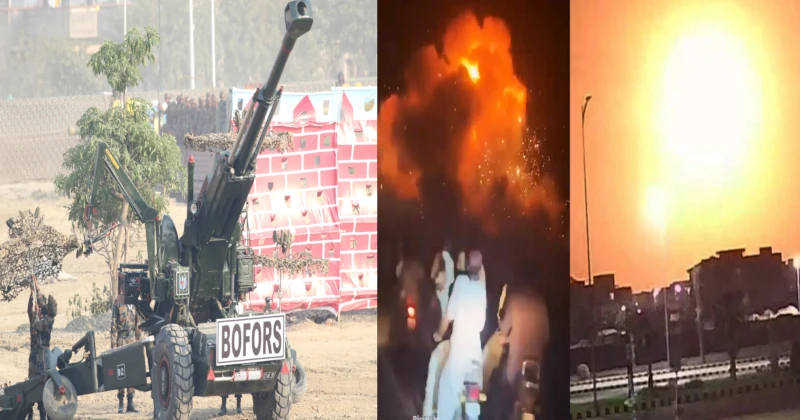
Following the Indian action, reports indicate a renewed deployment of artillery along the Line of Control (LoC), including the formidable Bofors FH-77B howitzer. This weapon earned legendary status during the 1999 Kargil War. This deployment, reminiscent of “Operation Vijay,” underscores the seriousness of the current situation and India’s readiness to respond to any further provocation.
The Shadow of Kargil: Bofors Howitzer Back on the Frontlines
The re-induction of the Bofors howitzer at the front lines carries significant symbolic and strategic weight. The 155 mm Bofors FH-77B howitzer is deeply etched in the nation’s collective memory as a pivotal weapon that played a decisive role in India’s victory during the Kargil War. Its exceptional accuracy, long range, and ability to deliver sustained fire proved instrumental in neutralising Pakistani positions entrenched in the high-altitude, treacherous terrain.
During “Operation Vijay,” the Bofors guns relentlessly pounded enemy bunkers, logistical hubs, and communication networks, effectively disrupting their ability to wage war. The artillery barrages demoralised the enemy forces and created the conditions for Indian infantry to advance and recapture strategic peaks. Military analysts often cite the effective and innovative use of artillery, particularly the Bofors, as a major factor in India’s success in the Kargil conflict.
The deployment of the Bofors now serves as a powerful signal of India’s resolve and preparedness to utilise its full military capabilities to defend its borders and respond to any aggression. The familiar rumble of these guns once again echoes in the sensitive border regions, a stark reminder of the potential for escalation and the importance of maintaining a strong deterrent posture.
Pakistan’s Response: Shelling Along the LoC
In the aftermath of India’s missile strikes, reports have emerged of Pakistan initiating shelling along various sectors of the Line of Control (LoC). This action, reminiscent of the period following “Operation Sindoor” (a past cross-border operation), indicates a potential retaliatory response and a rise in tensions along the already volatile border.
While the intensity and extent of the shelling are still being assessed, these actions are a cause for concern and highlight the delicate nature of the current security situation. Indian security forces stationed along the LoC have reportedly responded in kind, adhering to established protocols and maintaining a state of high alert.
Current Situation and Regional Implications
The current situation in the aftermath of the Indian missile strikes is fraught with tension and uncertainty. While India has maintained that its action was a targeted counter-terrorism operation aimed at preventing further attacks, Pakistan has vehemently condemned the strikes as a violation of its sovereignty and territorial integrity.
International reactions have been muted, with most major powers calling for restraint and urging both sides to de-escalate tensions through dialogue. Diplomatic channels will likely be actively engaged in the coming days to prevent the situation from spiralling out of control.
The Firepower of the Past: A Testament to Artillery’s Role
The Kargil War serves as a stark reminder of artillery’s critical role in modern warfare, particularly in mountainous terrain. The sheer volume of fire unleashed by the Indian artillery during the conflict was unprecedented in recent history.
Statistics from the Kargil conflict highlight the intensity of the artillery barrages
Over 250,000 shells, bombs, and rockets were fired by the Indian artillery during the conflict.
At the peak of the operations, an average of 5,000 shells, mortar bombs, and rockets were fired daily from approximately 300 guns, mortars, and Multi-Barrel Rocket Launchers (MBRLS).
On the day of the crucial capture of Tiger Hill, a staggering 9,000 shells were fired to soften enemy defences.
During the most intense phase of the fighting, each artillery battery was reportedly firing more than one round per minute continuously for 17 days.
This relentless bombardment had a devastating impact on the Pakistani positions, destroying bunkers, disrupting supply lines, and inflicting heavy casualties. The accuracy and range of weapons like the Bofors howitzer allowed Indian forces to engage enemy positions from a safe distance, minimising casualties on their side.
The lessons from the Kargil War continue to shape India’s defence strategy and the importance of maintaining a potent and modern artillery force. The deployment of the Bofors howitzer is not just a symbolic gesture but also a testament to the enduring relevance of this powerful weapon system in contemporary warfare scenarios, especially in the challenging terrain along India’s borders.
Looking Ahead: Maintaining Vigilance and Seeking De-escalation
As the situation unfolds, the focus remains on maintaining a high vigilance along the border while actively pursuing diplomatic avenues to de-escalate tensions. India’s firm response to the Pahalgam attack underscores its commitment to national security and its determination to counter cross-border terrorism. However, the potential for further escalation remains a significant concern.
The deployment of the Bofors howitzer and the reports of shelling along the LoC serve as a stark reminder of the fragile peace in the region. The international community’s role in facilitating dialogue and promoting restraint will be crucial in preventing a further deterioration of the security situation.
For the people living in the border areas, the renewed tensions bring back memories of past conflicts and underscore the constant threat they face. The government and security forces will need to ensure their safety and well-being during this period of heightened alert.
The coming days will be critical in determining the future trajectory of the situation. Whether the current escalation can be contained through diplomatic efforts or if it will lead to a more prolonged period of heightened tensions remains to be seen. However, one thing is clear: India’s decisive action and the re-emergence of the Kargil hero, the Bofors howitzer, have sent a strong message across the border, signalling a firm resolve to protect national interests and respond forcefully to any acts of terrorism.