Will Pakistan’s fragile economy survive the consequences of its proxy War with India?
June 8, 2026
  • Read Ecopy
  • Circulation
  • Advertise
  • Careers
  • About Us
  • Contact Us
Android AppiPhone AppArattai
Organiser
  • ‌
  • Bharat
    • Assam
    • Bihar
    • Chhattisgarh
    • Jharkhand
    • Maharashtra
    • View All States
  • World
    • Asia
    • Europe
    • North America
    • South America
    • Africa
    • Australia
  • Editorial
  • International
  • Opinion
  • RSS @ 100
  • More
    • Op Sindoor
    • Analysis
    • Sports
    • Defence
    • Politics
    • Business
    • Economy
    • Culture
    • Special Report
    • Sci & Tech
    • Entertainment
    • G20
    • Azadi Ka Amrit Mahotsav
    • Vocal4Local
    • Web Stories
    • Education
    • Employment
    • Books
    • Interviews
    • Travel
    • Law
    • Health
    • Obituary
  • Subscribe
    • Subscribe Print Edition
    • Subscribe Ecopy
    • Read Ecopy
  • ‌
  • Bharat
    • Assam
    • Bihar
    • Chhattisgarh
    • Jharkhand
    • Maharashtra
    • View All States
  • World
    • Asia
    • Europe
    • North America
    • South America
    • Africa
    • Australia
  • Editorial
  • International
  • Opinion
  • RSS @ 100
  • More
    • Op Sindoor
    • Analysis
    • Sports
    • Defence
    • Politics
    • Business
    • Economy
    • Culture
    • Special Report
    • Sci & Tech
    • Entertainment
    • G20
    • Azadi Ka Amrit Mahotsav
    • Vocal4Local
    • Web Stories
    • Education
    • Employment
    • Books
    • Interviews
    • Travel
    • Law
    • Health
    • Obituary
  • Subscribe
    • Subscribe Print Edition
    • Subscribe Ecopy
    • Read Ecopy
Organiser
  • Home
  • Bharat
  • World
  • Operation Sindoor
  • Editorial
  • Analysis
  • Opinion
  • Culture
  • Defence
  • International Edition
  • RSS @ 100
  • Magazine
  • Read Ecopy
Home Bharat

Will Pakistan’s fragile economy survive the consequences of its proxy War with India?

Amid rising tensions with India following the Pahalgam terror attack, Pakistan faces severe economic strain, compounded by the suspension of the Indus Waters Treaty and a collapsing stock market. As diplomatic measures tighten, the nation's fragile economy may struggle to survive escalating geopolitical risks

Shashank Kumar DwivediShashank Kumar Dwivedi
Apr 25, 2025, 09:15 pm IST
in Bharat, World, South Asia, Asia, Jammu and Kashmir
Follow on Google News
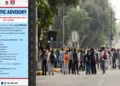
Pakistani people buying things (Picture is representation of economic collapse in Pakistan)

Pakistani people buying things (Picture is representation of economic collapse in Pakistan)

FacebookTwitterWhatsAppTelegramEmail

In the wake of the brutal Pahalgam terror attack on April 22 that killed 26 people, mostly Hindu tourists at Baisaran meadow in Jammu and Kashmir, India has responded with a series of diplomatic and strategic actions. Among the most significant is the suspension of the Indus Waters Treaty, a foundational agreement that has governed water sharing between India and Pakistan for over six decades.

Combined with a halt to the SAARC Visa Exemption Scheme for Pakistani nationals, expulsion of military attaches, reduction of diplomatic staff, and the closure of the Attari border check-post, these actions have not only escalated diplomatic tensions but also sent Pakistan’s economy into a downward spiral.

The Pakistan Stock Exchange (PSX) responded with panic. On April 24, the benchmark Karachi-100 index (KSE-100) plummeted by over 2,500 points, falling to 114,740.29 within just the first five minutes of trading. Though the market recovered some ground later in the day, it was still trading 1,532.42 points lower by 3 PM, reflecting continued nervousness among investors.

“The market opened lower amid fears of escalating tensions between Pakistan and India,” said Yousuf M. Farooq, Director of Research at Chase Securities, in a statement to Dawn.

“However, positive corporate earnings have supported a partial recovery.”

This marked the second consecutive session of losses for the Pakistani stock market. Just a day earlier, it had slipped by 1,204 points after the IMF cut Pakistan’s GDP growth forecast for FY25 to 2.6 per cent, citing heightened fiscal risks and enduring external vulnerabilities. The Asian Development Bank (ADB) echoed this view, lowering its 2025 forecast from 3 per cent to 2.5 per cent in its April update.

Indus Waters treaty suspension

India’s suspension of the Indus Waters Treaty has wide-ranging implications. Signed in 1960, the Treaty grants India control over the eastern rivers (Sutlej, Beas, and Ravi) and Pakistan the western rivers (Indus, Jhelum, and Chenab). Although there is no unilateral exit clause, India’s move to put the treaty “in abeyance” is a strategic signal with the potential to paralyse Pakistan’s agrarian economy.

According to Pakistan’s Economic Survey 2022-23, agriculture contributes 22.7 per cent to the country’s GDP and employs 37.4 per cent of the labor force. The World Bank has previously noted that the Indus river system irrigates 90 per cent of Pakistan’s food crops — wheat, rice, and cotton being the primary ones. In 2022, these agricultural exports brought in 4.8 billion dollars, as per the State Bank of Pakistan.

P K Saxena, former Indian Commissioner for Indus Waters, told think tank NatStrat that India should “respond strategically by accelerating development on the western rivers, engaging in proactive treaty renegotiations, and challenging Pakistan’s selective interpretations.”

How Pakistan went bankrupt

Pakistan’s current state of economic fragility has been years in the making. Chronic bad governance, military dictatorship, and a policy of state-sponsored terrorism have left the country teetering on the brink of bankruptcy.

In 2023, Planning Minister Ahsan Iqbal even urged citizens to cut down on tea, since Pakistan needed to borrow money to import it, a symbolic representation of the country’s deteriorating foreign exchange reserves. That year, inflation hit a record 38.5 per cent, growth turned negative, and foreign reserves dwindled to barely a few weeks of import cover, standing at just 3.7 billion dollars. Interest rates rose to 22 per cent, and the debt-to-GDP ratio reached a precarious 70 per cent.

The country also faced international scrutiny for terror financing, spending nearly five years on the Financial Action Task Force (FATF) grey list, which limited its access to global financing. According to Fitch Ratings, between 40 per cent and 50 per cent of Pakistan’s government revenue in 2023 went solely towards interest payments. Only Sri Lanka, Ghana, and Nigeria fared worse.

Despite a recent breakthrough in talks with the International Monetary Fund (IMF), Pakistan’s problems are far from over. The IMF agreed to a new 1.3 billion dollars climate resilience loan programme and also released 1 billion under its existing 7 billion dollars bailout programme, bringing the total to 2 billion dollars.

“Over the past 18 months, Pakistan has made significant progress in restoring macroeconomic stability and rebuilding confidence despite a challenging global environment,” the IMF said in a statement.

But Fitch Ratings in February noted that Pakistan’s external financing needs remain significant, with over 22 billion dollars in external debt due in FY2025, including 13 billion dollars in bilateral deposits.

“Securing sufficient external financing remains a challenge, considering large maturities and lenders’ existing exposures,” Fitch warned.

India Takes strong measures

In light of the attack, India has launched a series of retaliatory diplomatic and strategic measures:

Foreign Secretary Vikram Misri announced after the Cabinet Committee on Security (CCS) meeting that:

  • Indus Waters Treaty of 1960 will be held in abeyance with immediate effect.
  • Attari Integrated Checkpost will be closed indefinitely.
  • SAARC Visa Exemption Scheme will be suspended for Pakistani nationals.
  • Pakistani Defence Attachés in India declared persona non grata; to leave within a week.
  • India’s own military attachés will be withdrawn from Islamabad.

Pakistan scrambles for response

In response to India’s actions following the Pahalgam terror attack, Pakistan Prime Minister Shehbaz Sharif convened a National Security Committee (NSC) meeting on April 25.

According to Radio Pakistan, the meeting would “review response to India’s hastily taken, impulsive and impractical water measures.” The session reportedly included three service chiefs and key cabinet ministers.

Meanwhile, Defence Minister Rajnath Singh had already assured the Indian public of a “loud and clear” response to the Pahalgam massacre, signaling the possibility of military options on the table.

Amid all this, Pakistan issued a notice for a surface-to-surface missile test from Karachi’s coastline, to be conducted within its exclusive economic zone on April 24-25, raising fresh concerns about regional escalation.

Topics: Pahalgam AttackPakistan's economic condition. Proxy war on IndiaTerror attack in kashmirterrorismIndia-Pakistan
ShareTweetSendShareSend
✮ Subscribe Organiser YouTube Channel. ✮
✮ Join Organiser's WhatsApp channel for Nationalist views beyond the news. ✮
Previous News

Organiser Exclusive: Ajmer-style sex & blackmail racket busted in Bhopal — FIR details inside

Next News

Indus Waters Treaty: How Bharat’s water revolution could rewrite geopolitics & starve Pakistan’s strategy by 25%

Related News

Saurav Das, Chief Spokesperson of CJP

Exposing CJP’s Saurav Das: Inside his controversial commentary on Article 370, Umar Khalid & nationalism

NIA files chargesheet against three Maoist operatives in Andhra Pradesh

Andhra Explosives Supply Case: NIA files charges against 3 CPI (Maoist) operatives

PM Modi changes display picture on X to 'Operation Sindoor' on anniversary of military operation

Operation Sindoor Anniversary: PM Modi changes X display picture to honour Indian Armed Forces’ valour

First Anniversary of Operation Sindoor: The Doctrinal shift

Residents stand near burned buildings after an attack by Islamic State-linked terrorists in Guyaku, Adamawa state, northeastern Nigeria, where at least 29 people were killed

Nigeria massacre: Islamic State West Africa Province claims responsibility for killing 25 Christians; Toll rises to 29

ATS probes Mira Road stabbing of Hindu guards

Pahalgam-like attack in Mira Road: Zaib Zubair Ansari stabs guards after refusing Kalma, ISIS ‘Lone wolf’ links surface

Load More

Latest News

Decades of illegal infiltration from Bangladesh have driven profound demographic shifts in Assam, fundamentally altering its religious, linguistic, and political landscape

Unnatural demographic change: The termite threat

The Rs 200-crore MAHA Water Mission seeks to boost water security and democratise research funding in India

From Rigveda to Research Labs: How ANRF’s Rs 200 crore water mission is securing India’s future

(Right) Prakhar Shrivastava, Senior Consulting Editor and Anchor at Delhi Doordarshan Kendra at a Narada Jayanti programme in Guwahati (Left) Prakahar Srivastava addressing the gathering

Narada Jayanti by VSK Assam: “Half-truths more dangerous than lies,” says senior journalist Prakhar Shrivastava

Everest Survivor being taken to the hospital on a stretcher

Everest Survivor ICU Interview: BBC under fire for interviewing Sherpa without family’s consent

Phillipines Earthquake: 7.8 magnitude deadly earthquake leaves 15 dead, 200 injured; Rescue operation underway

Shamli Conversion Case: 'I studied Islam on YouTube,' says Ayush Malik as family alleges grooming

Shamli Conversion Case: ‘I studied Islam on YouTube,’ says Ayush Malik, now Mohammad Ali, as family alleges grooming

RSS functionaries on the stage at samapan samaroh of Sangh Shiksha Varg and Karyakarta Vikas Varg–Pratham at Sambalpur.

Awakening of Lokshakti is essential for building a glorious Bharat: Dr Gopal Prasad Mahapatra

Saree worn by India's Rocket Woman Nandini Harinath displayed at US Space Museum

From Mangalyaan to USA: ISRO scientist Nandini Harinath’s iconic ‘Mars Mission Saree’ featured at US Space Museum

Thiruparankundram Karthigai Deepam issue: TVK follows DMK line of no lightening at temple, BJP alleges betrayal

Tamil Nadu: CM Joseph clears move to prosecute former minister and DMK leader Senthil Balaji in cash-for-jobs case

Load More
  • Privacy
  • Terms
  • Cookie Policy
  • Refund and Cancellation
  • Delivery and Shipping

© Bharat Prakashan (Delhi) Limited.
Tech-enabled by Ananthapuri Technologies

  • Home
  • Search Organiser
  • Bharat
    • Assam
    • Bihar
    • Chhattisgarh
    • Jharkhand
    • Maharashtra
    • View All States
  • World
    • Asia
    • Africa
    • North America
    • South America
    • Europe
    • Australia
  • Editorial
  • Operation Sindoor
  • Opinion
  • Analysis
  • Defence
  • Culture
  • Sports
  • Business
  • RSS @ 100
  • Entertainment
  • More ..
    • Sci & Tech
    • Vocal4Local
    • Special Report
    • Education
    • Employment
    • Books
    • Interviews
    • Travel
    • Health
    • Politics
    • Law
    • Economy
    • Obituary
  • Subscribe Magazine
  • Read Ecopy
  • Advertise
  • Circulation
  • Careers
  • About Us
  • Contact Us
  • Policies & Terms
    • Privacy Policy
    • Cookie Policy
    • Refund and Cancellation
    • Terms of Use

© Bharat Prakashan (Delhi) Limited.
Tech-enabled by Ananthapuri Technologies