Small city, big impact: Karad’s 100% sanitary waste disposal model is a blueprint for Urban India
July 4, 2026
  • Read Ecopy
  • Circulation
  • Advertise
  • Careers
  • About Us
  • Contact Us
Android AppiPhone AppArattai
Organiser
  • ‌
  • Bharat
    • Assam
    • Bihar
    • Chhattisgarh
    • Jharkhand
    • Maharashtra
    • View All States
  • World
    • Asia
    • Europe
    • North America
    • South America
    • Africa
    • Australia
  • Editorial
  • International
  • Opinion
  • RSS @ 100
  • More
    • Op Sindoor
    • Analysis
    • Sports
    • Defence
    • Politics
    • Business
    • Economy
    • Culture
    • Special Report
    • Sci & Tech
    • Entertainment
    • G20
    • Azadi Ka Amrit Mahotsav
    • Vocal4Local
    • Web Stories
    • Education
    • Employment
    • Books
    • Interviews
    • Travel
    • Law
    • Health
    • Obituary
  • Subscribe
    • Subscribe Print Edition
    • Subscribe Ecopy
    • Read Ecopy
  • ‌
  • Bharat
    • Assam
    • Bihar
    • Chhattisgarh
    • Jharkhand
    • Maharashtra
    • View All States
  • World
    • Asia
    • Europe
    • North America
    • South America
    • Africa
    • Australia
  • Editorial
  • International
  • Opinion
  • RSS @ 100
  • More
    • Op Sindoor
    • Analysis
    • Sports
    • Defence
    • Politics
    • Business
    • Economy
    • Culture
    • Special Report
    • Sci & Tech
    • Entertainment
    • G20
    • Azadi Ka Amrit Mahotsav
    • Vocal4Local
    • Web Stories
    • Education
    • Employment
    • Books
    • Interviews
    • Travel
    • Law
    • Health
    • Obituary
  • Subscribe
    • Subscribe Print Edition
    • Subscribe Ecopy
    • Read Ecopy
Organiser
  • Home
  • Bharat
  • World
  • Operation Sindoor
  • Editorial
  • Analysis
  • Opinion
  • Culture
  • Defence
  • International Edition
  • RSS @ 100
  • Magazine
  • Read Ecopy
Home Bharat

Small city, big impact: Karad’s 100% sanitary waste disposal model is a blueprint for Urban India

Karad, a small city in Maharashtra’s Satara district, has achieved a remarkable milestone by ensuring 100 per cent safe disposal of sanitary waste. Its innovative, community-driven model is now being hailed as a blueprint for effective urban waste management across India

Shashank Kumar DwivediShashank Kumar Dwivedi
Apr 17, 2025, 10:30 am IST
in Bharat, Maharashtra
Follow on Google News
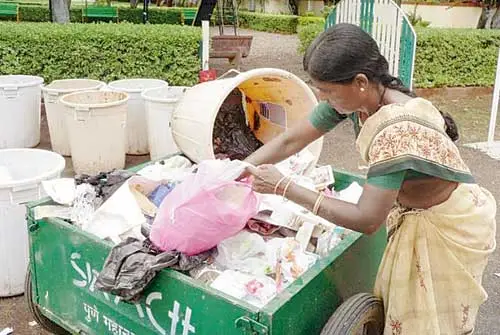
A representative image

A representative image

FacebookTwitterWhatsAppTelegramEmail

Sanitary waste management continues to be a significant public health and environmental challenge across India. From improper disposal of menstrual hygiene products to unsafe handling of biomedical waste, the risks range from environmental degradation to serious health hazards, especially for sanitation workers. Yet amidst this national concern, Karad, a modest city nestled in Maharashtra’s Satara district, has emerged as a beacon of innovation and effectiveness in tackling sanitary waste. With 100 per cent segregation, collection, and processing of sanitary and biomedical waste, Karad has not only set a benchmark for sustainable waste disposal but has also shown how community participation, innovative thinking, and public-private collaboration can lead to transformative change.

Breaking the silence around sanitary waste

Sanitary waste, particularly menstrual hygiene products like sanitary napkins and diapers, is often surrounded by societal taboos and discomfort. In many regions, this stigma results in improper disposal, contributing to both environmental pollution and social exclusion. Recognising this critical issue, Karad Municipal Council (KMC) took proactive steps to break the taboo surrounding sanitary waste. A robust awareness campaign was launched to educate citizens on the importance of safe disposal, highlighting the health risks of indiscriminate dumping and the dignity of labour for sanitation workers.

Public service announcements, workshops, and door-to-door campaigns formed the foundation of this sensitisation drive. Through these efforts, the city successfully transformed mindsets and encouraged responsible household-level waste segregation, including the proper wrapping and disposal of used sanitary products.

Women leading the change

One of the most striking aspects of Karad’s success story is the active participation of women. KMC collaborated with local female residents to form women-led awareness groups, who went on to play a pivotal role in educating households about hygienic waste disposal. These women became local champions for change, particularly in residential areas, ensuring that messages around menstrual hygiene and waste segregation reached every corner of the city.

To support these behavioural changes, dedicated red bins were installed in public toilets across Karad, providing women with accessible and safe options for disposal. This simple intervention significantly reduced open dumping and protected sanitation staff from direct contact with hazardous materials.

Sanitation innovation in schools and households

Karad’s sanitary waste management initiative also extended into educational institutions, recognising the need to build hygienic practices early. Schools were encouraged to install sanitary pad vending machines, along with incinerators and dedicated disposal units. The city’s Information, Education and Communication (IEC) team consistently promoted hygienic practices such as wrapping used sanitary products in paper prior to disposal—an effort that has now become second nature for many students.

These practices ensured that school-generated waste was safely incinerated, with minimal residues sent to biomedical waste treatment facilities. The program not only improved school hygiene standards but also empowered young girls, allowing them to manage their menstrual health with dignity.

Infrastructure for safe disposal

At the core of Karad’s strategy lies its well-planned and meticulously executed waste disposal infrastructure. The city’s Garbage Collection Vehicles are fitted with dedicated bins for sanitary waste, which are carefully segregated during collection. Trained sanitation staff handle this waste separately, ensuring that only appropriate materials are selected for incineration.

The collected waste is then transported to a high-temperature incinerator operated by the Karad Hospital Association. Here, the waste is incinerated at temperatures reaching up to 1200°C, effectively oxidizing organic materials and reducing them to harmless ash. Emissions are carefully filtered, and real-time monitoring systems ensure compliance with State Pollution Control Board (SPCB) air quality standards, thus minimising any adverse environmental impact.

A model public-private partnership

A cornerstone of Karad’s sanitary waste management system is the partnership between Karad Municipal Council and the Karad Hospital Association. In a textbook case of Public-Private Partnership (PPP), the municipal body allocated land for a dedicated biomedical waste treatment plant, while the hospital association took on the responsibility of construction, operation, and maintenance.

The result is a Common Biomedical Waste Treatment Facility (CBWTF) with a processing capacity of 600 kg/day. This centralised incineration facility handles all of the city’s sanitary and biomedical waste—free of charge to the Municipal Council—substantially reducing the city’s financial burden. By outsourcing processing while retaining control over collection and segregation, Karad has demonstrated a cost-effective and scalable model for other urban centres.

Impact and replicability

The improved waste management system has had a transformative effect on Karad’s public health landscape. The elimination of open dumping has not only curbed the spread of disease but also protected sanitation workers from exposure to harmful materials. The reduction in environmental pollution and the removal of visible sanitary waste have significantly improved urban cleanliness, contributing to a better quality of life for residents, particularly women.

Perhaps most importantly, Karad has shown that sanitary waste management is not just a matter of infrastructure—it is a matter of mindset, participation, and dignity. With its community-first approach, targeted awareness campaigns, and effective use of public-private collaboration, Karad provides a replicable model for cities across India striving to solve similar challenges.

In a country where over 336 million women use sanitary pads and millions more rely on other hygiene products, Karad’s achievement is not just local—it is national in its significance. The city’s experience proves that effective sanitary waste management is achievable, and that it can be done in a way that preserves dignity, protects the environment, and promotes public health.

Topics: MaharashtraKharadbiomedical wasteSanitary waste management
ShareTweetSendShareSend
✮ Subscribe Organiser YouTube Channel. ✮
✮ Join Organiser's WhatsApp channel for Nationalist views beyond the news. ✮
Previous News

Nari Adalat: Yogi Govt’s grassroots Justice model empowers rural women across Uttar Pradesh

Next News

Odisha: Mahendra Hembram released after 25 years in Graham Staines murder case on grounds of good conduct

Related News

Rajasthan Police's CID (Intelligence) has arrested alleged ISI funding agent Rafiq Sheikh of Aurangabad

Rajasthan CID arrests Rafiq Sheikh in Pakistan-linked ISI spy funding network case spanning multiple states

Gadchiroli Police, CRPF destroy massive maoist weapons manufacturing facility and buried arms cache in Maharashtra

Gadchiroli police & CRPF destroy Maoist weapons manufacturing facility, recover buried arms cache in Maharashtra

Maharashtra government approves central wage structure for Pune Metro Contract Workers; Major victory for BMS

More than 1,000 temple trustees and Hindu organisations across Maharashtra have opposed the proposed Act, alleging it threatens temple land rights and traditional religious institutions. In this regard, a memorandum was submitted to Maharashtra CM Devendra Fadnavis on May 15 by Maharashtra Mandir Mahasangh

Maharashtra Devasthan Inams Abolition Draft Act, 2026: Not just ‘Inam’, but sacred heritage

UP Sets New Electricity Supply Record Under Yogi Govt

Uttar Pradesh: Yogi Government records highest ever electricity supply; Surpasses Maharashtra

Maharashtra govt’s move to abolish Devasthan Inam lands triggers debate over Temple rights & cultural heritage

Load More

Latest News

India designates 23 LeT & JeM operatives as terrorists under UAPA; HM Amit Shah Reaffirms ‘zero tolerance’ to terrorism

UP has raised the monthly maintenance grant for mentally challenged and destitute divyangjan in shelter homes from Rs 2,000 to Rs 3,000

Seva, Samvedna, Sammaan: How Yogi government rewrote Uttar Pradesh’s compact with its Divyangjan

Congress MP Shashi Tharoor (File Photo)

Congress leader Shashi Tharoor applauds Modi’s governance and foreign policy

Kamakhya Mandir

From Kamakhya to Gadchiroli: How India’s sacred feminine traditions reflect a shared civilisational heritage

M.B. Rajesh and the contentious letter

Keralam: Ex-LDF Minister’s letter allegedly enabled 147 non-classified hotels to obtain bar licences by bypassing norms

Heritage Banyan tree at ITC campus, Munger, Bihar

Bihar’s Munger banyan declared world’s oldest scientifically dated banyan tree, estimated to be around 700 years old

Ekambareswarar Mandir, Kanchipuram

Pancha Bhoota Sthalams Explained: Exploring the five ancient Shiva Mandirs dedicated to nature’s elements

Union Minister Sarbananda Sonowal unveils first India-made export-import shipping container

Union Minister Sarbananda Sonowal unveils India’s first Made-in-India EXIM shipping container for global trade

Prime Minister Narendra Modi

Indonesia, Australia and New Zealand: What PM Modi’s Indo-Pacific tour means for India’s strategic future

Gangster Act invoked against 10 accused in codeine cough syrup smuggling case in Varanasi

Codeine cough syrup smuggling case: Gangster Act invoked against 10

Load More
  • Privacy
  • Terms
  • Cookie Policy
  • Refund and Cancellation
  • Delivery and Shipping

© Bharat Prakashan (Delhi) Limited.
Tech-enabled by Ananthapuri Technologies

  • Home
  • Search Organiser
  • Bharat
    • Assam
    • Bihar
    • Chhattisgarh
    • Jharkhand
    • Maharashtra
    • View All States
  • World
    • Asia
    • Africa
    • North America
    • South America
    • Europe
    • Australia
  • Editorial
  • Operation Sindoor
  • Opinion
  • Analysis
  • Defence
  • Culture
  • Sports
  • Business
  • RSS @ 100
  • Entertainment
  • More ..
    • Sci & Tech
    • Vocal4Local
    • Special Report
    • Education
    • Employment
    • Books
    • Interviews
    • Travel
    • Health
    • Politics
    • Law
    • Economy
    • Obituary
  • Subscribe Magazine
  • Read Ecopy
  • Advertise
  • Circulation
  • Careers
  • About Us
  • Contact Us
  • Policies & Terms
    • Privacy Policy
    • Cookie Policy
    • Refund and Cancellation
    • Terms of Use

© Bharat Prakashan (Delhi) Limited.
Tech-enabled by Ananthapuri Technologies