Amidst Waqf Amendment Bill debate in Rajya Sabha, know if Taj Mahal is owned by Waqf or not
September 14, 2026
  • Read Ecopy
  • Circulation
  • Advertise
  • Careers
  • About Us
  • Contact Us
Android AppiPhone AppArattai
Organiser
  • ‌
  • Bharat
    • Assam
    • Bihar
    • Chhattisgarh
    • Jharkhand
    • Maharashtra
    • View All States
  • World
    • Asia
    • Europe
    • North America
    • South America
    • Africa
    • Australia
  • Editorial
  • International
  • Opinion
  • RSS @ 100
  • More
    • World Hindu Congress 2026
    • Op Sindoor
    • Analysis
    • Sports
    • Defence
    • Politics
    • Business
    • Economy
    • Culture
    • Special Report
    • Sci & Tech
    • Entertainment
    • G20
    • Azadi Ka Amrit Mahotsav
    • Vocal4Local
    • Web Stories
    • Education
    • Employment
    • Books
    • Interviews
    • Travel
    • Law
    • Health
    • Obituary
  • Subscribe
    • Subscribe Print Edition
    • Subscribe Ecopy
    • Read Ecopy
  • ‌
  • Bharat
    • Assam
    • Bihar
    • Chhattisgarh
    • Jharkhand
    • Maharashtra
    • View All States
  • World
    • Asia
    • Europe
    • North America
    • South America
    • Africa
    • Australia
  • Editorial
  • International
  • Opinion
  • RSS @ 100
  • More
    • World Hindu Congress 2026
    • Op Sindoor
    • Analysis
    • Sports
    • Defence
    • Politics
    • Business
    • Economy
    • Culture
    • Special Report
    • Sci & Tech
    • Entertainment
    • G20
    • Azadi Ka Amrit Mahotsav
    • Vocal4Local
    • Web Stories
    • Education
    • Employment
    • Books
    • Interviews
    • Travel
    • Law
    • Health
    • Obituary
  • Subscribe
    • Subscribe Print Edition
    • Subscribe Ecopy
    • Read Ecopy
Organiser
  • Home
  • Bharat
  • World
  • Operation Sindoor
  • Editorial
  • Analysis
  • Opinion
  • Culture
  • Defence
  • International Edition
  • RSS @ 100
  • Magazine
  • Read Ecopy
Home Bharat

Amidst Waqf Amendment Bill debate in Rajya Sabha, know if Taj Mahal is owned by Waqf or not

The origins of the controversy can be traced back to 1998 when a businessman from Firozabad, Irfan Bedar, approached the Uttar Pradesh Sunni Waqf Board with a request to declare the Taj Mahal as Waqf property

Shashank Kumar DwivediShashank Kumar Dwivedi
Apr 3, 2025, 11:15 pm IST
inBharat, Uttar Pradesh
Follow on Google News
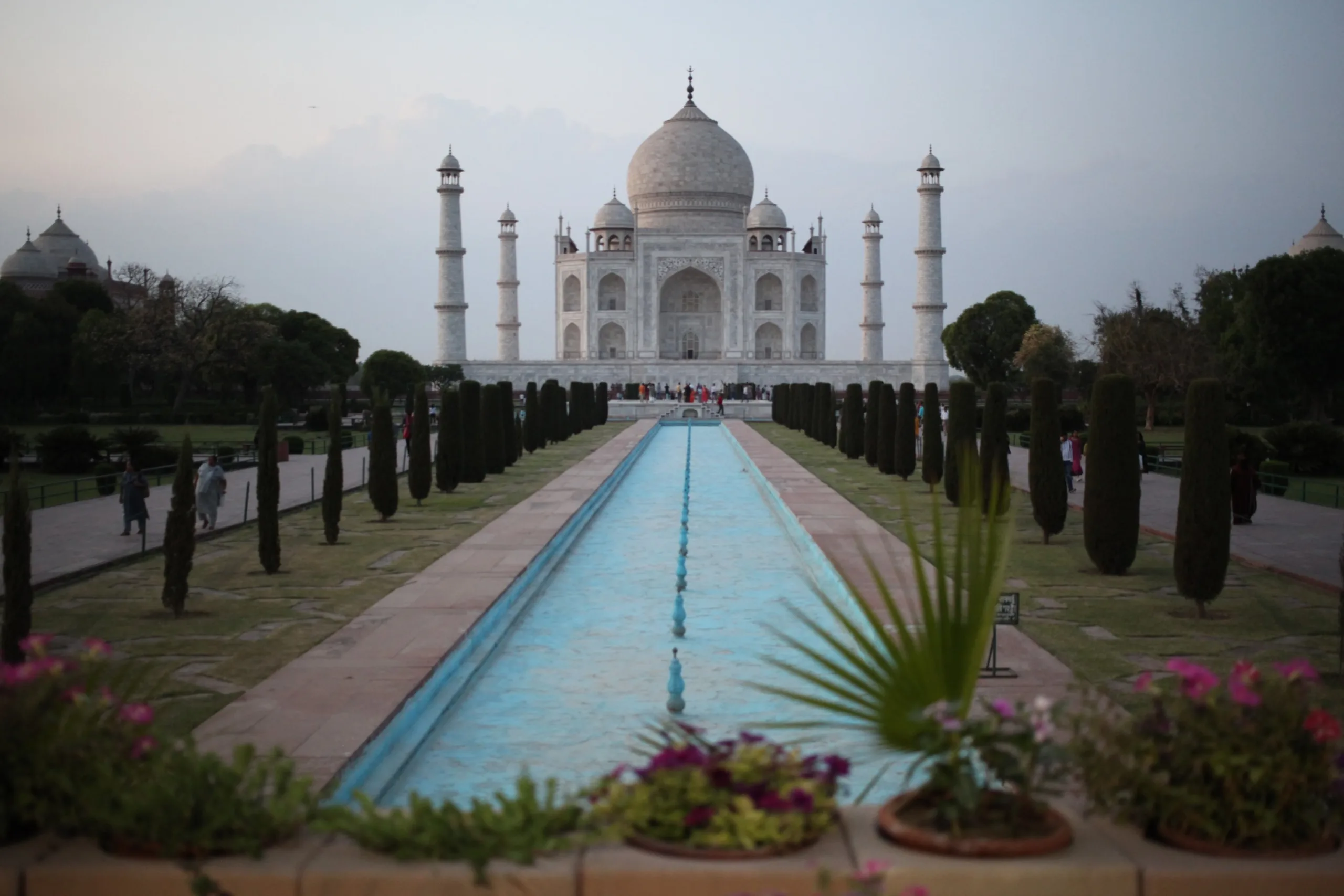
The Taj Mahal located in Agra, Uttar Pradesh

The Taj Mahal located in Agra, Uttar Pradesh

Facebook
Twitter
WhatsAppTelegramEmail

The Taj Mahal, one of the celebrated monuments in India, has long been revered as a symbol of love and architecture. However, in recent years, its ownership has been the subject of intense debate, leading to legal disputes, political controversies, and religious claims. This issue gained traction when the Uttar Pradesh Sunni Waqf Board laid claim to the monument, sparking a legal battle over whether it should remain under the control of the Indian government or be recognised as a Waqf property. This report delves into the debate, analysing the legal, political, and historical dimensions of the controversy.

Waqf Board’s claim

The origins of the controversy can be traced back to 1998 when a businessman from Firozabad, Irfan Bedar, approached the Uttar Pradesh Sunni Waqf Board with a request to declare the Taj Mahal as Waqf property. Bedar argued that the monument should be maintained by the Waqf Board due to its historical and religious significance. This request prompted the Waqf Board to issue a notice to the Archaeological Survey of India (ASI), the central agency responsible for managing the Taj Mahal. Instead of resolving the matter, this notice triggered a prolonged legal battle that spanned decades.

Supreme Court intervention and legal proceedings

In 2004, Bedar took the matter to the Allahabad High Court, seeking legal backing for his demand to be recognised as the caretaker of the Taj Mahal. The High Court advised the Waqf Board to treat the issue with seriousness, prompting the Board to register the Taj Mahal as a Waqf property in 2005. However, the ASI challenged this decision, escalating the matter to the Supreme Court of India.

The Supreme Court took cognisance of the case and demanded substantial proof from the Waqf Board to support its claim. The court, as reported by India Today Hindi, asked for documented evidence demonstrating that Mughal Emperor Shah Jahan himself had declared the Taj Mahal as Waqf property. The proceedings took a decisive turn in 2010 when the Supreme Court stayed the Waqf Board’s decision and ordered a thorough investigation into the ownership claims.

Political Dimensions

As the legal battle unfolded, political figures began to engage in the discourse, adding complexity to the ownership debate. In 2014, Samajwadi Party leader Azam Khan, who was then the Minister for Urban Development in Uttar Pradesh, advocated for the Taj Mahal to be officially recognised as Waqf property. He contended that since the monument housed the tombs of Shah Jahan and Mumtaz Mahal, it rightfully belonged under Waqf jurisdiction. His statements ignited significant controversy, with critics questioning his motivations and arguing that the Taj Mahal, as a national heritage site, should not be controlled by any single religious entity.

The controversy took another turn when Shia leaders also entered the debate, asserting that because Mumtaz Mahal was a Shia Muslim, the Taj Mahal held a distinct connection to Shia traditions. A Shia leader was quoted as saying, “Mumtaz was a Shia, whose real name was Arjuman Bano. The architecture of the Taj is proof of its Shia connection.”

Supreme Court’s verdict

The case reached a pivotal juncture in April 2018 when the Supreme Court questioned the Waqf Board’s claim, emphasising the absence of documentary proof. The Court demanded that the Waqf Board produce original documents signed by Shah Jahan that explicitly transferred ownership of the Taj Mahal to the Waqf Board.

During the hearings, the then Chief Justice of India, Deepak Mishra, made a notable remark: “Who in India will accept that the Taj Mahal belongs to the Waqf Board?” He further stated, “When was it given to you? It was in the possession of the East India Company for more than 250 years. After that, it went to the central government. ASI has been in charge of its management, and it had the right to administer it.”

Despite counterarguments from the Waqf Board’s legal team, the Supreme Court maintained that without conclusive proof, the Taj Mahal could not be classified as Waqf property. The Waqf Board’s counsel, led by senior advocate VV Giri, insisted that the monument qualified as Waqf property by virtue of housing the graves of two prominent Muslims. However, the Court remained firm in its stance that mere religious significance did not equate to legal ownership.

Waqf Board withdraws its claim

By mid-2018, it became apparent that the Waqf Board’s claim would not hold in court without documentary evidence. The Board ultimately conceded that the Taj Mahal could not be officially registered as Waqf property. The Board’s representatives instead argued that while ownership could not be proven, the monument “belongs to Allah” and should ideally be managed by the Waqf Board for practical purposes.

The Board’s legal counsel explained, “We don’t have the documents to show Taj Mahal is Waqf property. But by virtue of continuous use, it is a Waqf property, and the Sunni Waqf Board is entitled to manage the Taj Mahal.” This statement implied that the Waqf Board was more interested in administrative control rather than outright ownership.

Despite these arguments, the ASI strongly opposed the idea of Waqf administration, cautioning that such a precedent could lead to similar claims over other national monuments, including the Red Fort and Fatehpur Sikri.

Waqf (Amendment) Bill 2024

As the debate over Waqf properties continued, the Lok Sabha passed the Waqf (Amendment) Bill on April 3, 2025, after a marathon 12-hour discussion. The bill saw 288 members voting in favor and 232 against, with opposition parties labeling it as “anti-Muslim.” The ruling NDA defended the legislation as a necessary step to ensure transparency in Waqf-related matters. Union Minority Affairs Minister Kiren Rijiju stated, “There is no place in the world safer than India for minorities, and they are safe because the majority is entirely secular.”

The bill, which incorporated recommendations from the Joint Parliamentary Committee, will now move to the Rajya Sabha, where another extensive debate is expected in the Rajya Sabha has allocated eight hours for its discussion.

Topics: Waqf BoardWaqf propertyRajya Sabha DebateWaqf amendment bill 2024
Share
Tweet
SendShareSend
✮ Subscribe Organiser YouTube Channel. ✮
✮ Join Organiser's WhatsApp channel for Nationalist views beyond the news. ✮
Previous News

New study in breast cancer progression, drug resistance

Next News

Waqf Amendment Bill 2025: BJP MP Sudhanshu Trivedi says, “This fight is between Samvidhan vs Farmans”

Related News

Tamil Nadu Assembly

Tamil Nadu: TVK government announces 11 minority welfare measures; Hindu Munnani demands equal treatment

Tamil Nadu: Hindus detained after opposing Islamic Kandhuri festival in Udayarpatti village with no Muslims

Former Waqf Board CEO B.M. Jamal

Keralam: Complaint against Congress leader, Ex-Waqf Board CEO, over alleged EVM hacking fraud in 2026 election

MP leads nation in Waqf Reforms, appoints two Hindus to State Board

Madhya Pradesh becomes first state to appoint two Hindu members to Waqf Board under new law

Dr Surendra Jain, Joint General secretary, VHP

VHP Demands Audit of Waqf Properties Amid Encroachment Claims: “Land should go to rightful owner,” says Surendra Jain

UDF Government Faces Heat in Kerala as Waqf Board Digs In Over 404-Acre Munambam Land

Munambam Waqf Dispute in Keralam: Opposition slams CM Satheesan for “passing the buck”

Load More

Latest News

RSS Akhil Bharatiya Sah-Bauddhik Shikshan Pramukh Deepak Vispute addressing the gathering

‘Nation First’ should be the guiding principle for every individual, regardless of their Field: Deepak Vispute

‘India was not poor; it was made poor’: The truth re-emerges through Jema Ferrer’s perspective

Six years after talent manager Disha Salian was found dead, her father Satish Salian on September 11 recorded a detailed statement with the Central Bureau of Investigation (CBI), naming Shiv Sena (UBT) leader Aaditya Thackeray, actors Dino Morea and Sooraj Pancholi, and others.

Disha Salian Murder Case: Father names Aaditya Thackeray in CBI statement; Lawyer claims gang rape, murder cover-up

Release of a book at Vishwa Bandhutva Diwas programme that was organised in Ujjain

Bharat’s youth rooted in sacrifice, service & discipline can give new direction to World: Parag Abhyankar

AI Generated Representative Image

“Let Go” — But only when it suits you? Exposing the double standards of Kashmir’s political leadership

Bharatiya Kisan Sangh distributed free school uniforms, notebooks, pen bundles, bags to 7,000 students in flood-affected areas of Assam

Assam: Bharatiya Kisan Sangh distributes free school uniforms, notebooks & bags to 7,000 flood-affected students

Chinmoy Prabhu

When a Bengali Hindu suffers in Bangladesh, where does ‘Bangali-Prem’ go?

AI Generated Representative Image

BRICS Summit: Not de-dollarisation, but derisking from dollar; India scripts pragmatic shield against external shocks

RSS Sarsanghchalak Dr Mohan Bhagwat, attended the 37th annual prize distribution ceremony ‘Swaraj’ at L.K. Singhania Education Centre

Education must go beyond livelihood and focus on holistic human development: Dr Mohan Bhagwat

(Left) Prime Minister Narendra Modi and Russian President Vladimir Putin (Right) Prime Minister Narendra Modi and Chinese President Xi Jinping in the backdrop of the Rameshwaram temple corridor in the backdrop of the BRICS 2026 summit

Bharat’s civilisational pride at BRICS 2026: Rameswaram temple corridor frames world leaders

Load More
  • Privacy
  • Terms
  • Cookie Policy
  • Refund and Cancellation
  • Delivery and Shipping

© Bharat Prakashan (Delhi) Limited.
Tech-enabled by Ananthapuri Technologies

  • Home
  • Search Organiser
  • Bharat
    • Assam
    • Bihar
    • Chhattisgarh
    • Jharkhand
    • Maharashtra
    • View All States
  • World
    • Asia
    • Africa
    • North America
    • South America
    • Europe
    • Australia
  • Editorial
  • Operation Sindoor
  • Opinion
  • Analysis
  • Defence
  • Culture
  • Sports
  • Business
  • RSS @ 100
  • Entertainment
  • More ..
    • Sci & Tech
    • Vocal4Local
    • Special Report
    • Education
    • Employment
    • Books
    • Interviews
    • Travel
    • Health
    • Politics
    • Law
    • Economy
    • Obituary
  • Subscribe Magazine
  • Read Ecopy
  • Advertise
  • Circulation
  • Careers
  • About Us
  • Contact Us
  • Policies & Terms
    • Privacy Policy
    • Cookie Policy
    • Refund and Cancellation
    • Terms of Use

© Bharat Prakashan (Delhi) Limited.
Tech-enabled by Ananthapuri Technologies