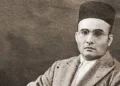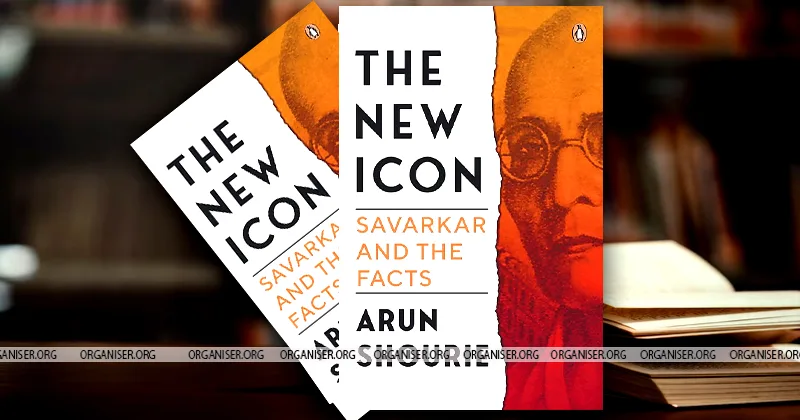
Arun Shourie’s latest work on Savarkar is emblematic of a particular intellectual practice that often masquerades as rigorous scholarship but is, in essence, a highly selective and distorted narrative. While Shourie has built a reputation as a meticulous researcher and an unflinching critic, his treatment of Savarkar reveals an underlying bias and a propensity to cherry-pick evidence to suit his preconceived conclusions. A careful and critical analysis of his methodology, choice of sources, and interpretative strategies is necessary to expose the book’s numerous shortcomings and to provide a balanced counter to his argumentation. One of the most striking flaws in Shourie’s approach is his selective use of quotes. Rather than engaging with Savarkar’s voluminous writings and speeches in their entirety, Shourie appears to extract only those fragments that align with his critical narrative. By isolating sentences and phrases from their broader context, he crafts a portrayal of Savarkar that is often at odds with the historical record. This method allows Shourie to highlight what he perceives as Savarkar’s inconsistencies or controversial views, while conveniently ignoring passages that might contradict his thesis or present a more nuanced picture of the man’s ideology. For example, Shourie frequently cites Savarkar’s remarks on Hindutva and Hindu identity without acknowledging the evolution of his thought over time or the socio-political circumstances that shaped his views. Savarkar’s early writings, penned in the aftermath of British colonial repression and during his imprisonment, reflect a particular urgency and militancy that were, to some extent, a product of their time. Later works show a more complex and layered perspective. Yet, Shourie’s book rarely, if ever, reflects this progression. Instead, it offers a static and reductive image of Savarkar, perpetuating the myth of a monolithic ideology.
Distorted Interpretations of Historical Events
Shourie’s recounting of historical events related to Savarkar’s life also raises serious concerns about accuracy and fairness. By selectively emphasizing certain incidents while downplaying others, Shourie crafts a narrative that appears authoritative but is, in reality, deeply flawed. His interpretation of Savarkar’s role in the Hindu Mahasabha, his stance during the Quit India Movement, and his relationship with other prominent leaders of the time are all skewed to support a predetermined critique. One particularly glaring example is Shourie’s treatment of Savarkar’s trial and incarceration. While he correctly notes that Savarkar’s petitions to the British authorities have been a source of controversy, he fails to consider the broader context in which these petitions were made. The colonial justice system was hardly a fair arbiter, and many Indian leaders employed various strategies—legal petitions, public appeals, and diplomatic channels—to secure their release or mitigate the harsh conditions of imprisonment. By presenting Savarkar’s actions as uniquely ignoble, Shourie not only misrepresents the historical record but also imposes a moral judgment that he does not apply uniformly to other figures of the time.
Another major issue with Shourie’s book is its unwillingness to engage with counter-evidence. The work largely disregards the substantial body of scholarship that paints a more balanced picture of Savarkar. This includes studies that examine his contributions to Indian political thought, his literary achievements, and his role as a social reformer. By ignoring such works, Shourie deprives his readers of a comprehensive understanding of Savarkar’s legacy. This one-sided approach not only undermines the credibility of the book but also raises questions about the author’s intellectual integrity. Furthermore, Shourie’s reluctance to incorporate diverse perspectives results in a homogenized and polarized narrative. He portrays Savarkar as a singularly divisive figure, overlooking the complex interplay of influences and ideas that shaped his worldview. By failing to acknowledge the plurality of voices within the nationalist movement—ranging from moderate reformers to revolutionary radicals—Shourie reduces a multifaceted historical figure to a caricature.
An Ideological Agenda Masquerading as Scholarship
Underlying these methodological flaws is a deeper issue: Shourie’s book appears to be driven more by ideological motives than by a genuine pursuit of historical understanding. His critique of Savarkar aligns closely with contemporary political and cultural debates, suggesting that the book is intended less as an objective historical analysis and more as a polemical intervention. This is not to suggest that all works of history must be devoid of perspective or argumentation. However, when an author consistently skews evidence, misrepresents sources, and dismisses alternative viewpoints, it becomes clear that the primary goal is not scholarly rigor but rather ideological persuasion. Shourie’s heavy reliance on moralistic rhetoric further underscores this point. Throughout the book, he frequently castigates Savarkar in moral terms, using language that suggests a predetermined verdict rather than an impartial investigation. This approach not only alienates readers seeking a fair and balanced account but also diminishes the book’s value as a serious historical work.
In light of these shortcomings, a befitting response to Shourie’s book would involve a return to the fundamentals of rigorous historical scholarship. Such a response would carefully examine primary sources, place Savarkar’s writings and actions in their proper historical context, and engage with a wide range of perspectives. By doing so, it would counteract the selective quoting, contextual manipulation, and ideological bias that characterize Shourie’s work. Additionally, a thorough critique would highlight the need for intellectual honesty and methodological transparency in any serious historical inquiry. It would call attention to the dangers of reducing complex figures to simplistic stereotypes and warn against the pitfalls of allowing contemporary political agendas to overshadow historical accuracy. In this way, a reasoned and well-researched reply would not only expose the flaws in Shourie’s approach but also contribute to a more balanced and nuanced understanding of Savarkar’s legacy.
Shourie’s book represents a deeply flawed and biased account that fails to meet the standards of rigorous historical scholarship. Through selective quoting, distorted interpretations, and an ideological agenda, Shourie crafts a narrative that does a disservice to both his readers and the subject of his critique. A robust and well-reasoned response is needed to counteract these distortions and to uphold the principles of balanced and objective historical inquiry. By engaging with primary sources, acknowledging diverse perspectives, and resisting the temptation to impose present-day political agendas on the past, such a response can provide a more accurate and fair assessment of Savarkar’s life and contributions.