New antibody reduces tumour growth in treatment-resistant breast, ovarian cancers: Study
June 8, 2026
  • Read Ecopy
  • Circulation
  • Advertise
  • Careers
  • About Us
  • Contact Us
Android AppiPhone AppArattai
Organiser
  • ‌
  • Bharat
    • Assam
    • Bihar
    • Chhattisgarh
    • Jharkhand
    • Maharashtra
    • View All States
  • World
    • Asia
    • Europe
    • North America
    • South America
    • Africa
    • Australia
  • Editorial
  • International
  • Opinion
  • RSS @ 100
  • More
    • Op Sindoor
    • Analysis
    • Sports
    • Defence
    • Politics
    • Business
    • Economy
    • Culture
    • Special Report
    • Sci & Tech
    • Entertainment
    • G20
    • Azadi Ka Amrit Mahotsav
    • Vocal4Local
    • Web Stories
    • Education
    • Employment
    • Books
    • Interviews
    • Travel
    • Law
    • Health
    • Obituary
  • Subscribe
    • Subscribe Print Edition
    • Subscribe Ecopy
    • Read Ecopy
  • ‌
  • Bharat
    • Assam
    • Bihar
    • Chhattisgarh
    • Jharkhand
    • Maharashtra
    • View All States
  • World
    • Asia
    • Europe
    • North America
    • South America
    • Africa
    • Australia
  • Editorial
  • International
  • Opinion
  • RSS @ 100
  • More
    • Op Sindoor
    • Analysis
    • Sports
    • Defence
    • Politics
    • Business
    • Economy
    • Culture
    • Special Report
    • Sci & Tech
    • Entertainment
    • G20
    • Azadi Ka Amrit Mahotsav
    • Vocal4Local
    • Web Stories
    • Education
    • Employment
    • Books
    • Interviews
    • Travel
    • Law
    • Health
    • Obituary
  • Subscribe
    • Subscribe Print Edition
    • Subscribe Ecopy
    • Read Ecopy
Organiser
  • Home
  • Bharat
  • World
  • Operation Sindoor
  • Editorial
  • Analysis
  • Opinion
  • Culture
  • Defence
  • International Edition
  • RSS @ 100
  • Magazine
  • Read Ecopy
Home World

New antibody reduces tumour growth in treatment-resistant breast, ovarian cancers: Study

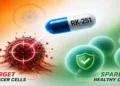
A new study reveals that an innovative antibody, IgE, significantly reduces tumour growth in treatment-resistant breast and ovarian cancers by activating the immune system in unique ways. This breakthrough could offer new hope for patients who do not respond to conventional therapies

WEBDESKWEBDESK
Mar 17, 2025, 11:00 pm IST
in World, Health
Follow on Google News
Representative image

Representative image

FacebookTwitterWhatsAppTelegramEmail

Immunotherapy, or antibody treatment that activates the patient’s own immune system against cancer is increasingly being studied as an alternative to chemotherapy and radiotherapy. This is because it directly targets cancer cells, reducing the negative effects associated with more conventional treatments.

Tumours, such as some breast and ovarian cancers, can express the marker HER2. HER2 is responsible for cancer growth and is the target of existing therapies, such as the most commonly used type of antibodies, IgG. However, this treatment is not always effective in some patients.

Now, scientists have investigated a different antibody type, IgE, which activates the patient’s immune system in different ways than IgG. As they act on different immune cells to IgG, IgE antibodies uniquely stimulate otherwise inactive immune cells in the ‘microenvironment’ surrounding the tumour to target the cancer cells directly.

In the study, led by Dr Heather Bax at King’s College London, the team engineered IgE versions of existing IgG therapies and tested their ability to activate immune cells against HER2-expressing cancer cells.

IgE was shown to direct immune cells against HER2-expressing cancer cells and slowed tumour growth in mice. The tumours grown in mice are known to be resistant to conventional treatments, suggesting this new treatment could be an option for patients who don’t respond to existing therapy.

Further investigation revealed that IgE antibodies stimulated and reprogrammed the ‘immune microenvironment’ around the tumours themselves, shifting from an immunosuppressive to an immunostimulatory response. This means the immune system was activated to target the cancer cells and overcome the tumour’s actions to suppress the attack.

The study has shown the potential of IgE as a new therapy for HER2-expressing cancers, including those resistant to other treatments. The researchers believe that, with the right investment and development, this approach could be used in humans in as soon as 3-5 years.

Senior Author Dr Heather Bax, Postdoctoral Research Fellow in St. John’s Institute of Dermatology, at King’s College London, said, “Around 20% of breast and ovarian cancers express the marker, HER2. By generating anti-HER2 IgE antibodies equivalent to the clinically used IgGs, for the first time, we demonstrate that IgEs harness unique mechanisms to reprogramme the immune microenvironment, switching immune cells to effectively target HER2-expressing cancers, including those resistant to existing therapies.

“Our findings indicate that IgE antibodies could offer a potential new therapy option for patients with HER2-expressing cancer.” Co-Author Professor Sophia Karagiannis, Professor of Translational Cancer Immunology and Immunotherapy, in St. John’s Institute of Dermatology, at King’s College London, added, “By generating a panel of IgE antibodies and studying them in different tumour types, we consistently found that the human immune system reacts in the presence of IgE to restrict the growth of cancer.

“The findings of our latest study speak to the potential of applying IgE to stimulate effective responses against hard-to-treat solid tumours. This new class of drugs holds promise to benefit different patient groups and opens a new frontier in the battle against cancer.”

Dr Kotryna Temcinaite, head of research communications and engagement at Breast Cancer Now, who provided funding for the study, said, “This exciting research could lead to much-needed new treatments for people with HER2 positive breast cancer whose cancers don’t respond to existing therapies. Now we know that the treatment works in principle in mice, researchers can continue to develop this immunotherapy to make it suitable for people, as well as to understand the full effect it could have and who it may benefit the most.”

(With inputs from ANI)


Topics: ImmunotherapyIgE AntibodiesCancer ResearchBreast cancerTumor growthOvarian cancer
Share11TweetSendShareSend
✮ Subscribe Organiser YouTube Channel. ✮
✮ Join Organiser's WhatsApp channel for Nationalist views beyond the news. ✮
Previous News

“Centre has given go ahead for Chadrayaan-5 mission to moon,” says ISRO chief Narayanan

Next News

Uttar Pradesh: Ornithologists confirm pollution-free waters as migratory birds & dolphins thrive at Mahakumbh’s sangam

Related News

Representative image

IIT Madras WSAI & Ohio State University researchers develop new AI framework to aid discovery of next-generation drugs

Representative image

Childhood exposure to bacterial toxin can trigger Colorectal cancer among the young: Study

Representative image

New study in breast cancer progression, drug resistance

Representative image

Antibody-based therapy several notches closer to treating lethal mucormycosis: Study

Representative image

Cancer Screening: Experts call for urgent action on women-centric testing, inadequacies in rural, semi-urban India

Representative image

Aspirin may prevent some cancers from spreading: Study

Load More

Latest News

Chief Minister of West Bengal Suvendu Adhikari

West Bengal has deported 4,800 Bangladeshi infiltrators, 836 more await repatriation: CM Suvendu Adhikari

Over the last 12 years, seven ASI-protected sites have been inscribed on the UNESCO World Heritage List, showcasing India's rich cultural

From Nalanda to Maratha Forts: The seven Indian heritage sites that earned UNESCO recognition in the last 12 years

Demolition of the illegal mosque in Sambhal

Sambhal: Eight booked after ‘I Love Muhammad’ posters, Pakistan-like flags found during demolition of illegal mosque

A representative image

India’s Agricultural Transformation: How India’s Agri sector transformed over the last decade

Ken-Betwa link project: balancing development, water security and ecological responsibility (This is an AI generated Image)

Beyond Bundelkhand: Why the success of the Ken-Betwa link matters for India’s water future

Chandni Qureshi (centre) and Ayush Malik before his conversion; the image on the left purportedly shows Ayush, now known as Mohammad Ali, offering namaz

Exclusive | Chandni Qureshi, Pakistani cleric & secret nikah: Inside Shamli conversion case that triggered an SIT probe

Ceremonial lamp lighting at a seminar in Delhi University organised by Centre for Tribal Studies

Traditional tribal practices can help mitigate planetary crisis: Experts at Delhi University seminar

How India keeps cooking gas cheaper than most nations

The LPG Reality Check: Why India still has the world’s cheapest cooking gas

TMC leader Brahmananda Chakraborty arrested in Howrah after viral video shows him hiding under clothes, accused of cut money in PM Awas Yojana funds. (Image: X)

Hiding under a pile of clothes? TMC leader arrested in PM Awas Yojana ‘Cut money’ case as dramatic video goes viral

Pakistan Prime Minister Shehbaz Sharif face the brunt as Punjab draws excess water from Indus basin and Sindh suffers from scarcity

Pakistan: Indus water drifts to Punjab & erupts political rift; Acute crisis in Dadu canal & drought in Sindh

Load More
  • Privacy
  • Terms
  • Cookie Policy
  • Refund and Cancellation
  • Delivery and Shipping

© Bharat Prakashan (Delhi) Limited.
Tech-enabled by Ananthapuri Technologies

  • Home
  • Search Organiser
  • Bharat
    • Assam
    • Bihar
    • Chhattisgarh
    • Jharkhand
    • Maharashtra
    • View All States
  • World
    • Asia
    • Africa
    • North America
    • South America
    • Europe
    • Australia
  • Editorial
  • Operation Sindoor
  • Opinion
  • Analysis
  • Defence
  • Culture
  • Sports
  • Business
  • RSS @ 100
  • Entertainment
  • More ..
    • Sci & Tech
    • Vocal4Local
    • Special Report
    • Education
    • Employment
    • Books
    • Interviews
    • Travel
    • Health
    • Politics
    • Law
    • Economy
    • Obituary
  • Subscribe Magazine
  • Read Ecopy
  • Advertise
  • Circulation
  • Careers
  • About Us
  • Contact Us
  • Policies & Terms
    • Privacy Policy
    • Cookie Policy
    • Refund and Cancellation
    • Terms of Use

© Bharat Prakashan (Delhi) Limited.
Tech-enabled by Ananthapuri Technologies