Digital infiltration & data threat—China's apps face India's crackdown: 'National security is non-negotiable'
June 7, 2026
  • Read Ecopy
  • Circulation
  • Advertise
  • Careers
  • About Us
  • Contact Us
Android AppiPhone AppArattai
Organiser
  • ‌
  • Bharat
    • Assam
    • Bihar
    • Chhattisgarh
    • Jharkhand
    • Maharashtra
    • View All States
  • World
    • Asia
    • Europe
    • North America
    • South America
    • Africa
    • Australia
  • Editorial
  • International
  • Opinion
  • RSS @ 100
  • More
    • Op Sindoor
    • Analysis
    • Sports
    • Defence
    • Politics
    • Business
    • Economy
    • Culture
    • Special Report
    • Sci & Tech
    • Entertainment
    • G20
    • Azadi Ka Amrit Mahotsav
    • Vocal4Local
    • Web Stories
    • Education
    • Employment
    • Books
    • Interviews
    • Travel
    • Law
    • Health
    • Obituary
  • Subscribe
    • Subscribe Print Edition
    • Subscribe Ecopy
    • Read Ecopy
  • ‌
  • Bharat
    • Assam
    • Bihar
    • Chhattisgarh
    • Jharkhand
    • Maharashtra
    • View All States
  • World
    • Asia
    • Europe
    • North America
    • South America
    • Africa
    • Australia
  • Editorial
  • International
  • Opinion
  • RSS @ 100
  • More
    • Op Sindoor
    • Analysis
    • Sports
    • Defence
    • Politics
    • Business
    • Economy
    • Culture
    • Special Report
    • Sci & Tech
    • Entertainment
    • G20
    • Azadi Ka Amrit Mahotsav
    • Vocal4Local
    • Web Stories
    • Education
    • Employment
    • Books
    • Interviews
    • Travel
    • Law
    • Health
    • Obituary
  • Subscribe
    • Subscribe Print Edition
    • Subscribe Ecopy
    • Read Ecopy
Organiser
  • Home
  • Bharat
  • World
  • Operation Sindoor
  • Editorial
  • Analysis
  • Opinion
  • Culture
  • Defence
  • International Edition
  • RSS @ 100
  • Magazine
  • Read Ecopy
Home Bharat

Digital infiltration & data threat—China’s apps face India’s crackdown: ‘National security is non-negotiable’

India aims to block 119 apps, primarily linked to Chinese developers, citing national security concerns, but delays in enforcement raise questions. With China’s history of digital espionage and data exploitation, India's crackdown reflects a broader strategy to counter Beijing’s technological influence

WEBDESKWEBDESK
Feb 20, 2025, 04:00 pm IST
in Bharat, Technology
Follow on Google News
FacebookTwitterWhatsAppTelegramEmail

India is set to block 119 mobile applications, primarily video and voice chat platforms, linked to developers from China and Hong Kong, in a decisive move against potential cyber threats and Beijing’s growing digital presence. The disclosure, originally made public by Google on February 18 via the Lumen Database—a Harvard University-operated site tracking content removal requests—was mysteriously deleted, raising concerns over transparency and Beijing’s covert influence in cyberspace.

Despite the Centre’s directive, only 15 of the 119 flagged apps have been removed from India’s digital ecosystem so far, with no clear explanation on the delay in enforcing the remaining bans. Officials, when approached for comments, remained tight-lipped, citing the confidentiality provisions of Section 69A of the Information Technology Act, which allows the government to block digital content in the interest of national security, sovereignty, and public order.

The larger question that looms is whether these apps pose a genuine security risk or if China has been using them as a digital Trojan horse to infiltrate India’s cyberspace. Time and again, intelligence reports have pointed to China’s sophisticated cyber-espionage tactics, with Beijing-backed firms accused of collecting vast amounts of data for undisclosed purposes. The Chinese Communist Party (CCP) has deep-rooted control over private enterprises, compelling them to share data with the government under its draconian laws.

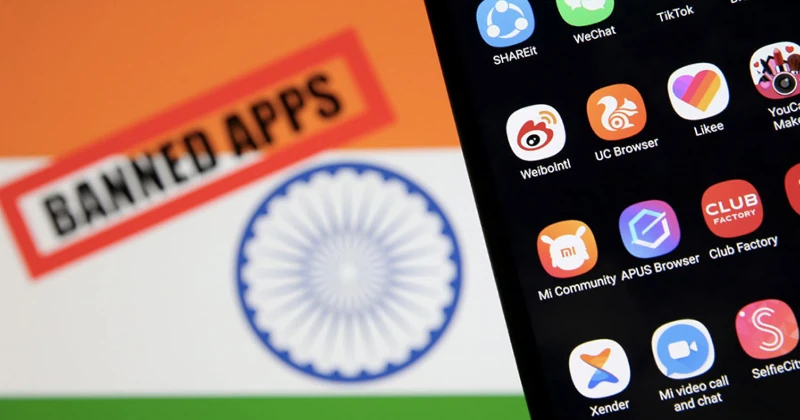
Since May-June 2020, India has blocked a total of 321 Chinese apps, including popular platforms like TikTok, WeChat, and PUBG Mobile. In February 2022, another wave of 54 Chinese apps was banned under Section 69A. The Ministry of Electronics and Information Technology (MeitY) had then issued a scathing statement:

“These 54 apps allegedly obtain various critical permissions and collect sensitive user data. This real-time data is misused and transmitted to servers located in hostile countries. This enables them to compile massive personal data troves for mining, analysis, and profiling by entities hostile to India’s sovereignty and integrity. Additionally, some of these apps engage in espionage and surveillance through unauthorized access to cameras, microphones, GPS tracking, and malicious network activity.”

Unlike previous bans, this latest crackdown is not solely focused on Chinese entities. Several affected apps originate from Singapore, the United States, the United Kingdom, and Australia, indicating a broader regulatory tightening in India’s digital landscape. The move aligns with India’s strategy to strengthen its data sovereignty policies and curb foreign dominance in the tech sector.

Several developers affected by the ban have voiced their frustration over the lack of transparency from Indian authorities. While Google has notified them of the directive, it has provided little clarity on compliance measures.

ChillChat (Singapore): “A severe blow to business”

ChillChat, developed by Singapore-based Mangostar Team, has over a million downloads on Google Play with a 4.1-star rating. A company spokesperson expressed concerns over the impact of the ban:

“A blocking order would significantly impact not only us as developers but also our users in India. Our platform provides video chat and gaming experiences that are integral to many of our users’ daily interactions. A disruption in service could erode trust, which we have worked hard to build in the Indian market.”

The company is seeking clarifications from MeitY and is working with legal teams to ensure compliance with Indian regulations.

ChangApp (China): “Incalculable damage to growth”

Blom, the developer behind China-based ChangApp, responded in an email, originally written in Chinese, that the ban could cause “incalculable damage.” “This move will hinder new user growth and significantly impact our existing user base. In the long run, it could devastate our team and years of work.” Their response, however, conveniently omits the larger issue at play—China’s persistent track record of digital surveillance and data exploitation.

HoneyCam (Australia): “Willing to Comply”

Shellin PTY Ltd, the Australian-based developer of HoneyCam, struck a more cooperative tone:

“India is an important market for HoneyCam, and we attach great importance to its user base. We are well aware of the potential and opportunities of the Indian market and the importance of complying with local laws and regulations. Therefore, we are willing to cooperate with the Indian government to ensure our app meets compliance standards.”

The company claims to have a robust content review mechanism, including automated filtering, manual reviews, and oversight to adhere to local regulations.

While security concerns are at the forefront, the crackdown also aligns with India’s broader economic strategy to reduce dependency on Chinese capital and digital influence. Since 2020, Chinese investments in Indian startups have stalled, with New Delhi imposing stricter screening processes. A report by Gateway House noted that “over the five years ending March 2020, 18 of India’s 30 unicorns were Chinese-funded.”

In April 2020, the Indian government revised its Foreign Direct Investment (FDI) policy to prevent opportunistic takeovers by Chinese firms. The Consolidated FDI Policy, 2020, further reinforced this stance, subjecting all Chinese investment proposals to mandatory security clearances. By November 2021, more than 100 proposals remained stuck in bureaucratic limbo, according to The Economic Times.

Ironically, while China cries foul over India’s app bans, it has been systematically suppressing foreign digital platforms within its own borders. The Great Firewall of China prevents access to Google, Facebook, Twitter, and countless other international apps. Moreover, Beijing has implemented a spate of draconian cybersecurity laws, cracking down on domestic tech giants under the guise of “data security.”


Topics: Chinese App BanFDI policyChinese AppsBan on Chinese AppsChinese developersTrojan horse
Share1TweetSendShareSend
✮ Subscribe Organiser YouTube Channel. ✮
✮ Join Organiser's WhatsApp channel for Nationalist views beyond the news. ✮
Previous News

Himachal Pradesh: VHP hits back at Islamists for opposing installation of Maharana Pratap statue

Next News

Chhattisgarh: Road to bring fortune in remote villages of Balrampur district near Jharkhand border

Related News

A representative image

Union Cabinet approves changes in FDI policy for investments from countries sharing land borders with Bharat

Representative Image

Indian Space Association emphasises importance of FDI policy for Space Sector advancement

Load More

Latest News

(Left) Victorious Indian Men-s hockey team who who won Gold in U-18 Asia Cup (Right) U-18 Women's hockey team who won bronze medal in the Asia Cup

U18 Asia Cup 2026: Indian Men’s hockey wins gold, women secure bronze medal; PM Modi & Amit Shah hail the teams

India’s semiconductor roadmap shifts from import dependence to silicon sovereignty, aiming for a self-reliant ecosystem by Viksit Bharat 2047

From Import Dependence to Silicon Sovereignty: India’s bold semiconductor roadmap for Viksit Bharat 2047

Keralam Chief Minister V.D. Satheeshan

Jamaat-e-Islami Hind Team Meets CM Satheeshan, Senior Ministers, fuel debate over influence in UDF government

Singapore acts against China-linked posts targeting Indian community, cites threat to social harmony

Singapore Invokes OCHA: Facebook, YouTube and X ordered to block anti-Indian content originating from China

Editors of the HAF Wikipedia page run propaganda and disinformation campaign against the organisation, India and Hindu cultural ethos

Wikipedia fuels propaganda against Hindu American Foundation: How anonymous writers demonise Hindu rights group?

Israel to Install Statue of Chhatrapati Shivaji Maharaj; Israel’s Consul General in Mumbai, Yaniv Revach, met Maharashtra Chief Minister Devendra Fadnavis and sough his support in this regard

Chhatrapati Shivaji Maharaj’s legacy to reach Israel; Statue to be installed as symbol of India-Israel friendship

IIGH Public Policy Seminar: Women’s dignity, safety & equal opportunity discussed

Representative Image

Decoding Hezbollah: How the terror group built a massive arsenal against Israel

Representative Image

Plastic, Traffic and Landslides: How rising tourist footfall is posing threat to the mountainous region

The Green Realignment: Why the US-India trade pact is a battle for climate and supply chain security

Load More
  • Privacy
  • Terms
  • Cookie Policy
  • Refund and Cancellation
  • Delivery and Shipping

© Bharat Prakashan (Delhi) Limited.
Tech-enabled by Ananthapuri Technologies

  • Home
  • Search Organiser
  • Bharat
    • Assam
    • Bihar
    • Chhattisgarh
    • Jharkhand
    • Maharashtra
    • View All States
  • World
    • Asia
    • Africa
    • North America
    • South America
    • Europe
    • Australia
  • Editorial
  • Operation Sindoor
  • Opinion
  • Analysis
  • Defence
  • Culture
  • Sports
  • Business
  • RSS @ 100
  • Entertainment
  • More ..
    • Sci & Tech
    • Vocal4Local
    • Special Report
    • Education
    • Employment
    • Books
    • Interviews
    • Travel
    • Health
    • Politics
    • Law
    • Economy
    • Obituary
  • Subscribe Magazine
  • Read Ecopy
  • Advertise
  • Circulation
  • Careers
  • About Us
  • Contact Us
  • Policies & Terms
    • Privacy Policy
    • Cookie Policy
    • Refund and Cancellation
    • Terms of Use

© Bharat Prakashan (Delhi) Limited.
Tech-enabled by Ananthapuri Technologies