IIT Madras and ISRO boost 'Make in India' with SHAKTI microprocessor
October 10, 2026
  • Read Ecopy
  • Circulation
  • Advertise
  • Careers
  • About Us
  • Contact Us
Android AppiPhone AppArattai
Organiser
  • ‌
  • Bharat
    • Assam
    • Bihar
    • Chhattisgarh
    • Jharkhand
    • Maharashtra
    • View All States
  • World
    • Asia
    • Europe
    • North America
    • South America
    • Africa
    • Australia
  • Editorial
  • International
  • Opinion
  • RSS @ 100
  • More
    • World Hindu Congress 2026
    • Op Sindoor
    • Analysis
    • Sports
    • Defence
    • Politics
    • Business
    • Economy
    • Culture
    • Special Report
    • Sci & Tech
    • Entertainment
    • G20
    • Azadi Ka Amrit Mahotsav
    • Vocal4Local
    • Web Stories
    • Education
    • Employment
    • Books
    • Interviews
    • Travel
    • Law
    • Health
    • Obituary
  • Subscribe
    • Subscribe Print Edition
    • Subscribe Ecopy
    • Read Ecopy
  • ‌
  • Bharat
    • Assam
    • Bihar
    • Chhattisgarh
    • Jharkhand
    • Maharashtra
    • View All States
  • World
    • Asia
    • Europe
    • North America
    • South America
    • Africa
    • Australia
  • Editorial
  • International
  • Opinion
  • RSS @ 100
  • More
    • World Hindu Congress 2026
    • Op Sindoor
    • Analysis
    • Sports
    • Defence
    • Politics
    • Business
    • Economy
    • Culture
    • Special Report
    • Sci & Tech
    • Entertainment
    • G20
    • Azadi Ka Amrit Mahotsav
    • Vocal4Local
    • Web Stories
    • Education
    • Employment
    • Books
    • Interviews
    • Travel
    • Law
    • Health
    • Obituary
  • Subscribe
    • Subscribe Print Edition
    • Subscribe Ecopy
    • Read Ecopy
Organiser
  • Home
  • Bharat
  • World
  • Operation Sindoor
  • Editorial
  • Analysis
  • Opinion
  • Culture
  • Defence
  • International Edition
  • RSS @ 100
  • Magazine
  • Read Ecopy
Home Bharat

IIT Madras and ISRO boost ‘Make in India’ with SHAKTI microprocessor

IIT Madras and ISRO have developed the IRIS chip based on the SHAKTI microprocessor, marking a major step towards India's self-reliance in semiconductor technology. This indigenous chip, manufactured entirely in India, strengthens the ‘Make in India’ and ‘Atmanirbhar Bharat’ initiatives for aerospace and beyond

WEBDESKWEBDESK
Feb 15, 2025, 10:00 am IST
inBharat, Sci & Tech
Follow on Google News
Facebook
Twitter
WhatsAppTelegramEmail

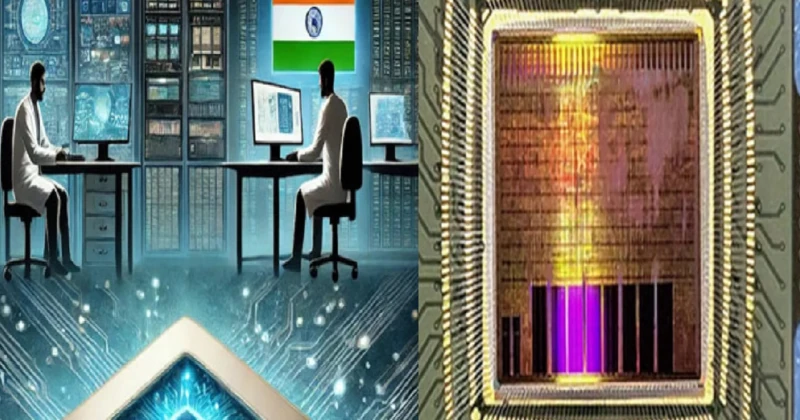
In a significant stride towards self-reliance in semiconductor technology, the Indian Institute of Technology Madras (IIT Madras) and the Indian Space Research Organisation (ISRO) have jointly developed the IRIS (Indigenous RISC-V Controller for Space Applications) chip. This project, aligned with the ‘Make in India’ and ‘Atmanirbhar Bharat’ initiatives, highlights India’s growing expertise in advanced computing technologies for aerospace and other critical sectors.

The IRIS chip, based on the SHAKTI microprocessor, represents a remarkable collaborative effort to advance indigenous semiconductor technology. Developed through the combined expertise of multiple Indian institutions, the project showcases India’s growing self-reliance in the high-tech sector. The ISRO Inertial Systems Unit (IISU), Thiruvananthapuram, played a crucial role in spearheading the initiative, while IIT Madras led the design and development of the chip.

Manufacturing was undertaken by the Semiconductor Laboratory (SCL) in Chandigarh, ensuring that the core fabrication process remained within the country. Tata Advanced Systems in Karnataka handled the packaging, further reinforcing domestic capability in semiconductor assembly. The motherboard production was carried out in Gujarat, and the final assembly took place in Chennai. This coordinated effort across different regions of India highlights the nation’s progress in semiconductor research and development, paving the way for future advancements in indigenous technology.

This effort signifies a major step in India’s ambition to achieve self-sufficiency in semiconductor technology, particularly for space applications.

Key Features of the IRIS Chip

  • Specifically designed to support ISRO’s command and control systems.
  • Built for high fault tolerance and reliability, making it ideal for space missions.
  • Includes custom modules such as WATCHDOG timers and advanced serial buses.
  • Expandable capabilities through multiple boot modes and hybrid memory extensions.
  • Completely designed, manufactured, and assembled in India.

Boosting ‘Make in India’ Through Semiconductor Innovation

Professor V. Kamakoti leads the SHAKTI microprocessor project at the Prathap Subrahmanyam Centre for Digital Intelligence and Secure Hardware Architecture (PSCDISHA) at IIT Madras. SHAKTI processors use RISC-V, an open-source processor technology, under the Digital India RISC-V (DIRV) initiative, supported by the Ministry of Electronics and Information Technology (MeitY).

Professor V. Kamakoti, Director of IIT Madras, emphasized that IRIS is the third successfully fabricated SHAKTI chip, following RIMO in 2018 and MOUSHIK in 2020. Dr. V. Narayanan, Chairman of ISRO, hailed IRIS as a significant milestone in India’s semiconductor development and commended the teams at IISU and IIT Madras for their dedicated efforts. Kamaljeet Singh, Director General of SCL Chandigarh, highlighted that the IRIS chip was developed using SCL’s 180 nm technology node, demonstrating India’s advancing capabilities in semiconductor manufacturing.

The successful development of the IRIS chip reinforces India’s position as a rising player in the global semiconductor sector. It marks a breakthrough for the ‘Make in India’ and ‘Atmanirbhar Bharat’ initiatives, pushing the country towards technological self-sufficiency in aerospace applications and beyond. As India continues its advancements in semiconductor design and manufacturing, this achievement serves as a significant step in securing its place in the future of global technology.

The success of the IRIS chip marks a significant milestone in India’s semiconductor industry, paving the way for future advancements and expansion. As the demand for indigenous microprocessors grows, this breakthrough creates numerous opportunities across various sectors. Beyond aerospace, the IRIS chip has the potential to revolutionize industries such as defense and automotive, strengthening India’s technological self-reliance.

Additionally, it can drive enhanced research and development capabilities in semiconductor fabrication, fostering innovation within the country. This achievement also encourages greater collaboration between academic institutions and government organizations, accelerating progress in microprocessor technology and positioning India as a key player in the global semiconductor landscape.

India has been making significant investments in semiconductor infrastructure, with initiatives like the India Semiconductor Mission (ISM) and partnerships with global tech firms. The development of the IRIS chip aligns with these efforts, demonstrating India’s potential to become a global hub for semiconductor manufacturing and innovation.

With continued investment in fabrication facilities, research centers, and talent development, India is well-positioned to emerge as a leader in the semiconductor domain, reducing reliance on foreign imports and ensuring technological sovereignty for critical sectors.

Topics: ISROIIT (Madras)SHAKTI MicroprocessorSemiconductor Innovation
Share17
Tweet
SendShareSend
✮ Subscribe Organiser YouTube Channel. ✮
✮ Join Organiser's WhatsApp channel for Nationalist views beyond the news. ✮
Previous News

“India maintains global friendships”: Swiss State Secretary confident in nation’s positive role in global affairs

Next News

Pakistan: 11 coal miners from Khyber Pakhtunkhwa killed in Balochistan’s Harnai, six others injured

Related News

IIT Madras hosts first universal brotherhood day celebration, highlights Swami Vivekananda’s legacy and vision for youth

Universal Brotherhood Day: IIT Madras hosts first celebration honouring Swami Vivekananda’s historic Chicago speech

PM Modi hails ISRO as 430 satellites from 34 nations are launched on Indian rocket; Calls for safe & sustainable space

Representative Image

No Privatisation, Bigger Mission: ISRO clarifies role as India targets $44 billion space economy by 2033

ISRO Successfully Launches EOS-05: India’s indigenous “eye in the sky” to power development & national security

India has partnered with UNESCO to develop AI-powered immersive learning tools for more engaging and personalised classrooms

India-UNESCO Partnership: IIT Madras to develop AI-powered immersive learning technology for classrooms worldwide

SSLV SS1 Upgrade: India Builds a Faster and More Competitive Launch Future

Explainer: ISRO’s SS1 upgrade set to supercharge India’s small satellite launch vehicle

Load More

Latest News

(From Left To Right) Alexandra Leeper, Carolyn Hull, Ruth Schilling, Tom Pickerell, Anusha Kesarkar Gavankar Hem Kaur Saroya

Sagarmanthan 2026: Global experts call for systemic shift to drive women into top maritime leadership positions

DWWA President Mahalakshmi Subramani meets women trainees at NSG Training Academy

From Resilience to Leadership: DWWA President encourages women trainees at NSG academy to embrace ‘Mahila Shakti’

National Investigation Agency

Kishtwar Terror Attack Case: NIA chargesheets OGW Maneer Ahmed; Traces plot directly to Pakistan

Telangana Row: Journo Jalli Rekha Detained With Sick Infant Over Post on CM Revanth Reddy’s Daughter

Outrage as Hyderabad Police grill journalist with sick baby for hours over post on CM Revanth’s daughter’s business

Raghoo Puri, the Indian delegate at the UN

Indian delegate at UN Raghoo Puri mauls Pakistan over terrorism: Calls Shehbaz Govt as illegitimate ‘Form 47’ regime

Indian Knowledge Systems:Adding Ātma to Ātmanirbhar Bhārat

Tamil Nadu and Puducherry Bypolls: TVK wins 2 seats, Dharapuram and Madurantakam; NDA secures Thattanchavady

Five new projects were inaugurated and two major projects were announced at Gau-Vigyan Anusandhan Kendra, Gauteerth, Deolapar by Param Pujaniya Sarsanghchalak Dr. Mohan Bhagwat Ji

Gau-mata is not merely a matter of faith but deeply connected with rural life, environment and economy: Dr Bhagwat

M T Ramesh
BJP State General Secretary (Left), CM Sateeshan with Rahul Gandhi (Right)

Keralam CM Satheeshan should resign if he distrusts electoral system: BJP’s MT Ramesh hits back at SIR stir in Delhi

ABVP demands arrest of Congress Lok Sabha MP and sacked JNU Professor Angomcha Bimol Akoijam

JNU Sexual Harassment Case: ABVP demands immediate arrest of sacked Prof and Congress MP Bimol

Load More
  • Privacy
  • Terms
  • Cookie Policy
  • Refund and Cancellation
  • Delivery and Shipping

© Bharat Prakashan (Delhi) Limited.
Tech-enabled by Ananthapuri Technologies

  • Home
  • Search Organiser
  • Bharat
    • Assam
    • Bihar
    • Chhattisgarh
    • Jharkhand
    • Maharashtra
    • View All States
  • World
    • Asia
    • Africa
    • North America
    • South America
    • Europe
    • Australia
  • Editorial
  • Operation Sindoor
  • Opinion
  • Analysis
  • Defence
  • Culture
  • Sports
  • Business
  • RSS @ 100
  • Entertainment
  • More ..
    • Sci & Tech
    • Vocal4Local
    • Special Report
    • Education
    • Employment
    • Books
    • Interviews
    • Travel
    • Health
    • Politics
    • Law
    • Economy
    • Obituary
  • Subscribe Magazine
  • Read Ecopy
  • Advertise
  • Circulation
  • Careers
  • About Us
  • Contact Us
  • Policies & Terms
    • Privacy Policy
    • Cookie Policy
    • Refund and Cancellation
    • Terms of Use

© Bharat Prakashan (Delhi) Limited.
Tech-enabled by Ananthapuri Technologies