Trading with 'Tariffying Trump
August 4, 2026
  • Read Ecopy
  • Circulation
  • Advertise
  • Careers
  • About Us
  • Contact Us
Android AppiPhone AppArattai
Organiser
  • ‌
  • Bharat
    • Assam
    • Bihar
    • Chhattisgarh
    • Jharkhand
    • Maharashtra
    • View All States
  • World
    • Asia
    • Europe
    • North America
    • South America
    • Africa
    • Australia
  • Editorial
  • International
  • Opinion
  • RSS @ 100
  • More
    • Op Sindoor
    • Analysis
    • Sports
    • Defence
    • Politics
    • Business
    • Economy
    • Culture
    • Special Report
    • Sci & Tech
    • Entertainment
    • G20
    • Azadi Ka Amrit Mahotsav
    • Vocal4Local
    • Web Stories
    • Education
    • Employment
    • Books
    • Interviews
    • Travel
    • Law
    • Health
    • Obituary
  • Subscribe
    • Subscribe Print Edition
    • Subscribe Ecopy
    • Read Ecopy
  • ‌
  • Bharat
    • Assam
    • Bihar
    • Chhattisgarh
    • Jharkhand
    • Maharashtra
    • View All States
  • World
    • Asia
    • Europe
    • North America
    • South America
    • Africa
    • Australia
  • Editorial
  • International
  • Opinion
  • RSS @ 100
  • More
    • Op Sindoor
    • Analysis
    • Sports
    • Defence
    • Politics
    • Business
    • Economy
    • Culture
    • Special Report
    • Sci & Tech
    • Entertainment
    • G20
    • Azadi Ka Amrit Mahotsav
    • Vocal4Local
    • Web Stories
    • Education
    • Employment
    • Books
    • Interviews
    • Travel
    • Law
    • Health
    • Obituary
  • Subscribe
    • Subscribe Print Edition
    • Subscribe Ecopy
    • Read Ecopy
Organiser
  • Home
  • Bharat
  • World
  • Operation Sindoor
  • Editorial
  • Analysis
  • Opinion
  • Culture
  • Defence
  • International Edition
  • RSS @ 100
  • Magazine
  • Read Ecopy
Home Bharat

Trading with ‘Tariffying Trump

Even during his last administration, Donald Trump did the politics of protectionism and followed ‘America First policy’, especially in trade. Now as he is back in the office, one should expect the world going in the era of tariff war again

Yashodhan AYashodhan A
Feb 3, 2025, 09:00 pm IST
in Bharat, Analysis
Follow on Google News
US President Donald Trump signs documents in the Oval Office at the White House on Inauguration Day in Washington, US, January 20

US President Donald Trump signs documents in the Oval Office at the White House on Inauguration Day in Washington, US, January 20

FacebookTwitterWhatsAppTelegramEmail

In his 1969 inaugural address, Nixon spoke of America as a “shining city upon a hill,” a phrase borrowed from John Winthrop, the Puritan leader who first used it in the 1630s to describe the Massachusetts Bay Colony as a beacon for the world. For Nixon, the “city on a hill” symbolised American exceptionalism and the nation’s role as a moral and political leader on the world stage. Nixon’s use of the phrase was intended to evoke a sense of pride and purpose, emphasising the ideals of liberty, democracy, and leadership that America stood for.

In terms of the “shining city on a hill,” Nixon’s vision of trade can be viewed as part of this larger narrative of American exceptionalism. He wanted the US to lead by example—not just in terms of military or political strength but also by fostering open economic relations that could contribute to peace and prosperity worldwide. However, the practical realities of trade policies, including tariffs, economic agreements, and global competition, often contradict this idealistic vision. The Republican Party’s approach to international trade has evolved over time, but historically, the party has generally supported free-market principles and global trade.

President Trump clearly deviates from this tradition by emphasisng the importance of protectionism for the US economy. He draws his inspiration from William McKinley, the 25th US President, who imposed import tariffs through the McKinley Tariff. McKinley raised the average duty on imports to nearly 50 per cent, aiming to protect domestic industries and workers from foreign competition. President Trump affirmed his vision at the World Economic Forum in Davos, stating: “If you don’t make your product in America, which is your prerogative, then, very simply, you will have to pay a tariff — differing amounts, but a tariff — which will direct hundreds of billions of dollars and even trillions of dollars into our Treasury to strengthen our economy and pay down debt. Under the Trump administration, there will be no better place on Earth to create jobs, build factories, or grow a company than right here in the good old USA.”

President Trump also signed an “America First” trade policy executive order on his first day in office, stating: “I am establishing a robust and reinvigorated trade policy that promotes investment and productivity, enhances our nation’s industrial and technological advantages, defends our economic and national security, and — above all — benefits American workers, manufacturers, farmers, ranchers, entrepreneurs, and businesses.” Clearly, the protectionism and tariffs were aimed at promoting American manufacturing and jobs. Additionally, Trump’s administration committed to American leadership in Artificial Intelligence (AI) with initiatives such as doubling AI research investment, establishing national AI research institutes, strengthening leadership in AI technical standards, and issuing the world’s first AI regulatory guidance.

India’s total exports of software services, including those delivered by foreign affiliates of Indian companies, increased to $205.2 billion during 2023-24

This paradigm presents both challenges and opportunities for India, particularly in its trade relations with the US goods and services trade with India, which amounted to an estimated $191.8 billion in 2022. Of this, exports were $73.0 billion, while imports totalled $118.8 billion, resulting in a US trade deficit with India of $45.7 billion in goods and services. Going forward, the US will likely aim to reduce this trade deficit with India. India’s exports to the US increased by 5.57 per cent, reaching $60 billion from April to December in FY25. Since 2021-22, the US has been India’s largest trading partner, accounting for about 18 per cent of India’s total goods exports,  over 6 per cent of its imports, and about 11 per cent of total bilateral trade.

In December of the previous year, President Trump commented that India imposes “high” tariffs, reiterating his intention to impose reciprocal tariffs on certain American imports. The typical Indian response to such gestures is tariff reciprocity rather than pragmatic business tradecraft. While tariff reciprocity may yield some results, it also strengthens India’s leadership in specific segments and supports its exports. However, there is an opportunity for India to purchase more oil and gas, minerals, and cement to meet its growing energy and infrastructure needs. There is significant scope for India to import defence equipment from the USA in certain strategic segments. At the very least, a bilateral negotiation on these topics could improve India’s supply chain resiliency. Furthermore, India’s willingness to import American products based on its needs could lead to advantageous negotiating positions.

India’s exports to the US

India’s total exports of software services, including those delivered by foreign affiliates of Indian companies, increased to $205.2 billion during 2023-24, up from $200.6 billion in the previous fiscal year, according to a Reserve Bank survey. This represents India’s highly significant business sector. However, given the US stance on immigration, this sector could face challenges. While President Trump expressed strong support for the H-1B program, he also had a base of supporters who viewed the program unfavourably. There is growing political speculation about the abuse of the H-1B program, particularly in relation to Indian software services.

It may be time for India to think beyond just software services and focus more on software products. Prime Minister Modi has emphasised that AI embodies the American-Indian spirit, and this theme should be carried forward in negotiations with the US. The US will also need a skilled workforce and expertise in software and scientific fields to drive growth in science and technology.

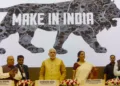
India must navigate this shift by balancing strategic trade imports and exports while also preparing initiatives like “Make in India” and “Make for India.” America can no longer be perceived as the “shining city upon a hill,” but rather as “stunning pragmatism and opportunism upon a hill.”

 

Topics: Nixon's vision of tradeUSA and IndiaMake In IndiaPresident Trump1969 inauguralWilliam McKinley
ShareTweetSendShareSend
✮ Subscribe Organiser YouTube Channel. ✮
✮ Join Organiser's WhatsApp channel for Nationalist views beyond the news. ✮
Previous News

Uttarakhand: UCC institutionalising Uniform Civility

Next News

Chandrika Tandon’s Grammy triumph: Blending ancient chants with global sounds in ‘Triveni’

Related News

A proposed industrial partnership could redefine India's place in the global combat aircraft manufacturing ecosystem

India emerges as Dassault’s second global Rafale production hub under proposed 114 fighter jet programme

The Union Cabinet has approved the MPMS and Semicon 2.0 schemes to strengthen electronics manufacturing

Modi Government’s Twin Tech Revolution: India eyes Rs 40 lakh crore electronics manufacturing boom

From Battlefield Validation to Global Ambition: Bharat’s defence push marks the rise of indigenous military power

Union Minister Sarbananda Sonowal unveils first India-made export-import shipping container

Union Minister Sarbananda Sonowal unveils India’s first Made-in-India EXIM shipping container for global trade

IIT Gandhinagar to develop India’s first indigenous cooling tech for EVs

IIT Gandhinagar secures Rs 20 lakh grant to build India’s first homegrown cooling technology for EVs & AI data centres

US President Trump signs the US–Iran Peace Agreement at Versailles, France

West Asia Conflict: The deal out of exhaustion

Load More

Latest News

PoJK bloodshed raises questions over Western media's selective coverage; India seeks global scrutiny

PoJK bloodshed exposes questions over Western media’s selective coverage of human rights crisis

Zuckerberg must apologise for blocking PM Modi's video, says MPs' panel chief

Parliamentary panel seeks Zuckerberg’s public apology over PM Modi video removal, warns of safe harbour review

Keralam BJP VP KS Radhakrishnan alleges two Christian Bishops mobilised youths for CJP agitation

DRDO calls MSMEs to build swarm drones; The game-changing tech to consolidate India’s capabilities in next-gen warfare

Balochistan & Enthno-Nationalist Armed Resistance: A nightmare for the Pakistani Army

Tamil Nadu: Supreme Court refuses to stay HC order on Thiruparankundram Deepam; TVK govt faces legal setback

Beyond the “Gaumutra” jibe

FCRA and NGOs: Ensuring accountability, protecting sovereignty

Tamil Nadu: Hindu Munnani’s protest stops meat waste dumping at historic Shiva temple in Tiruvallur

Devotees throng Baba Baidyanath Dham in Deoghar

Jharkhand: Devotees throng Baba Baidyanath Dham in Deoghar on first Monday of Shravan

Load More
  • Privacy
  • Terms
  • Cookie Policy
  • Refund and Cancellation
  • Delivery and Shipping

© Bharat Prakashan (Delhi) Limited.
Tech-enabled by Ananthapuri Technologies

  • Home
  • Search Organiser
  • Bharat
    • Assam
    • Bihar
    • Chhattisgarh
    • Jharkhand
    • Maharashtra
    • View All States
  • World
    • Asia
    • Africa
    • North America
    • South America
    • Europe
    • Australia
  • Editorial
  • Operation Sindoor
  • Opinion
  • Analysis
  • Defence
  • Culture
  • Sports
  • Business
  • RSS @ 100
  • Entertainment
  • More ..
    • Sci & Tech
    • Vocal4Local
    • Special Report
    • Education
    • Employment
    • Books
    • Interviews
    • Travel
    • Health
    • Politics
    • Law
    • Economy
    • Obituary
  • Subscribe Magazine
  • Read Ecopy
  • Advertise
  • Circulation
  • Careers
  • About Us
  • Contact Us
  • Policies & Terms
    • Privacy Policy
    • Cookie Policy
    • Refund and Cancellation
    • Terms of Use

© Bharat Prakashan (Delhi) Limited.
Tech-enabled by Ananthapuri Technologies