





Marichjhapi Massacre (1979): Hindu refugees brutally slaughtered in West Bengal under Communist government's repression
August 7, 2026
  • Read Ecopy
  • Circulation
  • Advertise
  • Careers
  • About Us
  • Contact Us
Android AppiPhone AppArattai
Organiser
  • ‌
  • Bharat
    • Assam
    • Bihar
    • Chhattisgarh
    • Jharkhand
    • Maharashtra
    • View All States
  • World
    • Asia
    • Europe
    • North America
    • South America
    • Africa
    • Australia
  • Editorial
  • International
  • Opinion
  • RSS @ 100
  • More
    • Op Sindoor
    • Analysis
    • Sports
    • Defence
    • Politics
    • Business
    • Economy
    • Culture
    • Special Report
    • Sci & Tech
    • Entertainment
    • G20
    • Azadi Ka Amrit Mahotsav
    • Vocal4Local
    • Web Stories
    • Education
    • Employment
    • Books
    • Interviews
    • Travel
    • Law
    • Health
    • Obituary
  • Subscribe
    • Subscribe Print Edition
    • Subscribe Ecopy
    • Read Ecopy
  • ‌
  • Bharat
    • Assam
    • Bihar
    • Chhattisgarh
    • Jharkhand
    • Maharashtra
    • View All States
  • World
    • Asia
    • Europe
    • North America
    • South America
    • Africa
    • Australia
  • Editorial
  • International
  • Opinion
  • RSS @ 100
  • More
    • Op Sindoor
    • Analysis
    • Sports
    • Defence
    • Politics
    • Business
    • Economy
    • Culture
    • Special Report
    • Sci & Tech
    • Entertainment
    • G20
    • Azadi Ka Amrit Mahotsav
    • Vocal4Local
    • Web Stories
    • Education
    • Employment
    • Books
    • Interviews
    • Travel
    • Law
    • Health
    • Obituary
  • Subscribe
    • Subscribe Print Edition
    • Subscribe Ecopy
    • Read Ecopy
Organiser
  • Home
  • Bharat
  • World
  • Operation Sindoor
  • Editorial
  • Analysis
  • Opinion
  • Culture
  • Defence
  • International Edition
  • RSS @ 100
  • Magazine
  • Read Ecopy
Home Bharat

Marichjhapi Massacre (1979): Hindu refugees brutally slaughtered in West Bengal under Communist government’s repression

The Marichjhapi Massacre (1979) remains one of the darkest chapters in the history of post-independence India. It involved the brutal repression and slaughter of Hindu refugees by the Communist government of West Bengal. These refugees, primarily belonging to the Dalit Namasudra community, had fled persecution in East Pakistan (now Bangladesh) and sought to settle in Marichjhapi, an island in the Sundarbans

WEBDESKSubhra ChattopadhyayWEBDESKandSubhra Chattopadhyay
Feb 1, 2025, 06:00 pm IST
inBharat, West Bengal
Follow on Google News
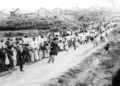
Refugees leaving after Marichjhapi massacre (File Imge)

Refugees leaving after Marichjhapi massacre (File Imge)

Facebook
Twitter
WhatsAppTelegramEmail

January 31 marks the anniversary of the Marichjhapi massacre, a tragic and often overlooked chapter in India’s history. On this day in 1979, the Left Front government in West Bengal was accused of turning Marichjhapi Island in the Sundarbans into a Kill zone. The massacre is still considered a shameful event for civilized society.

Background of the Marichjhapi Massacre

After the 1947 Partition, millions of Hindu refugees fled to West Bengal from East Pakistan (now Bangladesh). Among them were many lower-caste Hindus, including the Namashudra community, who faced severe persecution in Pakistan. The Congress government in West Bengal failed to provide adequate rehabilitation for them. In the 1950s, the government proposed sending refugees to Dandakaranya, a region in central India, for resettlement. However, the refugees struggled to adapt to the harsh conditions there—rocky terrain, long droughts, and an unfamiliar climate—leading many to return to West Bengal in small groups beginning in 1958.

On January 25, 1976, Jyoti Basu, a prominent leader of the Left Front, addressed a public meeting in Bhilai, near the Mana refugee camp in Dandakaranya. He promised that if the Left Front came to power in West Bengal, they would allow the refugees to settle in the Sundarbans. The Left Front came to power in 1977, and by early 1978, groups of refugees began arriving from Dandakaranya and settling on Marichjhapi Island, a previously uninhabited area in the Sundarbans.

Refugees Settle and begin farming and fishing

Upon arriving at Marichjhapi, the refugees began farming, fishing, and engaging in small businesses to sustain themselves. However, the Left Front government soon declared the area an ecological reserve and deemed their settlement illegal. Despite the refugees request for proper rehabilitation, the government refused to assist them and instead decided to evict them by force.

The eviction campaign

Between January and May 1979, the government launched a brutal operation to expel the refugees. The supply of food, water, medicine, and essential goods was cut off, leading to widespread hunger, disease, and suffering on the island. State police and Leftist cadres carried out violent operations between January 31 and May 11, 1979, during which thousands of refugees were killed. Reports allege that women, children, and the elderly were also murdered during this operation. Some accounts suggest that the government even threw the bodies of the dead and dying into crocodile-infested waters to dispose of them, with the bodies sometimes being consumed by crocodiles or tigers.

The Scale of the Tragedy

Estimates of the death toll vary, with some sources claiming that between 4,000 and 10,000 people were killed. However, the communist government has never acknowledged the scale of the massacre, and no trials or investigations have been conducted. Journalists who attempted to investigate were often stopped or prevented from gathering information. The Left Front has never taken responsibility for the massacre, and there have been efforts to erase this dark chapter from history.

Topics: Marichjhapi MassacreNamashudra communityJyoti Basu
Share7
Tweet
SendShareSend
✮ Subscribe Organiser YouTube Channel. ✮
✮ Join Organiser's WhatsApp channel for Nationalist views beyond the news. ✮
Previous News

Odisha: CM Majhi Slams Sonia Gandhi’s remarks as insult to President Murmu and Santhal community

Next News

Union Budget: Bihar NDA leaders express gratitude after major announcements for State

Related News

Marichjhapi Massacre (1979) is viewed as a tragic episode involving refugee eviction, blockade, and violence under the Left Front government in West Bengal

The Marichjhapi Massacre: Exposing the Left’s genocide of Hindu refugees and the decades of secular silence

Load More

Latest News

Dr Vasudev Sharan Agrawal

Dr Vasudev Sharan Agrawal Birth Anniversary: Archaeologist who gave scientific depth to India’s civilisational heritage

Gurudev Rabindranath Tagore

Rabindranath Tagore Death Anniversary: Remembering Gurudev’s timeless legacy of freedom, literature & humanity

(AI-generated Image)

Karnataka: BMTC parts procurement scam exposes Rs 25 crore fraud, 8 officials suspended

LeT Terrorist Mohammad Lateef Bhat on the Run; J&K Police Announces Rs 15 Lakh Reward

J&K Police announces Rs15 Lakh reward for LeT terrorist Mohammad Lateef Bhat wanted in murder of policeman

CBI claims NEET-UG 2026 leak network used WhatsApp, Telegram and digital files to circulate question papers before exam (This image is generated by AI)

NEET-UG 2026 Paper Leak: CBI says WhatsApp chats, Telegram messages and PDF files circulate question papers before exam

India's FCRA, US FARA and China's Foreign NGO Law reflect different legal approaches to foreign funding, united by a common emphasis on transparency and national security

Foreign Funding and Transparency: How India’s FCRA, US FARA and China’s Foreign NGO Law prioritise national security?

RSS Karyakartas carry our relief work in flood-hit Assam

Assam Flood: RSS Swayamsevaks reached 40,168 affected families with relief; Organised 50 medical camps

‘Har Ghar Tiranga’ campaign in J&K: Ahead of Independence Day, rural women in Udhampur stitch Tricolours

Former DMK Minister Ponmudi

Tamil Nadu: Chennai court issues NBW against former DMK Minister Ponmudi over remarks on Saivite, Vaishnavite symbols

12th National Handloom Day

12th National Handloom Day: Honouring the weaver, preserving a civilisational craft

Load More
  • Privacy
  • Terms
  • Cookie Policy
  • Refund and Cancellation
  • Delivery and Shipping

© Bharat Prakashan (Delhi) Limited.
Tech-enabled by Ananthapuri Technologies

  • Home
  • Search Organiser
  • Bharat
    • Assam
    • Bihar
    • Chhattisgarh
    • Jharkhand
    • Maharashtra
    • View All States
  • World
    • Asia
    • Africa
    • North America
    • South America
    • Europe
    • Australia
  • Editorial
  • Operation Sindoor
  • Opinion
  • Analysis
  • Defence
  • Culture
  • Sports
  • Business
  • RSS @ 100
  • Entertainment
  • More ..
    • Sci & Tech
    • Vocal4Local
    • Special Report
    • Education
    • Employment
    • Books
    • Interviews
    • Travel
    • Health
    • Politics
    • Law
    • Economy
    • Obituary
  • Subscribe Magazine
  • Read Ecopy
  • Advertise
  • Circulation
  • Careers
  • About Us
  • Contact Us
  • Policies & Terms
    • Privacy Policy
    • Cookie Policy
    • Refund and Cancellation
    • Terms of Use

© Bharat Prakashan (Delhi) Limited.
Tech-enabled by Ananthapuri Technologies








