Unmasking the Delhi Riots 2020: How Aam Aadmi Party’s Municipal Councilor Tahir Hussain fueled communal tensions
June 4, 2026
  • Read Ecopy
  • Circulation
  • Advertise
  • Careers
  • About Us
  • Contact Us
Android AppiPhone AppArattai
Organiser
  • ‌
  • Bharat
    • Assam
    • Bihar
    • Chhattisgarh
    • Jharkhand
    • Maharashtra
    • View All States
  • World
    • Asia
    • Europe
    • North America
    • South America
    • Africa
    • Australia
  • Editorial
  • International
  • Opinion
  • RSS @ 100
  • More
    • Op Sindoor
    • Analysis
    • Sports
    • Defence
    • Politics
    • Business
    • Economy
    • Culture
    • Special Report
    • Sci & Tech
    • Entertainment
    • G20
    • Azadi Ka Amrit Mahotsav
    • Vocal4Local
    • Web Stories
    • Education
    • Employment
    • Books
    • Interviews
    • Travel
    • Law
    • Health
    • Obituary
  • Subscribe
    • Subscribe Print Edition
    • Subscribe Ecopy
    • Read Ecopy
  • ‌
  • Bharat
    • Assam
    • Bihar
    • Chhattisgarh
    • Jharkhand
    • Maharashtra
    • View All States
  • World
    • Asia
    • Europe
    • North America
    • South America
    • Africa
    • Australia
  • Editorial
  • International
  • Opinion
  • RSS @ 100
  • More
    • Op Sindoor
    • Analysis
    • Sports
    • Defence
    • Politics
    • Business
    • Economy
    • Culture
    • Special Report
    • Sci & Tech
    • Entertainment
    • G20
    • Azadi Ka Amrit Mahotsav
    • Vocal4Local
    • Web Stories
    • Education
    • Employment
    • Books
    • Interviews
    • Travel
    • Law
    • Health
    • Obituary
  • Subscribe
    • Subscribe Print Edition
    • Subscribe Ecopy
    • Read Ecopy
Organiser
  • Home
  • Bharat
  • World
  • Operation Sindoor
  • Editorial
  • Analysis
  • Opinion
  • Culture
  • Defence
  • International Edition
  • RSS @ 100
  • Magazine
  • Read Ecopy
Home Bharat

Unmasking the Delhi Riots 2020: How Aam Aadmi Party’s Municipal Councilor Tahir Hussain fueled communal tensions

The Delhi riots of February 2020 exposed deep political and communal rifts, with violent clashes leaving lasting scars. Allegations have pointed to Aam Aadmi Party’s Municipal Councilor, Tahir Hussain, as a key figure in orchestrating the violence, raising serious concerns about political involvement in fueling such chaos

WEBDESKWEBDESK
Jan 27, 2025, 06:30 pm IST
in Bharat, Delhi
Follow on Google News
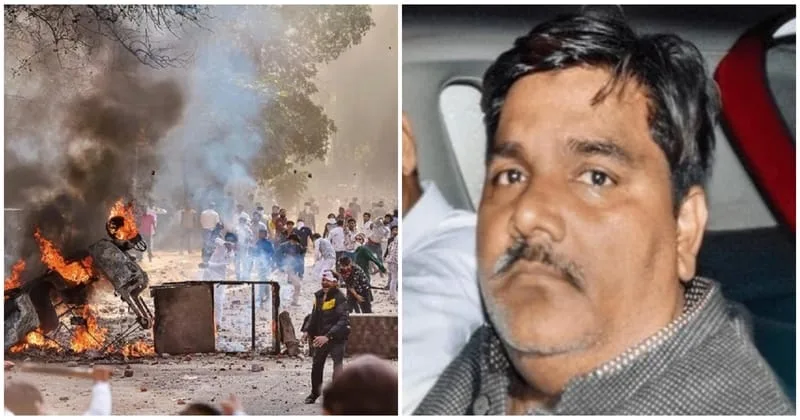
Aam Aadmi Party’s Municipal Councilor Tahir Hussain (Right)

Aam Aadmi Party’s Municipal Councilor Tahir Hussain (Right)

FacebookTwitterWhatsAppTelegramEmail

The Delhi riots of February 2020 shook the nation, exposing deep political and communal fault lines. Violent clashes between groups, primarily along religious lines, led to the loss of life and property and an escalation of mistrust. Amidst the tragedy, several alarming reflections, especially those pointing toward premeditated action, surfaced. Among these, some individuals in Delhi’s Muslim community have drawn attention to what they believe were deliberate preparations for violence. In particular, the claims of involvement by figures like Aam Aadmi Party’s Municipal Councilor Tahir Hussain sparked significant controversy.

The Allegations and Claims
The 2020 Delhi riots were not a mere outbreak of spontaneous violence; instead, various accounts suggest that they were preceded by careful preparations, strategic thinking, and coordinated efforts. The points raised, particularly by some members of the Muslim community in Delhi, paint a disturbing picture of a well-orchestrated event, where violence was preplanned and communities were targeted along religious lines. The 25 points of reflection outlined by certain individuals reveal significant detail about the planning stages of the riot. They suggest a high level of organisation, including the collection of weapons, the marking of Hindu areas, and the mobilisation of people across states.

Here are some of the key points highlighted in the reflections:

Premeditation and Preparation: The assertion that preparations were made “before the war” suggests that violence was planned in advance. The mobilisation of resources, from weapons to personnel, points to a level of coordination that goes beyond the typical escalation of protests into violence.

Infiltration and Resource Mobilisation: Relatives were reportedly called from other states, and money was collected to fund the planned violence. This indicates not only the involvement of local elements but also suggests the participation of outsiders who might have been directed to take part in the chaos.

The Role of Political and Religious Leaders: Claims suggest that some people took matters into their own hands, with no formal leadership in place to control the narrative or ensure peaceful resolution. Leaders, including political figures like Tahir Hussain, have been accused of inciting violence, though investigations are still ongoing.

Targeting and Identification: The use of slingshots, petrol bombs, and even acid bags, coupled with the use of helmets to distinguish attackers, raises questions about the intentional targeting of specific communities, particularly Hindus. The strategic marking of Hindu houses and shops indicates a clear intent to cause harm to specific religious groups.

Diverting Attention and Manipulating Sympathy: The strategic use of women and children to divert attention to places like Shaheen Bagh while the men prepared for violence is one of the more troubling aspects of the reflections. This tactic appears designed to distract from the violence as it unfolded, creating a false narrative of peaceful protest.

A Call for Reflection and Unity

The 2020 Delhi riots were undoubtedly fueled by a complex array of issues, not least of which were political tensions surrounding the Citizenship Amendment Act (CAA) and the National Register of Citizens (NRC). While these laws remain controversial, it is essential that political parties and community leaders do not use these issues as tools for further division. The tragic events of the Delhi riots exposed the dangers of division, not only between Hindus and Muslims but also between different political factions.

One of the more controversial aspects of the reflections is the criticism aimed at secular Hindus, who are described as “stupid and hypocritical.” This sentiment likely arises from a sense of betrayal, as many individuals within the Muslim community may have believed that secularism in India, which enshrines religious tolerance, was undermined by the actions of both political parties and specific individuals in power. However, labelling an entire community in such broad terms is both divisive and counterproductive.

Lessons for the Future

As we reflect on the Delhi riots and the complex dynamics that led to them, there are key lessons that must be learned:

Political Responsibility: Leaders must prioritise national unity over political gains. It is crucial that political figures from all sides recognise the responsibility they hold in either exacerbating or alleviating communal tensions. Exploiting religious divides for electoral advantage only deepens the wounds of the nation.

The Role of Law: The justice system must be empowered to act impartially, ensuring that all individuals, regardless of religion or politics, are held accountable for their actions. The future of a peaceful India lies in the ability of the legal system to act without fear or favour.

Youth Engagement: The next generation of Indians must be taught the values of tolerance, respect, and peaceful conflict resolution. They must be equipped with the tools to engage in constructive dialogue, rather than turning to violence as a means of expression.

Also Read: US Suspends All Aid to Bangladesh: The impact of Trump’s 90-day moratorium

The Delhi riots of February 2020 erupted amidst widespread protests against the Citizenship Amendment Act and the National Register of Citizens. These protests, initially focused on the controversial legislation, quickly escalated into violent clashes between pro- and anti-CAA groups, particularly in Northeast Delhi. The violence, which included targeted attacks on properties and individuals along religious lines, exposed the deepening fault lines within the capital. The riots resulted in over 50 deaths and hundreds of injuries, leaving behind a trail of devastation. The incidents raised serious questions about political polarisation, communal tensions, and the role of law enforcement.


Topics: Aam Aadmi PartyDelhi riots 2020Communal Tensions in IndiaPolitical PolarisationCAA NRC ProtestsAAP Municipal Councilor Tahir Hussain
ShareTweetSendShareSend
✮ Subscribe Organiser YouTube Channel. ✮
✮ Join Organiser's WhatsApp channel for Nationalist views beyond the news. ✮
Previous News

Tackling India’s Water Crisis: Learning from Israel’s success

Next News

Mahakumbh : Sants, Sangh and society together will make Bharat a world leader

Related News

Drug Census or Political Exercise? Punjab survey includes questions on Bhagwant Mann Government’s schemes & performance

BJP sweeps Gujarat local body elections 2026

Gujarat Local Body Poll Results: PM Modi hails BJP’s clean sweep; AAP & Congress party bite the dust

2020 Delhi Riots

Delhi Riots 2020: Stories of 12 Hindu families who lost their loved ones in & still await justice

Former AAP councillor Tahir Hussain, Salim Malik and Athar Khan denied bail by Delhi court

Delhi Anti-Hindu Riots: Court denies bail to former AAP councillor Tahir Hussain, Salim Malik, & Athar in 2020 case

Former CJI DY Chandrachud (Left) and Umar Khalid (Right)

‘Bail before conviction is a right, But national security demands scrutiny’: Ex-CJI Chandrachud on Umar Khalid case

Supreme Court rejects bail pleas of Umar Khalid, Sharjeel Imam in 2020 Delhi Riots case, says conspiracy allegations grave

Delhi Riots, a conspiracy, Not any protest gone wrong: Why Supreme Court refused bail to Umar Khalid and Sharjeel Imam

Load More

Latest News

Bangladesh’s reported JF-17 push has triggered fresh scrutiny after India’s Ops Sindoor exposed the vulnerabilities of Pakistani-Chinese defence systems and precision strike capabilities

Shadows of Operation Sindoor: Questions loom over Bangladesh’s JF-17 ambitions amid Sino-Pakistani tech vulnerabilities

B. Nagendra, Congress MLA and former minister in Karnataka

Karnataka: CBI files chargesheets against Nagendra, Congress leader, ex-minister, 29 others in Valmiki Corporation scam

Representative Image (This is an AI generated image)

From Class 10 to Ayurvedic Doctor: Central Sanskrit University unveils new pathway to BAMS

Heera Group founder Nowhera Shaik (File Photo)

Telangana: ED arrests Nowhera Shaik’s aide in Heera Group Sharia-compliant Rs 3000 Cr investment scam

Governor of Karnataka Thaawarchand Gehlot administered the Oath of Office and Secrecy to Chief Minister D.K. Shivakumar on June 3, 2026

DK Shivakumar takes oath as Karnataka CM, invokes Ajjayya in ceremony

TMC Leader Abhishek Banerjee attacked in Sonarpur

The Judgement Beyond the Ballot: Bengal’s Sonarpur, political memory, and accountability

Change of Guard in Punjab BJP: Challenges, opportunities and the road ahead

Sacrilege, state interference and the Sikh question in Punjab

After Schools, Vande Mataram Must For West Bengal Madarsas

West Bengal Madrasas Sing Vande Mataram: 1,600 madrasas comply with state govt order despite opposition criticism

Image of Dawood Aide Huzaifa, who is believed to be a close associate of Munna Jhingada

Dawood aide Huzaifa held in Mumbai crackdown; Probe focuses on Pakistan-linked recruitment network

Load More
  • Privacy
  • Terms
  • Cookie Policy
  • Refund and Cancellation
  • Delivery and Shipping

© Bharat Prakashan (Delhi) Limited.
Tech-enabled by Ananthapuri Technologies

  • Home
  • Search Organiser
  • Bharat
    • Assam
    • Bihar
    • Chhattisgarh
    • Jharkhand
    • Maharashtra
    • View All States
  • World
    • Asia
    • Africa
    • North America
    • South America
    • Europe
    • Australia
  • Editorial
  • Operation Sindoor
  • Opinion
  • Analysis
  • Defence
  • Culture
  • Sports
  • Business
  • RSS @ 100
  • Entertainment
  • More ..
    • Sci & Tech
    • Vocal4Local
    • Special Report
    • Education
    • Employment
    • Books
    • Interviews
    • Travel
    • Health
    • Politics
    • Law
    • Economy
    • Obituary
  • Subscribe Magazine
  • Read Ecopy
  • Advertise
  • Circulation
  • Careers
  • About Us
  • Contact Us
  • Policies & Terms
    • Privacy Policy
    • Cookie Policy
    • Refund and Cancellation
    • Terms of Use

© Bharat Prakashan (Delhi) Limited.
Tech-enabled by Ananthapuri Technologies