Corruption to conducive borders: How Kerala became Bharat’s biggest drug hub
September 12, 2026
  • Read Ecopy
  • Circulation
  • Advertise
  • Careers
  • About Us
  • Contact Us
Android AppiPhone AppArattai
Organiser
  • ‌
  • Bharat
    • Assam
    • Bihar
    • Chhattisgarh
    • Jharkhand
    • Maharashtra
    • View All States
  • World
    • Asia
    • Europe
    • North America
    • South America
    • Africa
    • Australia
  • Editorial
  • International
  • Opinion
  • RSS @ 100
  • More
    • World Hindu Congress 2026
    • Op Sindoor
    • Analysis
    • Sports
    • Defence
    • Politics
    • Business
    • Economy
    • Culture
    • Special Report
    • Sci & Tech
    • Entertainment
    • G20
    • Azadi Ka Amrit Mahotsav
    • Vocal4Local
    • Web Stories
    • Education
    • Employment
    • Books
    • Interviews
    • Travel
    • Law
    • Health
    • Obituary
  • Subscribe
    • Subscribe Print Edition
    • Subscribe Ecopy
    • Read Ecopy
  • ‌
  • Bharat
    • Assam
    • Bihar
    • Chhattisgarh
    • Jharkhand
    • Maharashtra
    • View All States
  • World
    • Asia
    • Europe
    • North America
    • South America
    • Africa
    • Australia
  • Editorial
  • International
  • Opinion
  • RSS @ 100
  • More
    • World Hindu Congress 2026
    • Op Sindoor
    • Analysis
    • Sports
    • Defence
    • Politics
    • Business
    • Economy
    • Culture
    • Special Report
    • Sci & Tech
    • Entertainment
    • G20
    • Azadi Ka Amrit Mahotsav
    • Vocal4Local
    • Web Stories
    • Education
    • Employment
    • Books
    • Interviews
    • Travel
    • Law
    • Health
    • Obituary
  • Subscribe
    • Subscribe Print Edition
    • Subscribe Ecopy
    • Read Ecopy
Organiser
  • Home
  • Bharat
  • World
  • Operation Sindoor
  • Editorial
  • Analysis
  • Opinion
  • Culture
  • Defence
  • International Edition
  • RSS @ 100
  • Magazine
  • Read Ecopy
Home Politics

Corruption to conducive borders: How Kerala became Bharat’s biggest drug hub

With Punjab being completely comprised, the drug smugglers began searching for newer avenues to further their trade. With a porous border and large-scale corruption, Kerala became the perfect destination for drug smugglers

Vicky NanjappaVicky Nanjappa
Dec 26, 2024, 09:00 pm IST
inPolitics, Bharat, Kerala
Follow on Google News
Representative Image

Representative Image

Facebook
Twitter
WhatsAppTelegramEmail

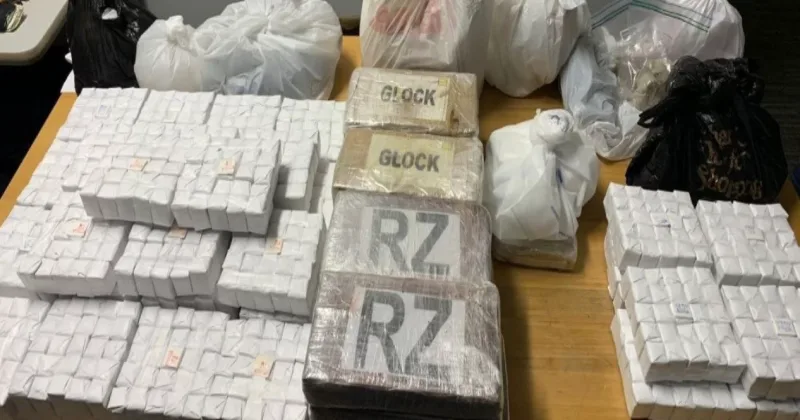
The recent drug seizures containing methamphetamine or meth and hydroponic marijuana clearly indicate that Kerala has become the main transit point for drugs in the country.

While the smugglers from Kerala have dealt with methamphetamine in large numbers a new drug that has made its way into the market is hydroponic marijuana. The drug smugglers from Pakistan and Afghanistan have completely compromised Punjab and over the years found newer avenues to further their drug trade. Kerala in this context becomes the perfect transit point to smuggle drugs and ensure that it is supplied across the southern states in large quantity.

Why is Kerala a preferred destination for drug smugglers

One of the main reasons as to why Kerala became a favourite destination for drug smugglers is because it is situated in a strategic location and has a long coastline. Further the proximity it has to the international borders also makes it a perfect route for drug smugglers.

The state has a coastline that stretches over 590 kilometres and this makes it an ideal entry point for smugglers. Further Kerala also has several busy port and airports which also facilitate drug smuggling.

These factors contribute largely to Kerala becoming a drug hub and is used by traffickers from both the Golden Crescent and Golden Triangle. The Golden Crescent includes Afghanistan and Pakistan which produces the largest quantity of opium. The Golden Triangle on the other hand which produces meth and hydroponic marijuana includes Myanmar, Laos and Thailand.

The drugs that land in Kerala are transported in large quantities to Tamil Nadu, Assam, Meghalaya, Manipur, Andhra Pradesh and West Bengal. The job of these drug smugglers is made easy due to two factors- porous borders and corruption.

Transit points

The Tamil Nadu-Kerala land border is a major route for smuggling of cannabis and methamphetamine. The Karnataka-Kerala border is used to smuggle heroin and cocaine. The Andhra Pradesh-Kerala border facilitates the smuggling of cannabis and synthetic drugs.

In many cases it has been found that the smugglers carry drugs on foot using the forest paths and rural roads. What has made it easy for them is the fact that in most cases the officials are involved in the trade.

Drug smugglers also focus heavily on Kerala due to the fact that the state has a large number of tourists from across the globe. The corruption is such that there is lack of monitoring of both cargo and passengers at the airports and sea ports.

Foreign links

Understanding the potential of Kerala, drug smugglers have deployed scores of foreign nationals to carry out the trade. The most dominant are the Nigerians who undertake this trade.

The foreign nationals have brought with them sophisticated networks and tactics which have easily overwhelmed the defence mechanism in the state. The Nigerians at as carriers of the drugs. They in turn establish contacts with local drug paddlers and gangs to distribute the drugs.

In recent times there has also been a rise in the number of people from Middle East getting involved in the trade. Kerala has the highest number of people who work in the Middle East and this has led to the links being formed with ease.

In recent cases, the investigating agencies have found nationals of Iran and Dubai taking part in this trade.

The involvement of the foreign nationals has led to the youth falling prey to drug addiction. Further the foreign nationals have also made drug smuggling an international organised crime.

The current flavour

The current flavour in drug circles is methamphetamine or meth. Most of the recent seizures suggest that meth has been smuggled into Bharat in large quantities as there is a high demand for the same.

A recent bust at Andaman and Nicobar Islands led to the seizure of meth to the tune of Rs 30,000 crore. This indicates the scale at which the drug is being smuggled in.

In the case of hydroponic ganja the demand is getting higher. The drug is brought in from Thailand and then supplied in Kerala from where it make its way to other parts of the country.

A customs official tells Organiser that the drug has the same pricing when compared to meth. It is also a recreational drug and hence there is a very high demand for the same, he also added.

The hydroponic weed is priced at around Rs 80 lakh to Rs 1 crore a kilogram and this is the same cost as meth. However, when compared to regular ganja, the pricing of hydroponic weed is nearly 50 times higher.

Hydroponic ganja is cultivated in a water-based solution rich in nutrients instead of soil. This is a very popular drug in Thailand and the consumption of the same is legal.

Further this drug is as potent as cocaine owing to the composition. The tetrahydrocannabinol content in hydroponic ganja is around 40 per cent when compared to the 3 per cent found in regular ganja.

Modus operandi and the Kerala connect

In all the recent seizures involving hydroponic ganja, the modus operandi has been similar in nature. The drug is packed in an air-tight plastic bag which in turn are concealed inside tetra packs of fruit juices. They are also packed in chocolate boxes or ready to eat breakfast items. Investigations found that the packaging is done in this way so that the smell does not escape which in turn could gather the attention of the officials.

The investigation also revealed that the kingpins of this racket are based in Kerala. This came to light when the carriers of the drug who were arrested were all identified as Keralites. Earlier this month 3.24 kilograms of hydroponic weed was seized from a resident of Kerala at the Chennai airport.

Similar seizures have been made at other airports as well. Last week the DRI seized 15 kilograms of hydroponic ganja at the Ahmedabad airport leading to the arrest of two persons including a Thai national. On November 25 this year, 2.2 kilograms of the drug was seized at the Hyderabad airport by the Customs. Similar cases wee reported on November 25 at the Mumbai airport as well.

Further it has been learnt that the quantity of the drug that is being brought in is of lesser quantity. This is because the commercial quantity of ganja as notified by the Narcotics Drugs and Psychotropic Substances Act (NDPS) is 20 kilograms.

This means that despite it being a high valued drug, the smugglers get bail within six months and a less severe punishment under the NDPS Act. This has led the agencies to mull a more severe punishment as they realise the smugglers are taking advantage of the provisions under the NDPS Act.

The smugglers have also been landing at different airports and then taking the domestic route in a bid to avoid detection. However, the agencies are on high alert understanding the gravity of the problem. The agencies would also be working closely with their counterparts in Thailand to arrest the problem at source.


Topics: Drug SeizureHydroponic ganjaNarcotics Drugs and Psychotropic Substances Actkerala
Share9
Tweet
SendShareSend
✮ Subscribe Organiser YouTube Channel. ✮
✮ Join Organiser's WhatsApp channel for Nationalist views beyond the news. ✮
Previous News

World Hindu Economic Forum 2024: Revitalising dharmic prosperity

Next News

Karnataka: BJP severely condemns Congress for omitting POJK and Aksai Chin from Bharat’s Map

Related News

Keralam madrasa teacher Imbichikoya surrenders before Kollam court in POCSO case

Keralam madrasa teacher Imbichikoya surrenders before court after two POCSO cases registered over students’ complaints

P.K. Firos, IUML leader and MLA with Ramesh Chennithala, Home Minister of Keralam

Keralam: IUML leader claims Home Minister Ramesh acted over Dr Basil case, raising questions over who controls power

Janmashtami 2026: Balagokulam turns Kerala into Brindavan with 10,000-plus shobhayatras, 5 lakh children

13-year-old Class 8 student Mithun Manu died after being electrocuted by a sagging live wire on his school roof in Kollam

Governance Failure in Non-BJP States: Crumbling schools & poor infrastructure put thousands of children at risk

Chandrababu dressed as Mahabali (Image Courtesy- Manoramanews

Keralam: Chandrababu, dressed as “Mahabali”, attacked by Ashraf with boiling oil after wishing ‘Happy Onam’

Kollakkayil Devaki Amma turned adversity into a green legacy by creating a 4.5-acre forest with over 3,000 trees in Kerala

Kollakkayil Devaki Amma: The Kerala woman who turned her backyard into a 4.5-acre forest with 3,000+ trees

Load More

Latest News

BRICS Summit 2026: New Delhi Declaration unanimously adopted; PM Modi pitches regional peace & Global South prosperity

BRICS Summit 2026: Troika, seafarers support network & UNSC reforms; PM Modi pitches Global South as “rule shaper”

The Quiet Part of BRICS 2026: “The Plumbing, Not the Currency” — What You Need to Know About the BRICS Currency (AI generated image)

The Quiet Part of BRICS 2026: “The Plumbing, Not the Currency” — What You Need to Know About the BRICS Currency

AI Generated Representative Image

BRICS Summit 2026 | Bajra, Ragi & Rajma: Food served to leaders reflect India’s millets, spices & culinary heritage

Andhra Pradesh: Sadiq Khan admits cyanide killing of Sowjanya’s husband; property motive eclipses Islam conversion

BRICS Summit 2026: New Delhi Declaration to be issued today; India seals diplomatic win amid West Asia crisis

Deoria Horror: Hindu Youth Manish ‘Monu’ Singh allegedly lured to death by Islamist China Ansari

PM Modi holds series of bilateral meetings;(From Left to Right): Malaysia PM Anwar Ibrahim, Ethiopian PM Abiy Ahmed Ali and Iran President Masoud Pezeshkian

BRICS Summit: PM Modi flags maritime security, seafarers safety with Iran President; Holds series of bilateral talks

The shifting economic weight of G7 and BRICS reflects the emergence of a more multipolar global order.

G7 and BRICS: How the global economic balance is shifting from western world to a rising global south

Mukul Kanitkar, senior RSS Functionary at Makhanlal Chaturvedi National University of Journalism and Communication on the occasion of a special lecture to commemorate Swami Vivekananda’s historic Chicago address

Modernity belongs to tools and technology, not culture; culture moves through continuity: Mukul Kanitkar

Load More
  • Privacy
  • Terms
  • Cookie Policy
  • Refund and Cancellation
  • Delivery and Shipping

© Bharat Prakashan (Delhi) Limited.
Tech-enabled by Ananthapuri Technologies

  • Home
  • Search Organiser
  • Bharat
    • Assam
    • Bihar
    • Chhattisgarh
    • Jharkhand
    • Maharashtra
    • View All States
  • World
    • Asia
    • Africa
    • North America
    • South America
    • Europe
    • Australia
  • Editorial
  • Operation Sindoor
  • Opinion
  • Analysis
  • Defence
  • Culture
  • Sports
  • Business
  • RSS @ 100
  • Entertainment
  • More ..
    • Sci & Tech
    • Vocal4Local
    • Special Report
    • Education
    • Employment
    • Books
    • Interviews
    • Travel
    • Health
    • Politics
    • Law
    • Economy
    • Obituary
  • Subscribe Magazine
  • Read Ecopy
  • Advertise
  • Circulation
  • Careers
  • About Us
  • Contact Us
  • Policies & Terms
    • Privacy Policy
    • Cookie Policy
    • Refund and Cancellation
    • Terms of Use

© Bharat Prakashan (Delhi) Limited.
Tech-enabled by Ananthapuri Technologies