Breakthrough '3-in-1' antibody offers promising new approach for targeted cancer treatment
June 9, 2026
  • Read Ecopy
  • Circulation
  • Advertise
  • Careers
  • About Us
  • Contact Us
Android AppiPhone AppArattai
Organiser
  • ‌
  • Bharat
    • Assam
    • Bihar
    • Chhattisgarh
    • Jharkhand
    • Maharashtra
    • View All States
  • World
    • Asia
    • Europe
    • North America
    • South America
    • Africa
    • Australia
  • Editorial
  • International
  • Opinion
  • RSS @ 100
  • More
    • Op Sindoor
    • Analysis
    • Sports
    • Defence
    • Politics
    • Business
    • Economy
    • Culture
    • Special Report
    • Sci & Tech
    • Entertainment
    • G20
    • Azadi Ka Amrit Mahotsav
    • Vocal4Local
    • Web Stories
    • Education
    • Employment
    • Books
    • Interviews
    • Travel
    • Law
    • Health
    • Obituary
  • Subscribe
    • Subscribe Print Edition
    • Subscribe Ecopy
    • Read Ecopy
  • ‌
  • Bharat
    • Assam
    • Bihar
    • Chhattisgarh
    • Jharkhand
    • Maharashtra
    • View All States
  • World
    • Asia
    • Europe
    • North America
    • South America
    • Africa
    • Australia
  • Editorial
  • International
  • Opinion
  • RSS @ 100
  • More
    • Op Sindoor
    • Analysis
    • Sports
    • Defence
    • Politics
    • Business
    • Economy
    • Culture
    • Special Report
    • Sci & Tech
    • Entertainment
    • G20
    • Azadi Ka Amrit Mahotsav
    • Vocal4Local
    • Web Stories
    • Education
    • Employment
    • Books
    • Interviews
    • Travel
    • Law
    • Health
    • Obituary
  • Subscribe
    • Subscribe Print Edition
    • Subscribe Ecopy
    • Read Ecopy
Organiser
  • Home
  • Bharat
  • World
  • Operation Sindoor
  • Editorial
  • Analysis
  • Opinion
  • Culture
  • Defence
  • International Edition
  • RSS @ 100
  • Magazine
  • Read Ecopy
Home World

Breakthrough ‘3-in-1’ antibody offers promising new approach for targeted cancer treatment

Researchers at Uppsala University and KTH Royal Institute of Technology have developed a groundbreaking "3-in-1" antibody that enhances T-cell responses and targets cancer cells with precision. The method shows promising results in animal models and offers a safer, faster, and more customizable cancer treatment approach

WEBDESKWEBDESK
Nov 24, 2024, 11:00 pm IST
in World, Health
Follow on Google News
FacebookTwitterWhatsAppTelegramEmail

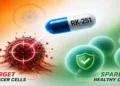
Researchers at Uppsala University and KTH Royal Institute of Technology have created an antibody that has the potential to treat a variety of cancers. Researchers were able to integrate three different functionalities in the antibody, which combined significantly increased the action of T cells on the cancer tumour.

Researchers have developed a unique type of antibody that both targets and delivers a drug package via the antibody itself, while simultaneously activating the immune system (“3-in-1 design”) for personalised immunotherapy treatments.

“We have been researching precision medicine for close to 15 years now, as well as how we can use antibodies to influence an important key protein (CD40) in the immune system. We can now show that our new antibody method works as precision medicine for cancer,” explains Sara Mangsbo, professor at the Department of Pharmacy at Uppsala University, who together with Johan Rockberg, professor at KTH Royal Institute of Technology, is the study’s lead author.

The drug redirects the immune system to find and target specific mutations and gene changes that are only found in cancer cells, known as neoantigens. This is achieved by the new antibody both delivering the unique tumour-specific material directly to a particular type of immune cell and by stimulating this cell simultaneously, which then has the capacity to greatly enhance the T-cell response to the tumour.

The results show that the method works in several ways. Not only does it activate the right type of immune cells in human blood samples, but animal models show that mice receiving the treatment had prolonged survival and, at higher doses, also save the mice from cancer, and that the method is safer than previous cancer treatments the researchers have studied.

Customised precision medicines can be both costly and time-consuming to develop.

“The advantage of our drug is that it is easy to produce on a larger scale , yet can be easily tailored to the patient’s disease or specific tumour. The medicine consists of two parts that are combined, a targeting bispecific antibody – which can be produced in large quantities in advance – and a custom peptide part, which is produced rapidly synthetically on a small scale for a desired type of cancer. Both in terms of production cost and the short time it takes to tailor a peptide to a new tumour, this increases availability and should make it quicker for patients to go from diagnosis to treatment,” explains Johan Rockberg, Professor at KTH Royal Institute of Technology.

The aim of the study was to establish a more flexible, faster and safer treatment for cancer than those currently available. The study has already shown that the method has the potential to be customised for each patient, thereby strengthening the immune system against cancer. The next step is to use the fully optimised production process to manufacture the drug candidate for further safety studies and then start clinical trials in humans.

(with inputs from ANI)

Topics: immune systemCancerHealthCancer Treatment
ShareTweetSendShareSend
✮ Subscribe Organiser YouTube Channel. ✮
✮ Join Organiser's WhatsApp channel for Nationalist views beyond the news. ✮
Previous News

Guru Tegh Bahadur Ji’s Supreme Sacrifice: A legacy etched in Sis Ganj Sahib

Next News

Technology, timeliness and trial are key to the new criminal laws: Union Law Minister Arjun Ram Meghwal

Related News

Indian surgeon conducts world’s longest cardiac telesurgery; Made-in-India robot echoes indigenous medical prowess

Kwality Walls shifts from palm oil to milk-based ice creams in India; Did the food giant prioritise profit over health?

Forgotten Victims of Chagai: Cancer Cases Rise in Pakistan’s Nuclear Test Zone

Chagai’s Nuclear Curse: Balochistan still battles cancer 28 years after Pakistan conducted nuclear tests

Abrupt shift in the measle vaccine procurement policy by the Yunus regime led to death of hundreds of children

A ‘Man-Made’ Crisis in Bangladesh? How the Yunus Regime’s UNICEF bypass left millions of children vulnerable to measles

India finds new molecular mechanism in mycobacterium tuberculosis: A catalyst to realise the vision of TB Mukt Bharat

A Decline in Child Mortality in India: A nation moving in the right direction for children’s welfare

Load More

Latest News

Accused Nida Khan reportedly admits taking victim for religious instruction, teaching Islamic rituals

Nashik TCS Corporate Jihad: ‘I taught her how to do namaz,’ says Nida Khan; victim pressured to observe 30 ramzan roza

Germany: Sri Ganesha temple opens in Berlin: Europe’s largest Hindu Mandir reflects India’s cultural & dharmic spirit

Rajasthn | RSS centenary journey embodies dedication to nation-building: Dr Ramesh Agrawal

Decades of illegal infiltration from Bangladesh have driven profound demographic shifts in Assam, fundamentally altering its religious, linguistic, and political landscape

Unnatural demographic change: The termite threat

The Rs 200-crore MAHA Water Mission seeks to boost water security and democratise research funding in India

From Rigveda to Research Labs: How ANRF’s Rs 200 crore water mission is securing India’s future

(Right) Prakhar Shrivastava, Senior Consulting Editor and Anchor at Delhi Doordarshan Kendra at a Narada Jayanti programme in Guwahati (Left) Prakahar Srivastava addressing the gathering

Narada Jayanti by VSK Assam: “Half-truths more dangerous than lies,” says senior journalist Prakhar Shrivastava

Everest Survivor being taken to the hospital on a stretcher

Everest Survivor ICU Interview: BBC under fire for interviewing Sherpa without family’s consent

Phillipines Earthquake: 7.8 magnitude deadly earthquake leaves 15 dead, 200 injured; Rescue operation underway

Shamli Conversion Case: 'I studied Islam on YouTube,' says Ayush Malik as family alleges grooming

Shamli Conversion Case: ‘I studied Islam on YouTube,’ says Ayush Malik, now Mohammad Ali, as family alleges grooming

RSS functionaries on the stage at samapan samaroh of Sangh Shiksha Varg and Karyakarta Vikas Varg–Pratham at Sambalpur.

Awakening of Lokshakti is essential for building a glorious Bharat: Dr Gopal Prasad Mahapatra

Load More
  • Privacy
  • Terms
  • Cookie Policy
  • Refund and Cancellation
  • Delivery and Shipping

© Bharat Prakashan (Delhi) Limited.
Tech-enabled by Ananthapuri Technologies

  • Home
  • Search Organiser
  • Bharat
    • Assam
    • Bihar
    • Chhattisgarh
    • Jharkhand
    • Maharashtra
    • View All States
  • World
    • Asia
    • Africa
    • North America
    • South America
    • Europe
    • Australia
  • Editorial
  • Operation Sindoor
  • Opinion
  • Analysis
  • Defence
  • Culture
  • Sports
  • Business
  • RSS @ 100
  • Entertainment
  • More ..
    • Sci & Tech
    • Vocal4Local
    • Special Report
    • Education
    • Employment
    • Books
    • Interviews
    • Travel
    • Health
    • Politics
    • Law
    • Economy
    • Obituary
  • Subscribe Magazine
  • Read Ecopy
  • Advertise
  • Circulation
  • Careers
  • About Us
  • Contact Us
  • Policies & Terms
    • Privacy Policy
    • Cookie Policy
    • Refund and Cancellation
    • Terms of Use

© Bharat Prakashan (Delhi) Limited.
Tech-enabled by Ananthapuri Technologies