Guru Nanak Janmotsav: Honouring the legacy of Sikhism's founder
June 7, 2026
  • Read Ecopy
  • Circulation
  • Advertise
  • Careers
  • About Us
  • Contact Us
Android AppiPhone AppArattai
Organiser
  • ‌
  • Bharat
    • Assam
    • Bihar
    • Chhattisgarh
    • Jharkhand
    • Maharashtra
    • View All States
  • World
    • Asia
    • Europe
    • North America
    • South America
    • Africa
    • Australia
  • Editorial
  • International
  • Opinion
  • RSS @ 100
  • More
    • Op Sindoor
    • Analysis
    • Sports
    • Defence
    • Politics
    • Business
    • Economy
    • Culture
    • Special Report
    • Sci & Tech
    • Entertainment
    • G20
    • Azadi Ka Amrit Mahotsav
    • Vocal4Local
    • Web Stories
    • Education
    • Employment
    • Books
    • Interviews
    • Travel
    • Law
    • Health
    • Obituary
  • Subscribe
    • Subscribe Print Edition
    • Subscribe Ecopy
    • Read Ecopy
  • ‌
  • Bharat
    • Assam
    • Bihar
    • Chhattisgarh
    • Jharkhand
    • Maharashtra
    • View All States
  • World
    • Asia
    • Europe
    • North America
    • South America
    • Africa
    • Australia
  • Editorial
  • International
  • Opinion
  • RSS @ 100
  • More
    • Op Sindoor
    • Analysis
    • Sports
    • Defence
    • Politics
    • Business
    • Economy
    • Culture
    • Special Report
    • Sci & Tech
    • Entertainment
    • G20
    • Azadi Ka Amrit Mahotsav
    • Vocal4Local
    • Web Stories
    • Education
    • Employment
    • Books
    • Interviews
    • Travel
    • Law
    • Health
    • Obituary
  • Subscribe
    • Subscribe Print Edition
    • Subscribe Ecopy
    • Read Ecopy
Organiser
  • Home
  • Bharat
  • World
  • Operation Sindoor
  • Editorial
  • Analysis
  • Opinion
  • Culture
  • Defence
  • International Edition
  • RSS @ 100
  • Magazine
  • Read Ecopy
Home Bharat

Guru Nanak Janmotsav: Honouring the legacy of Sikhism’s founder

Guru Nanak Janmotsav, celebrated on the full moon day of Kartik, marks the birth anniversary of Guru Nanak Dev Ji, the founder of Sikhism. The festival honours his teachings of equality, compassion, and devotion to one universal God

Anubha MishraAnubha Mishra
Nov 15, 2024, 08:00 am IST
in Bharat, Culture
Follow on Google News
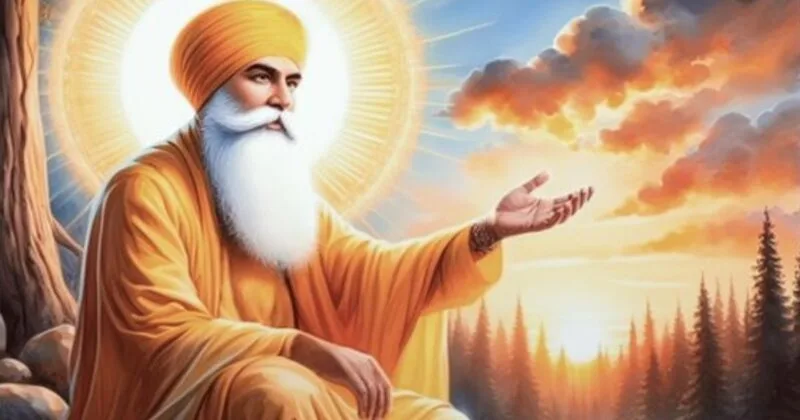
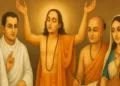
Guru Nanak Dev Ji

Guru Nanak Dev Ji

FacebookTwitterWhatsAppTelegramEmail

According to the Hindu lunar calendar, Guru Nanak Janmotsav is celebrated on the full moon day of the Kartik month every year. This year, the Guru Nanak Janmotsav 2024 will occur on November 15. Also known as Gurpurab or Prakash Utsav, the festival marks the birth anniversary of Guru Nanak Dev ji, the founder of the Sikh religion. The founder of Sikhism, Guru Nanak Dev Ji, was the first of the ten Sikh gurus, a philosopher, poet, and spiritual leader. He preached the messages of equality, compassion, and devotion to one universal God. Guru Nanak Dev ji’s teachings laid the foundation of Sikhism, emphasising the values of humility, service, and unity. The festival serves as an opportunity for his followers to imbibe his teachings in their daily lives and spread the message among people of other communities as well. Apart from this, the festival provides a moment for people to honour Guru Nanak’s vision of a just society where everyone, regardless of caste, creed, or gender, is respected. Hinduism and Sikhism are like two branches of one tree. Hinduism has pre-historic origins, while Sikhism was founded in the 15th century by Guru Nanak Dev ji. Both religions share many philosophical concepts such as karma, dharma, Mukti, and Maya.

Sikhism is considered a tradition within Hinduism, along with other Dharmic faiths like Jain and Buddhism. Historically, Sikhs were seen as the protectors of Hindu brothers and sisters, among others, and were even considered as the “sword arm” of Hinduism. This status as protectors of Hindus was strong enough that Punjabi Hindus would sometimes raise their eldest son as a Sikh. The roots of the Sikh tradition are perhaps in the Sant-tradition of India, whose ideology grew to become the Sikh religion. Fenech states, “Indic mythology permeates the Sikh sacred canon, the Guru Granth Sahib and the secondary canon, the Dasam Granth and adds delicate nuance and substance to the sacred symbolic universe of the Sikhs of today and of their past ancestors. Marriages between Sikhs and Hindus, particularly among Khatris are frequent. Dogra states that there has always been intermarriage between the Hindu Khatri and Sikh Khatri communities. The Sikh scriptures use Hindu terminology, with references to the Vedas and the names of gods and goddesses in Hindu bhakti movement traditions, such as Vishnu, Shiva, Brahma, Parvati, Lakshmi, Saraswati, Rama, and Krishna. It also refers to the spiritual concepts in Hinduism (Ishvara, Bhagavan, Brahman) to assert that these are just “alternate names for the Almighty One”.

While the Guru Granth Sahib acknowledges the Vedas, Puranas and Quran, it does not imply a syncretic bridge between Hinduism and Islam but emphasises focusing on Nitnem banis like Japji, instead of Muslim practices such as circumcision. The oneness of God is at the core of Hinduism.

Some historians see evidence of Sikhism as simply an extension of the Bhakti movement. The Bhakti movement started during the period of the Delhi Sultanate. The advocates of the Bhakti movement succeeded to a considerable extent in uplifting the moral tone of the community and bridging the gap between communities. There were numerous saints in the Bhakti movement such as Nimbarka, Chaitanya, Kabir and Guru Nanak Dev. Guru Nanak Dev played a crucial role in the Bhakti movement. Sufism and bhakti contributed to Nanak’s religious philosophy. He discarded retrograde elements of selfishness, hypocrisy, falsehood and violence. In his opinion, to link oneself to eternity, one must do good and virtuous to get eternal liberation from the world’s bondage. Moral conduct and action on moral values were his core teachings. Through Guru Nanak, the Bhakti movement in Punjab became a vehicle of social change, and it was the intensity and depth of his message, fortified and consolidated by successor Gurus, that served as an edifice on which the super-structure of Sikhism was built. Guru Nanak played an important role in integrating the contemporary Bhakti tradition of spiritual quest with the socio-milieu in the totality of medieval Indian life. The essence of Nanak’s religion consists of its being a force that emancipates his followers from all religious and social shackles. The 200 years spanning the 15th to 16th centuries AD was surely the golden era of the Bhakti movement in India. In retrospect, there is no doubt that it was by a divine arrangement that the land was flooded with saints of the devotional school at a time when Muslim oppression was at its peak and a new religion, Christianity, was making inroads in the cultural ethos of India. Representatives of Delhi Sultanates were ruling from Bengal. Malik Ghaffur (1305-1311) had reached up to Rameshwaram, sending shock waves into the minds of the people.

At this critical juncture, several great saints and indeed God Himself along with his associates appeared on the horizon: Goswami Tulsidas (1497-1623), Kabir (1398-1517), Meerabai (1501-1573), Bhakt Narsi Mehta of Junagarh (Kathiawar), Shree Daduji (1544-1603) of Gujarat and, Guru Nanak Dev (1469-1538), Sri Chaitanya Mahaprabhu and many more. It is a popular legend among the devotees that two great luminaries of their times, Shri Guru Nanak dev Ji and Sri Chaitanya Mahaprabhu, crossed paths in Jagannath Puri and spent some time meditating on the many forms of formless god and discussed Saguna and Nirguna Bhakti. On his journey back home, Guru Nanak Dev wrote an aarti, which is sung daily after the recitation of Rehraas Sahib & Ardās at the Darbar Sahib, Amritsar and at most Gurdwara sahibs praising the Lord of the Universe. Sikhism was never a limb different from Hinduism. Sikh Gurus stood against the Islamic tyrants and gave their life to protect their motherland and the religion.

In the Granth Sahib, it is written:
“Swasi grasi harinam samali
Simar bus vishwambhar ak”
In order to attain salvation, one must chant the Holy Name of Ram, Hari or Vishwambhar.

 

Topics: Prakash UtsavGuru Nanak JayantiBhakti MovementGurpurab 2024Sikh teachings
Share1TweetSendShareSend
✮ Subscribe Organiser YouTube Channel. ✮
✮ Join Organiser's WhatsApp channel for Nationalist views beyond the news. ✮
Previous News

Janjatiya Gaurav Divas: Honouring Bhagwan Birsa Munda on his birth anniversary and celebrating tribal heritage

Next News

UGC instructs HEIs to celebrate Janjatiya Gaurav Diwas from November 15-26, 2024 in honour of Birsa Munda

Related News

Women’s Reservation Bill: Freezing the catalyst reform

Prime Minister Narendra Modi paid tributes to Sri Guru Gobind Singh Ji

Sri Guru Gobind Singh Ji inspires us to stand for truth, justice & righteousness: PM Modi on occasion of Prakash Utsav

Guru Nanak Dev Ji

Guru Nanak Jayanti 2025: Reforming Bharatiya society through truth, compassion and wisdom

Prakash Utsav of Sri Guru Granth Sahib Ji: History and Significance

Chennai Lit Fest 2024: Celebrating the Sanatan Connect with Ram Naam

Prime Minister Narendra Modi (File Photo)

Prime Minister Modi extends warm wishes to Sikh community on the 357th Prakash Utsav of Guru Gobind Singh

Load More

Latest News

(Left) Victorious Indian Men-s hockey team who who won Gold in U-18 Asia Cup (Right) U-18 Women's hockey team who won bronze medal in the Asia Cup

U18 Asia Cup 2026: Indian Men’s hockey wins gold, women secure bronze medal; PM Modi & Amit Shah hail the teams

India’s semiconductor roadmap shifts from import dependence to silicon sovereignty, aiming for a self-reliant ecosystem by Viksit Bharat 2047

From Import Dependence to Silicon Sovereignty: India’s bold semiconductor roadmap for Viksit Bharat 2047

Keralam Chief Minister V.D. Satheeshan

Jamaat-e-Islami Hind Team Meets CM Satheeshan, Senior Ministers, fuel debate over influence in UDF government

Singapore acts against China-linked posts targeting Indian community, cites threat to social harmony

Singapore Invokes OCHA: Facebook, YouTube and X ordered to block anti-Indian content originating from China

Editors of the HAF Wikipedia page run propaganda and disinformation campaign against the organisation, India and Hindu cultural ethos

Wikipedia fuels propaganda against Hindu American Foundation: How anonymous writers demonise Hindu rights group?

Israel to Install Statue of Chhatrapati Shivaji Maharaj; Israel’s Consul General in Mumbai, Yaniv Revach, met Maharashtra Chief Minister Devendra Fadnavis and sough his support in this regard

Chhatrapati Shivaji Maharaj’s legacy to reach Israel; Statue to be installed as symbol of India-Israel friendship

IIGH Public Policy Seminar: Women’s dignity, safety & equal opportunity discussed

Representative Image

Decoding Hezbollah: How the terror group built a massive arsenal against Israel

Representative Image

Plastic, Traffic and Landslides: How rising tourist footfall is posing threat to the mountainous region

The Green Realignment: Why the US-India trade pact is a battle for climate and supply chain security

Load More
  • Privacy
  • Terms
  • Cookie Policy
  • Refund and Cancellation
  • Delivery and Shipping

© Bharat Prakashan (Delhi) Limited.
Tech-enabled by Ananthapuri Technologies

  • Home
  • Search Organiser
  • Bharat
    • Assam
    • Bihar
    • Chhattisgarh
    • Jharkhand
    • Maharashtra
    • View All States
  • World
    • Asia
    • Africa
    • North America
    • South America
    • Europe
    • Australia
  • Editorial
  • Operation Sindoor
  • Opinion
  • Analysis
  • Defence
  • Culture
  • Sports
  • Business
  • RSS @ 100
  • Entertainment
  • More ..
    • Sci & Tech
    • Vocal4Local
    • Special Report
    • Education
    • Employment
    • Books
    • Interviews
    • Travel
    • Health
    • Politics
    • Law
    • Economy
    • Obituary
  • Subscribe Magazine
  • Read Ecopy
  • Advertise
  • Circulation
  • Careers
  • About Us
  • Contact Us
  • Policies & Terms
    • Privacy Policy
    • Cookie Policy
    • Refund and Cancellation
    • Terms of Use

© Bharat Prakashan (Delhi) Limited.
Tech-enabled by Ananthapuri Technologies