The Delhi High Court on October 29 declined to consider a public interest litigation (PIL) that sought the Delhi government’s intervention in providing school admissions for children of Rohingya refugees who entered India illegally. The Court advised that the matter falls under the purview of the Union Ministry of Home Affairs and involves complex international considerations.
The Bench, consisting of Chief Justice Manmohan and Justice Tushar Rao Gedela, disposed of the PIL petition filed by the civil rights group Social Jurist, citing the Court’s limited role in policy-driven international issues. “We are not going to get involved in this … The first point of call cannot be High Court, first approach the government … What you cannot do directly, you cannot do indirectly. Court should not be a medium in this,” the Bench observed in a stern oral statement, underscoring the need for governmental, not judicial, intervention.
The Bench further clarified that since Rohingya children are not Indian citizens, their request for admission to public schools touches on issues of nationality and security. “Child doesn’t mean the whole world will come over here. These are international issues, there are ramifications on security, nationality,” the Court stated, suggesting a more cautious approach to matters with potential global and national security implications. The Bench advised that the petitioners address their concerns to the Ministry of Home Affairs, suggesting that only the central government is equipped to make policy decisions of this magnitude.
The Court referenced a recent Supreme Court ruling that upheld Section 6A of the Citizenship Act of 1955, which pertains to the process of granting Indian citizenship to certain immigrants under the Assam Accord. The High Court noted that this decision has led to heightened tensions and unrest in Assam, indicating that such sensitive issues should be managed through legislative channels rather than judicial mandates. “In no country in the world will the Court decide who is to be given citizenship,” the Bench emphasised.
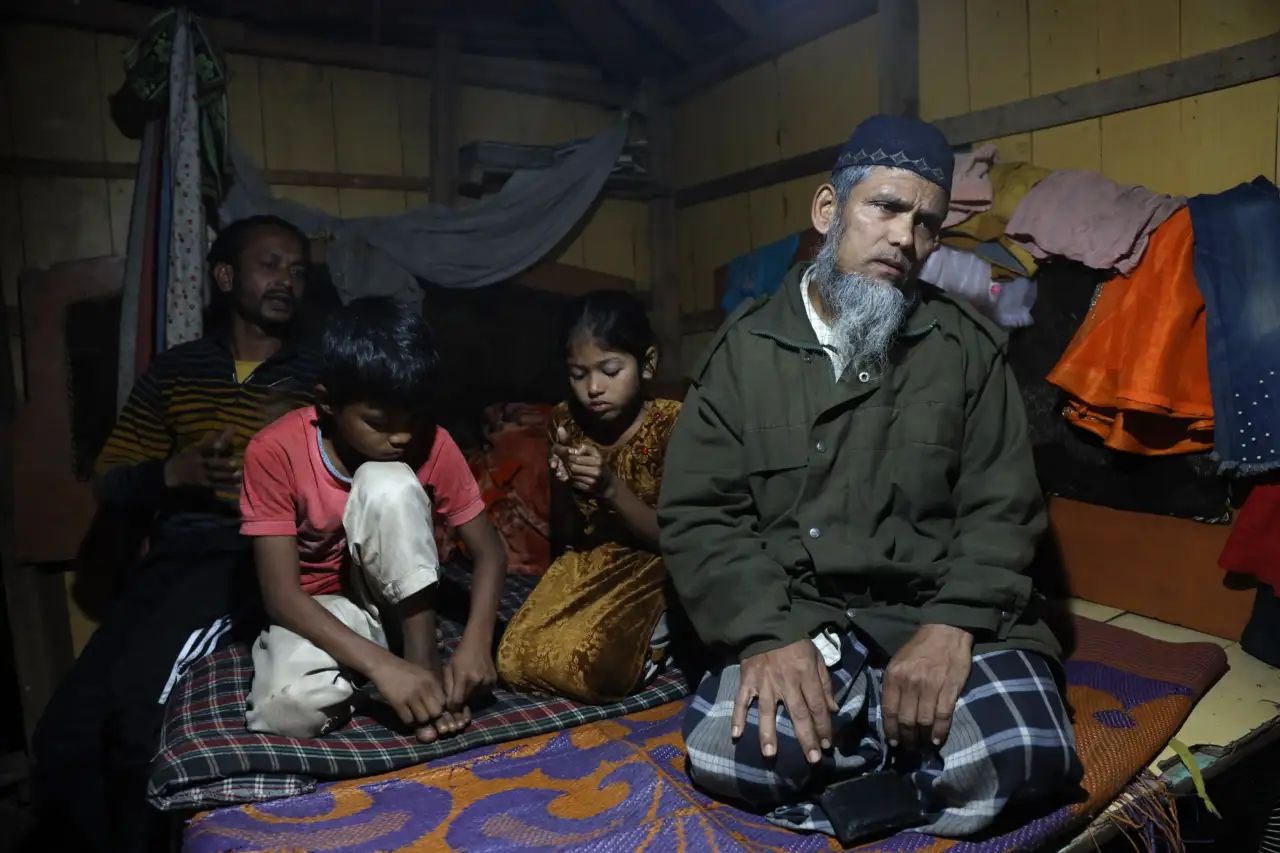
The PIL, spearheaded by Advocate Ashok Agarwal for Social Jurist, highlighted that Rohingya children in Delhi are routinely denied admission to government schools due to the absence of an Aadhaar card and a bank account, with only a United Nations Human Rights Council (UNHRC) refugee card as their identification. The petition further stated that Rohingya children who were admitted faced significant challenges, as the Delhi government withheld statutory benefits like school uniforms and writing materials from these students due to their lack of a bank account.
Social Jurist argued that the exclusion of Rohingya children from school facilities infringes on their fundamental right to education, as enshrined in the Indian Constitution. This situation reportedly came to light after Advocate Agarwal visited a refugee colony in Delhi and later sent a formal representation to the Delhi government, to which he received no response. Left with no alternative, Social Jurist subsequently filed the PIL in the High Court.
In addition to seeking school admissions, the NGO requested the Court to instruct the Municipal Corporation of Delhi (MCD) and the Delhi Education Department to take immediate action in addressing these issues. However, the High Court declined to issue any specific directives to the authorities, noting that the petitioners must approach the appropriate government bodies instead.
The petition was filed on behalf of Social Jurist by advocates Ashok Agarwal and Kumar Utkarsh which stands declined.