Breaking down the Budget: A comprehensive guide to understanding Government Finances
July 14, 2026
  • Read Ecopy
  • Circulation
  • Advertise
  • Careers
  • About Us
  • Contact Us
Android AppiPhone AppArattai
Organiser
  • ‌
  • Bharat
    • Assam
    • Bihar
    • Chhattisgarh
    • Jharkhand
    • Maharashtra
    • View All States
  • World
    • Asia
    • Europe
    • North America
    • South America
    • Africa
    • Australia
  • Editorial
  • International
  • Opinion
  • RSS @ 100
  • More
    • Op Sindoor
    • Analysis
    • Sports
    • Defence
    • Politics
    • Business
    • Economy
    • Culture
    • Special Report
    • Sci & Tech
    • Entertainment
    • G20
    • Azadi Ka Amrit Mahotsav
    • Vocal4Local
    • Web Stories
    • Education
    • Employment
    • Books
    • Interviews
    • Travel
    • Law
    • Health
    • Obituary
  • Subscribe
    • Subscribe Print Edition
    • Subscribe Ecopy
    • Read Ecopy
  • ‌
  • Bharat
    • Assam
    • Bihar
    • Chhattisgarh
    • Jharkhand
    • Maharashtra
    • View All States
  • World
    • Asia
    • Europe
    • North America
    • South America
    • Africa
    • Australia
  • Editorial
  • International
  • Opinion
  • RSS @ 100
  • More
    • Op Sindoor
    • Analysis
    • Sports
    • Defence
    • Politics
    • Business
    • Economy
    • Culture
    • Special Report
    • Sci & Tech
    • Entertainment
    • G20
    • Azadi Ka Amrit Mahotsav
    • Vocal4Local
    • Web Stories
    • Education
    • Employment
    • Books
    • Interviews
    • Travel
    • Law
    • Health
    • Obituary
  • Subscribe
    • Subscribe Print Edition
    • Subscribe Ecopy
    • Read Ecopy
Organiser
  • Home
  • Bharat
  • World
  • Operation Sindoor
  • Editorial
  • Analysis
  • Opinion
  • Culture
  • Defence
  • International Edition
  • RSS @ 100
  • Magazine
  • Read Ecopy
Home Bharat

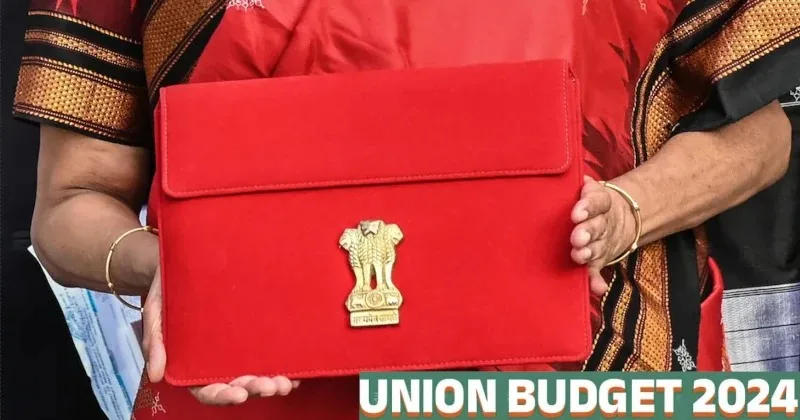
Breaking down the Budget: A comprehensive guide to understanding Government Finances

India's state and federal Governments release their annual budgets each year, outlining their financial strategies for the upcoming 12 months. These documents specify the government's revenue and funding strategy. Government budgets can be intricate and challenging to comprehend

WEBDESKWEBDESK
Jul 23, 2024, 01:00 pm IST
in Bharat, Economy
Follow on Google News
FacebookTwitterWhatsAppTelegramEmail

Every year, the Union and State Governments in India present their budgets, outlining their financial plans for the upcoming year. These budgets provide detailed statements about Government expenditures, shedding light on the economic priorities and policies. To make this information more accessible, let’s break down the budget into its fundamental components and understand how it impacts us.

Sources of Government Income

The Government, also known as receipts, can be broadly classified into revenue and capital receipts.

1. Revenue Receipts

Revenue receipts are the Government’s regular income. The Government does not create any liability or lead to the reduction of assets. These receipts are primarily derived from taxes and non-tax revenues.

Tax Revenue

  • Income Tax: This is a direct tax levied on the income of individuals and businesses.
  • Goods and Services Tax (GST): An indirect tax applied to the supply of goods and services.
  • Value Added Tax (VAT): A tax levied on the value added to a product at each stage of its production or distribution.
  • Excise Duty: A tax imposed on manufacturing goods within the country.
  • Customs Duty: A tax on imports and exports.
  • Cess: A tax collected for specific purposes, such as education or health.

Non-Tax Revenue

  • Interest: Earnings from loans given by the Government, public sector enterprises, and others.
  • Dividends and Profits: Income from Government investments in public sector enterprises.
  • Fees: Income from various services provided by the Government
  • Penalties: Income from fines and penalties imposed by the Government.
  • Receipts: Capital receipts are funds raised by the Government borrowing or selling its assets. These receipts either create a liability or reduce the assets of the Government.
  • Government wings: Internal Borrowings are loans from within the country, such as from the Reserve Bank of India (RBI) or commercial banks.
  • External Borrowings: Loans from foreign Governments or international organisations like the World Bank and the International Monetary Fund (IMF).
  • Disinvestment: The process of selling Government stakes in public sector enterprises.

Recovery of Loans: Money received back from loans previously given by the Government in the Kerala budget for 2020-21:

  • Revenue receipts: Rs 1.14 lakh crore
  • Capital receipts: Rs 29,500 crore
  • Recovery of loans: Rs 284 crore
  • Borrowings: Rs 29,241 crore

How does the Government get money?

The Government is categorised into two main types: revenue and capital.

1. Revenue Expenditure

Revenue expenditures involve the routine expenses required for the Government’s day-to-day operations. Government expenses do not create assets or reduce liabilities.

  • Salaries: Payments to Government employees.
  • Pensions: Payments to retired Government employees.
  • Interest Payments: Payments made on the Government’s borrowings
  • Subsidies: Financial support to lower the cost of goods and services for citizens.
  • Freebies: Items or services provided at no cost, such as free electricity or water

2. Capital Expenditure

Capital expenditure involves spending on projects that create assets or reduce liabilities. These expenses are aimed at long-term benefits and infrastructure development.

  • Infrastructure Projects: Construction of highways, roads, flyovers, and bridges.
  • Transportation Projects: Development of metro systems and railways.
  • Public Facilities: Building schools, hospitals, and other essential services.
  • Defence: Procurement of equipment and technology for the armed forces.

Understanding Budget Priorities

Examining the budget reveals the Government’s policies. The allocation of funds reflects whether the focus is on immediate relief (revenue expenditure) or long-term growth and development (capital expenditure).

Revenue Expenditures provide immediate benefits but do not contribute to asset creation. These include salaries, pensions, subsidies, and interest payments.

Capital Expenditure: This leads to the creation of assets and has the potential to generate economic growth. This includes spending on infrastructure, education, and healthcare.

Money spent on capital expenditure often yields significant returns over time, driving economic growth.
Money spent on revenue expenditure provides immediate relief but does not contribute to long-term asset creation.

Visualising how money flows between citizens and the Government helps understand the budget’s impact. Taxes and other forms of payments from citizens contribute to the state’s revenue, which is then allocated to various public services and infrastructure projects. Ideally, investments in capital expenditure should return multiple times in value through economic growth, while revenue expenditure ensures the immediate functioning and welfare of society.

By understanding these fundamental concepts, citizens can better appreciate the intricacies of Government budgets. The funds collected through taxes and other means are spent in ways that benefit the public, either through immediate services or long-term infrastructure development. This knowledge empowers individuals to engage more meaningfully with budget discussions and understand the financial decisions that shape their lives.

Topics: EconomyBudget 2024Government FinancesFinancial plansRevenue
Share4TweetSendShareSend
✮ Subscribe Organiser YouTube Channel. ✮
✮ Join Organiser's WhatsApp channel for Nationalist views beyond the news. ✮
Previous News

Rising Hinduphobia in Canada: BAPS Swaminarayan temple vandalised in Edmonton; defaced with anti-Hindu slogans

Next News

Budget 2024-25: Andhra Pradesh to receive Rs 15,000 crore for capital and key projects

Related News

Prime Minister Narendra Modi and New Zealand Prime Minister Christopher Luxon

India-New Zealand Strategic Partnership: A new horizon for New Delhi’s economic diplomacy

Economic resilience of India amid West Asia crisis

Prime Minister Modi pitches greater economic partnership during his visit to Australia

PM Modi’s Australia Visit: Critical minerals, clean energy, semiconductors & AI power futuristic economic partnership

Tamil Nadu’s Growth and Employment Agenda on the Journey towards Viksit Bharat@2047 Seminar at Lok Bhavan, Chennai, On June 29, 2026.

Seminar at Lok Bhavan highlights Tamil Nadu’s strategic role in India’s journey towards Viksit Bharat@2047

Uttar Pradesh: Digital democracy dialogue ‘Triveni’ concludes; Focused on inclusive growth & cultural discourses

RSS Sarsanghchalak Dr. Mohan Bhagwat

Consumer centric ‘US model of growth is unsustainable’; Six earths will be needed: RSS Sarsanghchalak Dr Mohan Bhagwat

Load More

Latest News

Rupee-Rupiah trade, digital payments and strategic cooperation mark a new chapter in the India-Indonesia economic partnership.

India, Indonesia advance de-dollarisation with Rupee-Rupiah local currency settlement framework

BMS hosts 15th BRICS Trade Union Forum (TUF) Summit 2026 in Hyderabad; Calls for worker-centric global order

A car fire inside the Airport Tunnel on the Gurugram–Dwarka Expressway showcased how smart safety systems can save lives

Airport Tunnel Fire: How smart safety systems on the Gurugram–Dwarka Expressway averted a major disaster

India's petroleum exports are set to surge 25 per cent, strengthening its position as a global energy export powerhouse

India’s Energy Revolution: How a 25% surge in petroleum exports is transforming India into a global export leader

Shri Nandkishore Goenka ji

Renowned social worker Nandkishore Goenka passes away; RSS pays tribute to his lifelong commitment to Goseva

The organisers of the 'Melbourne Meets Modi' community have issued a strongly worded open letter to Rahul Gandhi

Don’t insult Indian-Australians: Melbourne Meets Modi organisers demand apology from Rahul Gandhi over paid crowd claim

Tiruvananthapuram Mayor Adv. V.V. Rajesh administers oath to BJP councillor R. Sugatan at Viyyoor Central jail, Thrissur

Keralam: Tiruvananthapuram BJP Councillor R Sugatan retakes oath in Viyyoor Central Jail after Kerala HC intervention

Bhojshala Case: Supreme Court Declines Muslim Plea, No Namaz Allowed on Premises

Bhojshala: SC refuses to stay Madhya Pradesh HC order; No namaz allowed within premises, Bars structural changes by ASI

Tamil Nadu: Supreme Court stays Madras HC order directing state govt to ensure no cow slaughter

Pahalgam Terror Attack: NIA Court Issues Non-Bailable Warrant Against LeT Chief Hafiz Saeed

Pahalgam Terror attack: NIA court issues non-bailable warrant against LeT chief Hafiz Saeed, who resides in Pakistan

Load More
  • Privacy
  • Terms
  • Cookie Policy
  • Refund and Cancellation
  • Delivery and Shipping

© Bharat Prakashan (Delhi) Limited.
Tech-enabled by Ananthapuri Technologies

  • Home
  • Search Organiser
  • Bharat
    • Assam
    • Bihar
    • Chhattisgarh
    • Jharkhand
    • Maharashtra
    • View All States
  • World
    • Asia
    • Africa
    • North America
    • South America
    • Europe
    • Australia
  • Editorial
  • Operation Sindoor
  • Opinion
  • Analysis
  • Defence
  • Culture
  • Sports
  • Business
  • RSS @ 100
  • Entertainment
  • More ..
    • Sci & Tech
    • Vocal4Local
    • Special Report
    • Education
    • Employment
    • Books
    • Interviews
    • Travel
    • Health
    • Politics
    • Law
    • Economy
    • Obituary
  • Subscribe Magazine
  • Read Ecopy
  • Advertise
  • Circulation
  • Careers
  • About Us
  • Contact Us
  • Policies & Terms
    • Privacy Policy
    • Cookie Policy
    • Refund and Cancellation
    • Terms of Use

© Bharat Prakashan (Delhi) Limited.
Tech-enabled by Ananthapuri Technologies