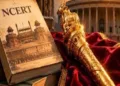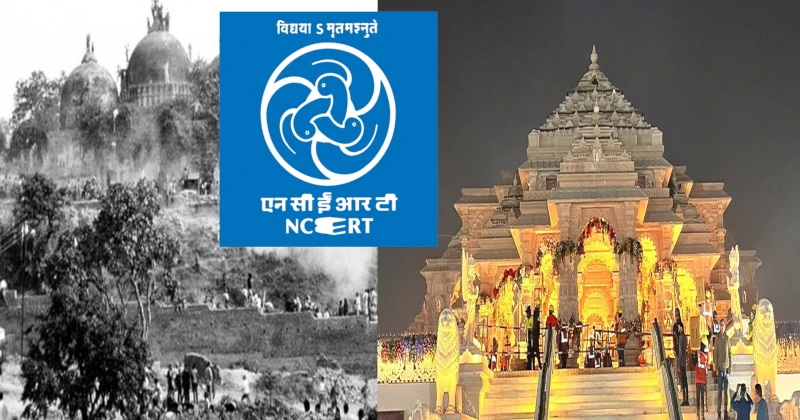
The recently revised Class 12 Political Science textbook by the National Council of Educational Research and Training (NCERT) has been released. It incorporates significant changes in its coverage of Ayodhya, a historically sensitive and controversial topic. These changes, announced in April this year, reflect a marked shift in the narrative presented to students, sparking discussions about the portrayal of historical events in educational materials.
Key Changes in the Ayodhya Chapter
The revisions are most notable in Chapter 8, which deals with the “Ayodhya Issue.” The new edition introduces several modifications:
Revised Terminology:
The previous version of the textbook explicitly named the Babri Masjid, describing it as a 16th-century mosque built by Mughal emperor Babur’s General Mir Baqi. The latest version, however, avoids this direct reference. Instead, it describes the structure as a “three-dome structure”. It states, “A three-dome structure was built at the site of Shri Ram’s birthplace in 1528, but the structure had a visible display of Hindu symbols and relics in its interior as well as its exterior portions.”
Mobilisation Narrative:
Earlier editions provided a detailed account of the mobilisation on both sides after the masjid’s locks were opened in February 1986. This included mentions of the rath yatra, kar seva, demolition of the structure, and the subsequent communal violence. The revised text significantly reduces this content, instead summarising the events with, “Subsequently, tensions heightened between both communities over ownership rights, resulting in numerous disputes and legal conflicts.”
Demolition Details:
The previous textbook described the BJP’s expression of “regret over the happenings at Ayodhya” and discussed the “serious debate over secularism” following the structure’s demolition. The new text presents a more balanced view: “Both communities desired a fair resolution to the longstanding issue. In 1992, following the demolition of the structure, some critics contended that it presented a substantial challenge to the principles of Indian democracy.”
Removals and Additions:
The revised edition has removed several critical elements from the earlier text, including newspaper clippings from December 7, 1992, with headlines like “Babri Masjid demolished, Centre sacks Kalyan Govt.” Instead, it has added content about the Supreme Court’s November 9, 2019, judgment, emphasising the legal resolution process. The book now quotes this verdict, stating, “…Faith and belief of Hindus since before construction of Mosque and after it has always been that Janmasthan of Lord Ram is the place where Babri Mosque has been constructed…”
Verdict Emphasis:
While the older version quoted a judgment by then Chief Justice Venkatachaliah and Justice G N Ray of the Supreme Court convicting former Uttar Pradesh Chief Minister Kalyan Singh, the new edition focuses on the 2019 Supreme Court judgment. This shift highlights the modern legal perspective, suggesting a move towards framing the narrative around recent judicial decisions rather than historical judicial actions.
The changes in the Ayodhya chapter are part of a broader revision of NCERT textbooks, reflecting shifts in political and educational priorities. The latest Political Science textbook has seen its section on Ayodhya reduced from four pages to two, omitting detailed discussions of communal violence, political repercussions, and specific mobilisation events. Some see this reduction as an attempt to streamline the narrative and focus on a more concise historical account.
The Ayodhya dispute has been one of India’s most contentious and divisive issues, centring on the demolition of the Babri Masjid in 1992 and the subsequent communal violence. The previous NCERT textbooks provided a detailed and nuanced account of these events, including the role of political parties, communal mobilisations, and the ensuing legal battles. The revised version adopts a more sanitised and less aggressive approach.
Some educators and historians see this shift in narrative as an attempt to de-escalate tensions and present a more balanced view of history. However, critics argue that it risks oversimplifying and potentially distorting the complexities of historical events.
Educational materials play a crucial role in shaping young minds. How historical events are presented can influence students’ understanding of their country’s past and socio-political landscape. The recent revisions in the NCERT textbooks underscore the importance of carefully curating educational content to ensure it is accurate and sensitive to the diverse perspectives within society.
In response to the release of the revised textbooks, the government and educational authorities have emphasised the need for regular updates to ensure that educational materials remain relevant and reflect current knowledge and societal changes.
The Education Ministry has directed the NCERT to implement an annual textbook review system. This directive aims to ensure that textbooks are updated regularly to incorporate new developments and emerging topics, such as advancements in technology and changes in societal norms.
An official from the Education Ministry highlighted the importance of keeping NCERT textbooks updated, stating, “NCERT books once published should not remain the same for many years. They should be reviewed every year before printing, incorporating any necessary changes or additions, such as emerging topics like Artificial Intelligence (AI).”
This proactive approach aligns with the Ministry’s commitment to fostering an environment of excellence and innovation in education. Regular updates will help ensure that students receive the most current and comprehensive educational resources.
Another critical aspect of the annual review process is the opportunity to address biases and promote inclusivity in educational materials. By regularly reviewing and updating textbooks, the NCERT can identify and correct any biases or inaccuracies, ensuring that the content is fair and representative of diverse perspectives.
The textbook revisions align with the new National Curriculum Framework (NCF) introduced in the National Education Policy (NEP) implementation in 2020. This framework aims to provide a holistic and integrated approach to education, emphasising critical thinking, creativity, and the importance of understanding India’s diverse cultural heritage.
Updating all NCERT textbooks to align with the new curriculum framework and recent developments is an ongoing process that may take up to two years to complete. However, the efforts are already underway, with new textbooks released for some classes and subjects.
The revised NCERT Class 12 Political Science textbook marks a notable shift in the presentation of this sensitive historical issue, with its significant changes to the coverage of the Ayodhya dispute.