Children with 'lazy eye' at higher risk of serious disease in adulthood: Study
September 14, 2026
  • Read Ecopy
  • Circulation
  • Advertise
  • Careers
  • About Us
  • Contact Us
Android AppiPhone AppArattai
Organiser
  • ‌
  • Bharat
    • Assam
    • Bihar
    • Chhattisgarh
    • Jharkhand
    • Maharashtra
    • View All States
  • World
    • Asia
    • Europe
    • North America
    • South America
    • Africa
    • Australia
  • Editorial
  • International
  • Opinion
  • RSS @ 100
  • More
    • World Hindu Congress 2026
    • Op Sindoor
    • Analysis
    • Sports
    • Defence
    • Politics
    • Business
    • Economy
    • Culture
    • Special Report
    • Sci & Tech
    • Entertainment
    • G20
    • Azadi Ka Amrit Mahotsav
    • Vocal4Local
    • Web Stories
    • Education
    • Employment
    • Books
    • Interviews
    • Travel
    • Law
    • Health
    • Obituary
  • Subscribe
    • Subscribe Print Edition
    • Subscribe Ecopy
    • Read Ecopy
  • ‌
  • Bharat
    • Assam
    • Bihar
    • Chhattisgarh
    • Jharkhand
    • Maharashtra
    • View All States
  • World
    • Asia
    • Europe
    • North America
    • South America
    • Africa
    • Australia
  • Editorial
  • International
  • Opinion
  • RSS @ 100
  • More
    • World Hindu Congress 2026
    • Op Sindoor
    • Analysis
    • Sports
    • Defence
    • Politics
    • Business
    • Economy
    • Culture
    • Special Report
    • Sci & Tech
    • Entertainment
    • G20
    • Azadi Ka Amrit Mahotsav
    • Vocal4Local
    • Web Stories
    • Education
    • Employment
    • Books
    • Interviews
    • Travel
    • Law
    • Health
    • Obituary
  • Subscribe
    • Subscribe Print Edition
    • Subscribe Ecopy
    • Read Ecopy
Organiser
  • Home
  • Bharat
  • World
  • Operation Sindoor
  • Editorial
  • Analysis
  • Opinion
  • Culture
  • Defence
  • International Edition
  • RSS @ 100
  • Magazine
  • Read Ecopy
Home World

Children with ‘lazy eye’ at higher risk of serious disease in adulthood: Study

Children diagnosed with 'lazy eye' face an increased risk of developing serious diseases later in life, highlighting long-term health concerns associated with this common childhood condition

WEBDESKWEBDESK
Jun 16, 2024, 11:00 pm IST
inWorld, Health
Follow on Google News
Representative image

Representative image

Facebook
Twitter
WhatsAppTelegramEmail

According to a new study performed by UCL researchers, those who had amblyopia (‘lazy eye’) in childhood are more likely to experience hypertension, obesity, and metabolic syndrome in adulthood, as well as an increased risk of heart attacks.

In publishing the study in eClinicalMedicine, the authors stress that while they have identified a correlation, their research does not show a causal relationship between amblyopia and ill health in adulthood.

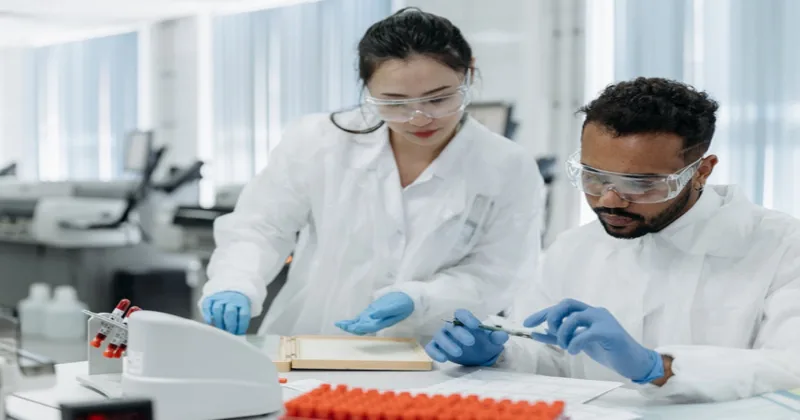
The researchers analysed data from more than 126,000 participants aged 40 to 69 years old from the UK Biobank cohort, who had undergone ocular examination.

Participants had been asked during recruitment whether they were treated for amblyopia in childhood and whether they still had the condition in adulthood. They were also asked if they had a medical diagnosis of diabetes, high blood pressure, or cardio/cerebrovascular disease (ie. angina, heart attack, stroke).

Meanwhile, their BMI (body mass index), blood glucose, and cholesterol levels were also measured and mortality was tracked.

The researchers confirmed that from 3,238 participants who reported having a ‘lazy eye’ as a child, 82.2 per cent had persistent reduced vision in one eye as an adult.

The findings showed that participants with amblyopia as a child had 29% higher odds of developing diabetes, 25 per cent higher odds of having hypertension and 16 per cent higher odds of having obesity. They were also at increased risk of heart attack – even when other risk factors for these conditions (e.g. other disease, ethnicity and social class) were taken into account.

This increased risk of health problems was found not only among those whose vision problems persisted, but also to some extent in participants who had had amblyopia as a child and 20/20 vision as an adult, although the correlation was not as strong.

Corresponding author, Professor Jugnoo Rahi (UCL Great Ormond Street Institute for Child Health, UCL Institute of Ophthalmology and Great Ormond Street Hospital), said: “Amblyopia is an eye condition affecting up to four in 100 children. In the UK, all children are supposed to have vision screening before the age of five, to ensure a prompt diagnosis and relevant ophthalmic treatment.

“It is rare to have a ‘marker’ in childhood that is associated with increased risk of serious disease in adult life, and also one that is measured and known for every child – because of population screening.

“The large numbers of affected children and their families, may want to think of our findings as an extra incentive for trying to achieve healthy lifestyles from childhood.”

Amblyopia is when the vision in one eye does not develop properly and can be triggered by a squint or being long-sighted.

It is a neurodevelopmental condition that develops when there’s a breakdown in how the brain and the eye work together and the brain can’t process properly the visual signal from the affected eye. As it usually causes reduced vision in one eye only, many children don’t notice anything wrong with their sight and are only diagnosed through the vision test done at four to five years of age.

A recent report from the Academy of Medical Sciences* involving some researchers from the UCL Great Ormond Street Institute for Child Health, called on policymakers to address the declining physical and mental health of children under five in the UK and prioritise child health.

The team hope that their new research will help reinforce this message and highlight how child health lays the foundations for adult health.

First author, Dr Siegfried Wagner (UCL Institute of Ophthalmology and Moorfields Eye Hospital), said: “Vision and the eyes are sentinels for overall health – whether heart disease or metabolic disfunction, they are intimately linked with other organ systems. This is one of the reasons why we screen for good vision in both eyes.

Also Read: WHO confirms human case of bird flu in India

“We emphasise that our research does not show a causal relationship between amblyopia and ill health in adulthood. Our research means that the ‘average’ adult who had amblyopia as a child is more likely to develop these disorders than the ‘average’ adult who did not have amblyopia. The findings don’t mean that every child with amblyopia will inevitably develop cardiometabolic disorders in adult life.”

(with inputs from ANI)


Topics: Heart DiseaseLazy eyesAmblyopiaVision problem
Share
Tweet
SendShareSend
✮ Subscribe Organiser YouTube Channel. ✮
✮ Join Organiser's WhatsApp channel for Nationalist views beyond the news. ✮
Previous News

“India did not associate itself with any document”: MEA on Ukraine Peace Summit

Next News

West Bengal: Suvendu Adhikari along with post-poll violence victims meet Governor at Raj Bhavan

Related News

Representative image

Lifestyle risks weigh heavier on women’s hearts: Study

Representative image

Higher fat in muscles leads to increased risk of heart disease: Study

Representative image

Study reveals how infertility treatment can double risk of postpartum heart disease

Representative image

Ayurvedic Wisdom: Tips for a healthy and strong heart

Younger kidney cancer survivors are at risk for heart problems: Study

Loneliness linked with elevated risk of heart disease in patients with diabetes: Study

Load More

Latest News

RSS Akhil Bharatiya Sah-Bauddhik Shikshan Pramukh Deepak Vispute addressing the gathering

‘Nation First’ should be the guiding principle for every individual, regardless of their Field: Deepak Vispute

‘India was not poor; it was made poor’: The truth re-emerges through Jema Ferrer’s perspective

Six years after talent manager Disha Salian was found dead, her father Satish Salian on September 11 recorded a detailed statement with the Central Bureau of Investigation (CBI), naming Shiv Sena (UBT) leader Aaditya Thackeray, actors Dino Morea and Sooraj Pancholi, and others.

Disha Salian Murder Case: Father names Aaditya Thackeray in CBI statement; Lawyer claims gang rape, murder cover-up

Release of a book at Vishwa Bandhutva Diwas programme that was organised in Ujjain

Bharat’s youth rooted in sacrifice, service & discipline can give new direction to World: Parag Abhyankar

AI Generated Representative Image

“Let Go” — But only when it suits you? Exposing the double standards of Kashmir’s political leadership

Bharatiya Kisan Sangh distributed free school uniforms, notebooks, pen bundles, bags to 7,000 students in flood-affected areas of Assam

Assam: Bharatiya Kisan Sangh distributes free school uniforms, notebooks & bags to 7,000 flood-affected students

Chinmoy Prabhu

When a Bengali Hindu suffers in Bangladesh, where does ‘Bangali-Prem’ go?

AI Generated Representative Image

BRICS Summit: Not de-dollarisation, but derisking from dollar; India scripts pragmatic shield against external shocks

RSS Sarsanghchalak Dr Mohan Bhagwat, attended the 37th annual prize distribution ceremony ‘Swaraj’ at L.K. Singhania Education Centre

Education must go beyond livelihood and focus on holistic human development: Dr Mohan Bhagwat

(Left) Prime Minister Narendra Modi and Russian President Vladimir Putin (Right) Prime Minister Narendra Modi and Chinese President Xi Jinping in the backdrop of the Rameshwaram temple corridor in the backdrop of the BRICS 2026 summit

Bharat’s civilisational pride at BRICS 2026: Rameswaram temple corridor frames world leaders

Load More
  • Privacy
  • Terms
  • Cookie Policy
  • Refund and Cancellation
  • Delivery and Shipping

© Bharat Prakashan (Delhi) Limited.
Tech-enabled by Ananthapuri Technologies

  • Home
  • Search Organiser
  • Bharat
    • Assam
    • Bihar
    • Chhattisgarh
    • Jharkhand
    • Maharashtra
    • View All States
  • World
    • Asia
    • Africa
    • North America
    • South America
    • Europe
    • Australia
  • Editorial
  • Operation Sindoor
  • Opinion
  • Analysis
  • Defence
  • Culture
  • Sports
  • Business
  • RSS @ 100
  • Entertainment
  • More ..
    • Sci & Tech
    • Vocal4Local
    • Special Report
    • Education
    • Employment
    • Books
    • Interviews
    • Travel
    • Health
    • Politics
    • Law
    • Economy
    • Obituary
  • Subscribe Magazine
  • Read Ecopy
  • Advertise
  • Circulation
  • Careers
  • About Us
  • Contact Us
  • Policies & Terms
    • Privacy Policy
    • Cookie Policy
    • Refund and Cancellation
    • Terms of Use

© Bharat Prakashan (Delhi) Limited.
Tech-enabled by Ananthapuri Technologies