China to improve Tibetans livelihood, ecological environment by forceful village relocations: Human Rights Watch
September 14, 2026
  • Read Ecopy
  • Circulation
  • Advertise
  • Careers
  • About Us
  • Contact Us
Android AppiPhone AppArattai
Organiser
  • ‌
  • Bharat
    • Assam
    • Bihar
    • Chhattisgarh
    • Jharkhand
    • Maharashtra
    • View All States
  • World
    • Asia
    • Europe
    • North America
    • South America
    • Africa
    • Australia
  • Editorial
  • International
  • Opinion
  • RSS @ 100
  • More
    • World Hindu Congress 2026
    • Op Sindoor
    • Analysis
    • Sports
    • Defence
    • Politics
    • Business
    • Economy
    • Culture
    • Special Report
    • Sci & Tech
    • Entertainment
    • G20
    • Azadi Ka Amrit Mahotsav
    • Vocal4Local
    • Web Stories
    • Education
    • Employment
    • Books
    • Interviews
    • Travel
    • Law
    • Health
    • Obituary
  • Subscribe
    • Subscribe Print Edition
    • Subscribe Ecopy
    • Read Ecopy
  • ‌
  • Bharat
    • Assam
    • Bihar
    • Chhattisgarh
    • Jharkhand
    • Maharashtra
    • View All States
  • World
    • Asia
    • Europe
    • North America
    • South America
    • Africa
    • Australia
  • Editorial
  • International
  • Opinion
  • RSS @ 100
  • More
    • World Hindu Congress 2026
    • Op Sindoor
    • Analysis
    • Sports
    • Defence
    • Politics
    • Business
    • Economy
    • Culture
    • Special Report
    • Sci & Tech
    • Entertainment
    • G20
    • Azadi Ka Amrit Mahotsav
    • Vocal4Local
    • Web Stories
    • Education
    • Employment
    • Books
    • Interviews
    • Travel
    • Law
    • Health
    • Obituary
  • Subscribe
    • Subscribe Print Edition
    • Subscribe Ecopy
    • Read Ecopy
Organiser
  • Home
  • Bharat
  • World
  • Operation Sindoor
  • Editorial
  • Analysis
  • Opinion
  • Culture
  • Defence
  • International Edition
  • RSS @ 100
  • Magazine
  • Read Ecopy
Home World

China to improve Tibetans livelihood, ecological environment by forceful village relocations: Human Rights Watch

Having received decades of brutal torture, and atrocities which included wiping out indigenous culture and forceful Sinicization, the Tibetan community are still heavily bearing the brunt of Chinese hegemony as they are being coercively forced to leave their traditional villages, pasturelands and relocate to places which their oppressors term it as measures to improve Tibetans livelihood and ecological environment

WEBDESKWEBDESK
May 23, 2024, 09:30 pm IST
inWorld, East Asia, International Edition
Follow on Google News
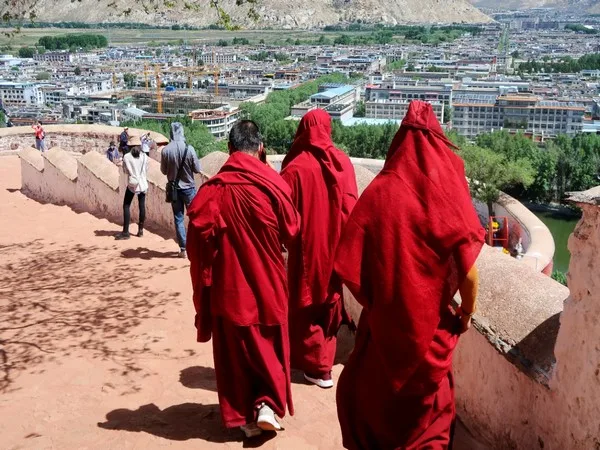
Representative Image (Tibetan Relocation)

Representative Image (Tibetan Relocation)

Facebook
Twitter
WhatsAppTelegramEmail

Revealing increasing atrocities against members of the Tibet community in China, Human Rights Watch on Wednesday released a report on the relocation of hundreds of Tibetans in recent times. Over 140,000 residents have been relocated or are currently relocating from 500 villages to new locations, Human Rights Watch said in a release.

The 71-page report – ‘Educate the Masses to Change Their Minds: China’s Coercive Relocation of Rural Tibetans,’ details how participation in “whole-village relocation” programs in Tibet, in which entire villages are relocated, amounts to forced eviction in violation of international law.

Officials misleadingly claim that these relocations will “improve people’s livelihood” and “protect the ecological environment.” The government prevents relocated people from returning to their former homes by generally requiring them to demolish these homes within a year of relocating., said the news release.

“The Chinese government says that the relocation of Tibetan villages is voluntary, but official media reports contradict this claim,” said Maya Wang, acting China director at Human Rights Watch. “Those reports make clear that when a whole village is targeted for relocation, it is practically impossible for the residents to refuse to move without facing serious repercussions.”

The report draws on over 1,000 official Chinese media articles published between 2016 and 2023. It includes three case studies and video footage that show in detail the arguments and methods Chinese officials use to obtain the “consent” of residents to relocate their villages.

Chinese government policy in Tibet sets out that every household in every village targeted is to consent to relocation. Human Rights Watch found multiple references to initial reluctance among Tibetans whose villages were scheduled for relocation. In one case, 200 out of 262 households in a village in Nagchu Municipality initially did not want to relocate to a site nearly 1,000 kilometres away. The government claimed that all eventually agreed to move voluntarily.

According to the release, Chinese officials attribute their success in getting total consent to “publicity work” and “door-to-door ideological work” carried out by officials. This often involves intrusive home visits. In some cases, officials of increasing seniority visit families repeatedly at their homes to gain their “consent.” In some cases, they also tell residents that essential services would be cut to their current homes if they did not move.

They openly threatened villagers who voiced disagreements about the relocations, accusing them of “spreading rumours” and ordering officials to crack down on such actions “swiftly and resolutely,” implying administrative and criminal penalties. In addition, officials require each targeted village to reach a consensus decision and do not allow any individual resident to opt-out of that decision, creating additional peer group pressure on all residents to comply.

In addition to programs that relocate entire villages, officials in Tibet also use a form of relocation known as “individual household relocation.” This typically involves officials selecting poorer households for relocation to sites deemed more suitable for income generation. The government relocated 567,000 people under this program in Tibetan areas of China between 2016 and 2020.

While participants selected for this program could decline to take part, official media articles show that officials routinely assured them that relocation would lead to improved employment prospects and higher incomes. However, studies by Chinese government-affiliated researchers in Tibet show that most relocatees, having been moved to peri-urban areas where their farming or herding skills cannot be used, are unable to get sustainable employment.

While such mass relocations of residents have been occurring elsewhere in poor rural areas in China, these drive risk causing a devastating impact on Tibetan communities, Human Rights Watch found.

Together with current Chinese government programs to assimilate Tibetan schooling, culture, and religion into those of the “Chinese nation,” the relocation of rural communities erodes or causes major damage to Tibetan culture and ways of life – not least because most relocation programs in Tibet move former farmers and pastoralists to areas where they cannot practice their former livelihood and have no choice but to seek work as wage labourers in off-farm industries.

“The mass relocations of rural Tibetan villages are severely eroding Tibetan culture and ways of life,” Wang said. “China’s government should suspend relocations in Tibet until an independent, expert review of existing policies and practices is carried out to determine their compliance with Chinese law, and standards and international law concerning relocations and forced evictions.”


Topics: Human Rights WatchSinicizationTibetprc
Share
Tweet
SendShareSend
✮ Subscribe Organiser YouTube Channel. ✮
✮ Join Organiser's WhatsApp channel for Nationalist views beyond the news. ✮
Previous News

Doha-based scholar translates ‘Great Minds on India’ which celebrates Hindu Wisdom into Arabic

Next News

Pakistan: PTI, JUI-F hold meetings to bolster constitutional ideals, democracy and rule of law

Related News

Members of the Tibetan community take part in a protest march against Chinese President Xi Jinping’s visit to India in New Delhi on September 11

Tibetans protest Xi Jinping’s India Visit; Demand action on China’s ‘ethnic unity’ law and repression

Three Gorges Dam in central China's Hubei Province

Nepal flood horror raises alarm over China’s Great Bend Dam in Tibet; CCP’s hydropower push threatens millions of lives

China targets Tibet's largest Buddhist Centre in new demolition drive

Larung Gar: How China is secretly razing down World’s Largest Tibetan Buddhism Monastery

PoJK: Uprising against continued colonisation

Union Minister Shobha Karandlaje

Karnataka: Shobha Karandlaje urges Amit Shah to halt PRC of Congress govt; Cites illegal Bangladeshi immigration

Tibetan man self-immolates outside the UN, protesting the repressive policies of China & Xi Jinping

Tibetan man self-immolates outside UN: Protests against repressive Chinese policies & demands independence from Beijing

Load More

Latest News

Fact Check: Viral Video Falsely Claims PM Modi Said He Would End Poverty ‘In One Go’

FACT CHECK: Did PM Modi say he would end poverty in Bharat in one go? Viral video is clipped

At just 19, Mohammad Nabeel built an online Al-Qaeda network in UP

Al-Qaeda plot in UP: 19-year-old Mohammad Nabeel arrested over plan to recruit youths for Jihad

A representative image

Bankers Books Evidence Act 2026 to replace 1891 law from October 1: Here’s what will change?

SSC CGL exam Schedule (This is an AI generated image)

SSC CGL Tier 1 exams from September 30 to October 30; Check schedule and admit card details, vacancies

New Delhi, Sep 12 (ANI): Prime Minister Narendra Modi holds a bilateral meeting with Chinese President Xi Jinping on the sidelines of the BRICS Summit 2026, in New Delhi on Saturday. External Affairs Minister S. Jaishankar, NSA Ajit Doval and Principal Secretaries to the PM, Pramod Kumar Mishra and Shaktikanta Das also present. (@MEAIndia X/ANI Photo)

BRICS 2026: Why Putin, Xi and Pezeshkian meetings stand out in PM Modi’s diplomacy

Odisha Chief Minister Mohan Charan Majhi addresses the media at Bhubaneswar airport after returning from his UAE visit on September 13, 2026.

Odisha secures Rs 2.43 lakh crore investment proposals during CM Majhi’s five-day UAE outreach programme

Bhagwan Ganesh

Ganesh Chaturthi: Rationale behind worshipping Bhagwan Ganesh

RSS Akhil Bharatiya Sah-Bauddhik Shikshan Pramukh Deepak Vispute addressing the gathering

‘Nation First’ should be the guiding principle for every individual, regardless of their Field: Deepak Vispute

‘India was not poor; it was made poor’: The truth re-emerges through Jema Ferrer’s perspective

Six years after talent manager Disha Salian was found dead, her father Satish Salian on September 11 recorded a detailed statement with the Central Bureau of Investigation (CBI), naming Shiv Sena (UBT) leader Aaditya Thackeray, actors Dino Morea and Sooraj Pancholi, and others.

Disha Salian Murder Case: Father names Aaditya Thackeray in CBI statement; Lawyer claims gang rape, murder cover-up

Load More
  • Privacy
  • Terms
  • Cookie Policy
  • Refund and Cancellation
  • Delivery and Shipping

© Bharat Prakashan (Delhi) Limited.
Tech-enabled by Ananthapuri Technologies

  • Home
  • Search Organiser
  • Bharat
    • Assam
    • Bihar
    • Chhattisgarh
    • Jharkhand
    • Maharashtra
    • View All States
  • World
    • Asia
    • Africa
    • North America
    • South America
    • Europe
    • Australia
  • Editorial
  • Operation Sindoor
  • Opinion
  • Analysis
  • Defence
  • Culture
  • Sports
  • Business
  • RSS @ 100
  • Entertainment
  • More ..
    • Sci & Tech
    • Vocal4Local
    • Special Report
    • Education
    • Employment
    • Books
    • Interviews
    • Travel
    • Health
    • Politics
    • Law
    • Economy
    • Obituary
  • Subscribe Magazine
  • Read Ecopy
  • Advertise
  • Circulation
  • Careers
  • About Us
  • Contact Us
  • Policies & Terms
    • Privacy Policy
    • Cookie Policy
    • Refund and Cancellation
    • Terms of Use

© Bharat Prakashan (Delhi) Limited.
Tech-enabled by Ananthapuri Technologies