Indian grand strategy’s playbook: Crusading on Neo-orientalism and countering occidental misadventures
June 9, 2026
  • Read Ecopy
  • Circulation
  • Advertise
  • Careers
  • About Us
  • Contact Us
Android AppiPhone AppArattai
Organiser
  • ‌
  • Bharat
    • Assam
    • Bihar
    • Chhattisgarh
    • Jharkhand
    • Maharashtra
    • View All States
  • World
    • Asia
    • Europe
    • North America
    • South America
    • Africa
    • Australia
  • Editorial
  • International
  • Opinion
  • RSS @ 100
  • More
    • Op Sindoor
    • Analysis
    • Sports
    • Defence
    • Politics
    • Business
    • Economy
    • Culture
    • Special Report
    • Sci & Tech
    • Entertainment
    • G20
    • Azadi Ka Amrit Mahotsav
    • Vocal4Local
    • Web Stories
    • Education
    • Employment
    • Books
    • Interviews
    • Travel
    • Law
    • Health
    • Obituary
  • Subscribe
    • Subscribe Print Edition
    • Subscribe Ecopy
    • Read Ecopy
  • ‌
  • Bharat
    • Assam
    • Bihar
    • Chhattisgarh
    • Jharkhand
    • Maharashtra
    • View All States
  • World
    • Asia
    • Europe
    • North America
    • South America
    • Africa
    • Australia
  • Editorial
  • International
  • Opinion
  • RSS @ 100
  • More
    • Op Sindoor
    • Analysis
    • Sports
    • Defence
    • Politics
    • Business
    • Economy
    • Culture
    • Special Report
    • Sci & Tech
    • Entertainment
    • G20
    • Azadi Ka Amrit Mahotsav
    • Vocal4Local
    • Web Stories
    • Education
    • Employment
    • Books
    • Interviews
    • Travel
    • Law
    • Health
    • Obituary
  • Subscribe
    • Subscribe Print Edition
    • Subscribe Ecopy
    • Read Ecopy
Organiser
  • Home
  • Bharat
  • World
  • Operation Sindoor
  • Editorial
  • Analysis
  • Opinion
  • Culture
  • Defence
  • International Edition
  • RSS @ 100
  • Magazine
  • Read Ecopy
Home International Edition News

Indian grand strategy’s playbook: Crusading on Neo-orientalism and countering occidental misadventures

Vedika ZnwarVedika Znwar
May 10, 2024, 09:00 pm IST
in News, India, International Edition
Follow on Google News
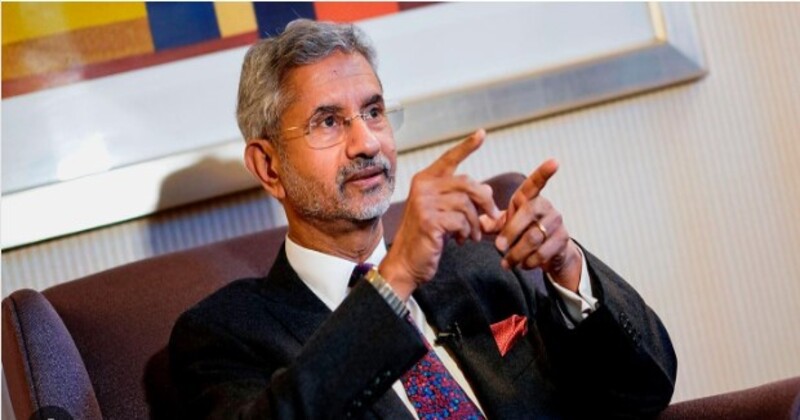
External Affairs Minister S Jaishankar

External Affairs Minister S Jaishankar

FacebookTwitterWhatsAppTelegramEmail

The biggest fallacy of western exclusivism is that there hit-job like commentaries display their hasty generalisations. The sweeping comments from the advanced and liberal democracies are disappointing, but unsurprising. The skewed and incorrect perceptions they have built show that their notions are far from the ground realities prevailing in India.

Orientalism is very much alive. This is pretty much evident from MEA Dr S Jaishankar’s takeaway, where he reminded that tackling neo- Orientalism is not about India being on the edge or being disregarding of other cultures and civilisations. Instead, it means that the world needs to engage and be more accommodative of India’s point of view (POV).  This applies to the external side, but the change begins at home as well. The internal churning has commenced.

India is done with playing safe at the cost of its credibility and becoming subservient to the imposed occidental double standards. The external minister’s remarks on the post-western monopolistic narrative was an argument for India’s own voice to be heard, not through some ventriloquists played by the great powers, which have themselves changed the landscape of the post-cold war era.

External Minister Jaishankar has called out something that was known, but spoken only in different undertones, which goes like that the existence of self proclaimed people with different ulterior motives coupled with what the West preaches, practices, its agendas and its objectivity (or paucity of it) should be accounted as factors.

EAM S Jaishankar points out that the previous governments who were run by left-liberal beliefs were always preoccupied with their search of some bigger cause than India’s own national interests. With new ideologies, new facets will replace the redundant strategies which do not adapt themselves to the current conditions. For example, prior to 2014 the historical left wing lobby had reservations with establishing or dealing with the US, but now the situation is quite the opposite.

Secondly, on the issues with China. EAM stated that the previous governments have even put Chinese interests above that of India’s. The current government has said a clear no and conveyed that now they won’t be dictating the terms, despite the cascading consequences.

Recently, PM Modi made a statement on India-China’s border issue, where mentioned that India seeks normalcy,  which can be achieved only if peace and tranquility prevails on the border. However, this is not about departing from the tone on the policy which India has consistently maintained.

Taking economic considerations into place, India is looking at straightforward economics where a country’s manufacturing practices have created asymmetries and promoted monopolistic trends. India then becomes protectionist, to protect the interests of domestic manufacturers and industrial players, especially the SMEs, labour, and the working class. No matter how globalised the world is, defensive measures will prevail when national interests are at stake.

Those days are long gone when the powerful few who emerged as victorious out of a war defined what was geopolitically and geo-culturally acceptable and what was not. The multipolar world that India aspires for is not the revisionist perspective of the 19th century version of bottomless geopolitical competition.

It advocates a multipolar world that is essentially rooted in multipolarity, not some concealed principles of unipolarity or bipolarity. India bats for a multicultural world order where countries like itself are not just seen but heard as well. Equal footing and mutual respect are the cardinals.

India’s pragmatism for its own development and growth and the Global South does not share the vehement expansionist and hegemonic world view of China. India does not believe in the anti-western rhetorics as suitable foreign policy strategies. India’s realism has altered, the clear emphasis is on the national interests of India. India believes in defensive realism which does not mean to become antithetical to any mainstream considerations of the world order, which is starkly opposite to what China’s offensive realism is all about, to maximise power and become the unequivocal hegemon. The subset is based in the radical shift of the ideology that the Indian ecosystem has witnessed in the past ten years.

India is the world’s fifth largest economy, home to one-sixth of humanity’s population. India has a symbiotic relationship with both the worlds— encompassing both the rich G7 countries and the least developed nations. India can uphold its moral and political heft by leveraging such vantage points. India’s prerogative should be able to respond and not react.

India needs to outshine the narratives constructed on double standards. It should be able to pushback against the orchestrated portrayal of India in bad light— whether depicted by sections of western media or representatives of the states. However, it is also important to consider that India should not come across as hypersensitive to criticisms. Mature democracies respond with reasoned arguments, do not throw fits or knee-jerk sulks and avoid being duped by conspiracy theories.
Topics: Global SouthG-7External Affairs Minister (EAM) S Jaishankar
ShareTweetSendShareSend
✮ Subscribe Organiser YouTube Channel. ✮
✮ Join Organiser's WhatsApp channel for Nationalist views beyond the news. ✮
Previous News

Chhattisgarh: At least 12 killed in action after forces launch a massive operation against Maoist in Bijapur

Next News

US Presidential Polls 2024: Donald Trump to use ‘special killer squads’ for exterminating Mexican drug lords

Related News

Prime Minister Narendra Modi with Foreign Ministers and Heads of Delegation of BRICS member countries during the BRICS Foreign Ministers’ Meeting in New Delhi

BRICS India 2026: PM Modi drives global South push to protect world economy from geopolitical turmoil

India's humanitarian assistance to the African nation of Malawi

India extends humanitarian aid to Malawi; Sends 1,000 metric tons of rice & reiterates the prosperity of Global South

AI for All: A Civilizational call from New Delhi to the Digital World

President of Brazil Luiz Inacio Lula da Silva and Prime Minister Narendra Modi

India-Brazil relations soar as strong voice of Global South: Trade, critical minerals, digital delivery on the agenda

AI Impact Summit 2026

AI Impact Summit 2026: Catalysing leadership across the global south

A representative image

AI Impact Summit 2026 begins in New Delhi: India signals global leadership ambition in the age of AI 

Load More

Latest News

India Deploys 12 Nuclear Warheads: Heralds doctrinal shift to script strategic deterrence against multi-front threat

J&K: Zojila tunnel clears key hurdle; Signals new era of connectivity for Ladakh

How Cockroach politics is hollowing out Bharatiya democratic culture

RSS centenary year is a time for renewed resolve and greater commitment to nation-building: Dr Mohan Bhagwat

Ex-DMK Minister Senthil Balaji (Right Side-File Photo)

Tamil Nadu: CBI books Rs 397 cr transformer tender scam from ex-DMK Minister Senthil Balaji’s tenure (2021-2023)

Border Security Force (BSF) officials inspect the Single Row Fencing (SRF) at a Border Out Post area (India-Bangladesh border)

Infiltration and Border Management: Saving the Siliguri corridor

External Affairs Ministry spokesperson Randhir Jaiswal, slams Pakistan over the recent killings in POJK

‘Hope Pakistan is held accountable’: India reacts after 20 killed in Pakistan Occupied Jammu & Kashmir

China’s anti-BLA offensive hits snag as UN members demand proof

UN Setback for China and Pakistan: US and allies stall move to ban Baloch Liberation Army

West Asia Conflict: Collective response to energy crisis

Atul Limaye Ji Sah Sarkaryavah, Rashtriya Swayamsevak Sangh while addressing a Pramukh Jan Gosthi Rashtriya at Raipur, Chhattisgarh

Chhattisgarh: Society must lead its own transformation through collective initiative: Atul Limaye

Load More
  • Privacy
  • Terms
  • Cookie Policy
  • Refund and Cancellation
  • Delivery and Shipping

© Bharat Prakashan (Delhi) Limited.
Tech-enabled by Ananthapuri Technologies

  • Home
  • Search Organiser
  • Bharat
    • Assam
    • Bihar
    • Chhattisgarh
    • Jharkhand
    • Maharashtra
    • View All States
  • World
    • Asia
    • Africa
    • North America
    • South America
    • Europe
    • Australia
  • Editorial
  • Operation Sindoor
  • Opinion
  • Analysis
  • Defence
  • Culture
  • Sports
  • Business
  • RSS @ 100
  • Entertainment
  • More ..
    • Sci & Tech
    • Vocal4Local
    • Special Report
    • Education
    • Employment
    • Books
    • Interviews
    • Travel
    • Health
    • Politics
    • Law
    • Economy
    • Obituary
  • Subscribe Magazine
  • Read Ecopy
  • Advertise
  • Circulation
  • Careers
  • About Us
  • Contact Us
  • Policies & Terms
    • Privacy Policy
    • Cookie Policy
    • Refund and Cancellation
    • Terms of Use

© Bharat Prakashan (Delhi) Limited.
Tech-enabled by Ananthapuri Technologies