
Lok Sabha Elections 2024: Digital landscape reshapes democracy
June 5, 2026
  • Read Ecopy
  • Circulation
  • Advertise
  • Careers
  • About Us
  • Contact Us
Android AppiPhone AppArattai
Organiser
  • ‌
  • Bharat
    • Assam
    • Bihar
    • Chhattisgarh
    • Jharkhand
    • Maharashtra
    • View All States
  • World
    • Asia
    • Europe
    • North America
    • South America
    • Africa
    • Australia
  • Editorial
  • International
  • Opinion
  • RSS @ 100
  • More
    • Op Sindoor
    • Analysis
    • Sports
    • Defence
    • Politics
    • Business
    • Economy
    • Culture
    • Special Report
    • Sci & Tech
    • Entertainment
    • G20
    • Azadi Ka Amrit Mahotsav
    • Vocal4Local
    • Web Stories
    • Education
    • Employment
    • Books
    • Interviews
    • Travel
    • Law
    • Health
    • Obituary
  • Subscribe
    • Subscribe Print Edition
    • Subscribe Ecopy
    • Read Ecopy
  • ‌
  • Bharat
    • Assam
    • Bihar
    • Chhattisgarh
    • Jharkhand
    • Maharashtra
    • View All States
  • World
    • Asia
    • Europe
    • North America
    • South America
    • Africa
    • Australia
  • Editorial
  • International
  • Opinion
  • RSS @ 100
  • More
    • Op Sindoor
    • Analysis
    • Sports
    • Defence
    • Politics
    • Business
    • Economy
    • Culture
    • Special Report
    • Sci & Tech
    • Entertainment
    • G20
    • Azadi Ka Amrit Mahotsav
    • Vocal4Local
    • Web Stories
    • Education
    • Employment
    • Books
    • Interviews
    • Travel
    • Law
    • Health
    • Obituary
  • Subscribe
    • Subscribe Print Edition
    • Subscribe Ecopy
    • Read Ecopy
Organiser
  • Home
  • Bharat
  • World
  • Operation Sindoor
  • Editorial
  • Analysis
  • Opinion
  • Culture
  • Defence
  • International Edition
  • RSS @ 100
  • Magazine
  • Read Ecopy
Home Politics

Lok Sabha Elections 2024: Digital landscape reshapes democracy

The 2024 elections will be a crucial test for the maturity and resilience of India's digital political ecosystem. The lessons learned from the past decade will shape the strategies and discourse of the future as parties continue to adapt to the ever-evolving digital landscape

Yuvraj PokharnaYuvraj Pokharna
May 1, 2024, 08:00 pm IST
in Politics, Bharat, Opinion
Follow on Google News
FacebookTwitterWhatsAppTelegramEmail

The emergence of digital media—social media, mobile journalism, YouTube, etc.—has transformed the political contour in Bharat, with social media platforms becoming the new battleground for electoral campaigns. This tectonic shift has been particularly evident in the period post-2014, as political parties have adapted their strategies to capitalise on the growing influence of digital platforms. Among these parties, Bharatiya Janata Party (BJP) has proven to be the most successful in harnessing the power of social media to connect with voters and shape public opinion, while Congress-led Opposition—if one may say so—has retained its spot in setting the narratives and discourse, even at the cost of peddling fake news and running disinformation campaigns.

These parties have invested heavily in building a robust social media presence, with dedicated teams working to create and disseminate content across platforms like Instagram, Facebook, Twitter (now X), and WhatsApp. This approach has allowed these parties, especially the trailblazer BJP, to bypass traditional media channels and directly engage with voters, particularly the younger, tech-savvy demographic. This may have left the so-called mainstream out of the stream!

Central to BJP’s digital dominance has been the leadership of Prime Minister Narendra Modi. Modiji’s personal brand and massive social media following have been instrumental in driving the party’s online narrative. His direct communication style and ability to connect with voters through platforms like X, have set him apart from other political leaders and helped establish a sense of trust and authenticity. The Modi-led BJP has also been effective in leveraging data analytics and targeted advertising to reach specific voter segments. By observing social media trends and user behaviour patterns, the party has been able to tailor its messaging and outreach to resonate with different constituencies. This data-driven approach has given BJP a significant advantage in mobilising supporters and swaying undecided voters.
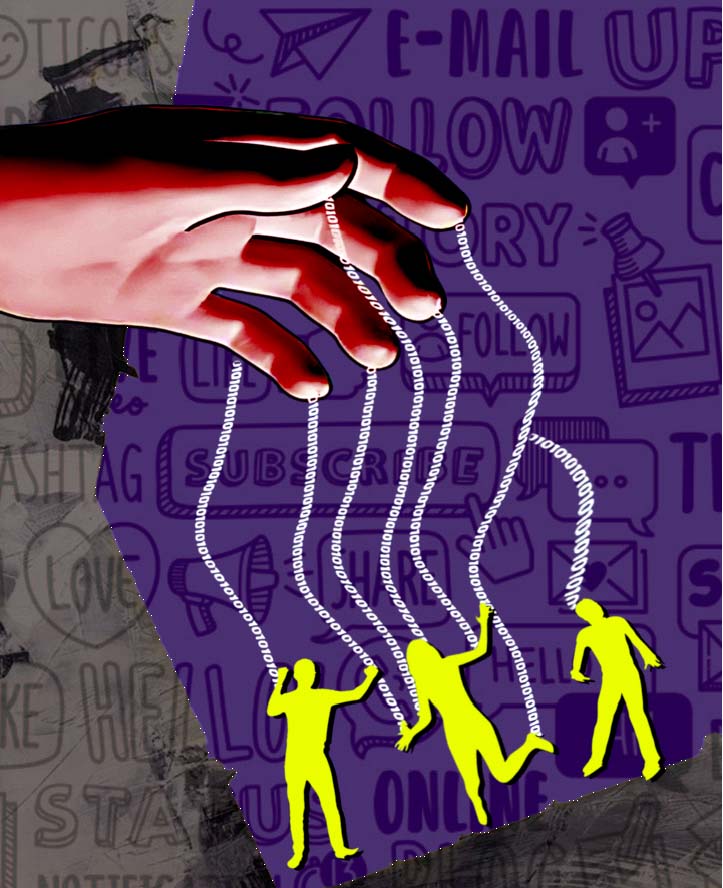
The increasing polarisation and echo chambers created by social media algorithms have led to concerns about their impact on democratic discourse

While BJP has set the standard for digital campaigning in India, other parties, too, have recognised the importance of adapting to the new media landscape. The Indian National Congress, the main Opposition party, now in a feeble and faltering state, has made efforts to strengthen its social media presence and engage with voters online. However, the party has struggled to match BJP’s coherence and effectiveness in its digital strategy. Regional parties have also embraced digital media to varying degrees, using platforms like Facebook and WhatsApp to connect with local constituencies and amplify their messages. These parties have often focused on issues specific to their regions, and they have used social media to mobilise support and challenge the national narrative.

The rise of digital media in Bharatiya politics has not been without its challenges and concerns. The spread of misinformation and fake news on social media platforms has become a major issue, with political parties and their supporters often accused of propagating false or misleading content to influence public opinion. Do you recall the case where the former national spokesperson endured harassment until her disappearance from public life? It was initiated by a doctored video shared by a known dogwhistler, a history sheeter, and a known Hindu baiter, Mohammad Zubair. That rebel rousing led to  the loss of at least six innocent Hindu lives at the hands of rabid and fundamentalist Islamists.

The use of social media for political propaganda and the targeting of specific voter groups have also raised questions about the fairness and transparency of digital campaigns. The lack of effective regulation and the opacity of online advertising have made it difficult to hold parties accountable for their digital activities. There was this infamous case of Cambridge Analytica, an erstwhile data analytics firm that the Indian National Congress under the stewardship of Rahul Gandhi, exploited the personal information of millions of Facebook users without their consent.

Moreover, the increasing polarisation and echo chambers created by social media algorithms have led to concerns about their impact on democratic discourse. Users’ inclination to interact with content that confirms their preexisting beliefs has hindered the visibility of diverse viewpoints and intensified the political atmosphere.

Digital media will play an increasingly significant role in politics as India prepares for the 2024 elections and beyond. Political parties will continue to refine their digital strategies and invest in new technologies to gain an edge over their competitors. However, it is crucial for all stakeholders—parties, platforms, regulators, and citizens—to work together to address the challenges posed by digital media in politics. We must make efforts to combat misinformation, enhance transparency in online campaigning, and promote a more inclusive and constructive political discourse.

BJP’s digital dominance has set a new standard for electoral campaigns with its intuitive and innovative content and the reach it gets owing to the highest following that the official handles of the party, its leaders and especially PM Modi boast. As India navigates this digital transformation, it is essential to balance the benefits of increased political engagement with the need to safeguard the integrity and fairness of the democratic process. India can ensure that the power of social media enhances democracy rather than undermines it by promoting digital literacy, encouraging responsible online behaviour, and strengthening regulations.

The 2024 General Elections will be a crucial test for the maturity and resilience of India’s digital political ecosystem. The lessons learned from the past decade will shape the strategies and discourse of the future as parties continue to adapt to the ever-evolving digital landscape. Ultimately, the success of India’s democracy in the digital age will depend on the collective efforts of all stakeholders to harness the potential of social media while mitigating its risks.

Topics: 2024 general electionsSocial MediaBJP's digital dominanceCongress-led Opposition
Yuvraj Pokharna
Yuvraj Pokharna
Yuvraj Pokharna is a Surat-based educator, columnist and social activist who vociferously voices his opinion on Hindutva, Islamic Jihad, Politics and Policy. [Read more]
ShareTweetSendShareSend
✮ Subscribe Organiser YouTube Channel. ✮
✮ Join Organiser's WhatsApp channel for Nationalist views beyond the news. ✮
Previous News

Shraddha Walker-like Murder Shook Mumbai: Nizam chopped Poonam into pieces after she found he was already married

Next News

Israeli PM Benjamin Netanyahu hard pressed on invading Rafah, despite warning from UN

Related News

Uttar Pradesh Chief Minister Yogi Adityanath

From Reel to Real: UP CM Yogi’s civilisational appeal to youth and parents against dangerous social media trend

New Mexico slams Meta for concealing child sexual exploitation & causing mental health harm; USD 375mn penalty imposed

Andhra Pradesh: Rahmatulla, Sohail and Danish arrested in Vijayawada over alleged jihadi recruitment, Pakistan links

Representative Image

Ethics of electronic media towards country’s development and progress

Representative Image

Misrepresentation of Sanatana culture by Western media; How foreign influencers with ignorance mock sacred practices

Ex-BBC ‘Editor’ Rifat Jawaid shared fake video (Image: CommuneMag)

Ex-BBC ‘Journalist’ Rifat Jawaid misleads public with Bangladesh video as Indian, deletes post without clarification

Load More

Latest News

A representative image

After TCS, Corporate Jihad allegations reach SBI: Married Hindu employee conversion claims trigger FIR in Mumbai

MEA spokesperson Randhir Jaiswal highlights India's resolve to deport illegal Bangladeshi migrants via bilateral mechanisms

India reiterates strong resolve to deport illegal Bangladeshis; Flags delay of bilateral procedures from Dhaka

Kerala HC rejects CMRL appeal, clears way for ED probe against Pinarayi Vijayan’s daughter in money laundering case

Uttar Pradesh leads in Bharat's green transformation

World Environment Day 2026: On his birthday, Yogi Adityanath’s green vision powers Uttar Pradesh’s transformation

As Khalistani networks seek new platforms beyond the West, Azerbaijan has emerged as a key venue for conferences, campaigns and narratives aligned with the Pakistan-Turkey axis against India.

Khalistan’s New Grazing Ground: Azerbaijan emerges as new hub for Turkey-Pakistan backed anti-India networks

Kochi IPL Mystery: Why Did Sunanda Pushkar Surrender Stake Amid Benami Claims Tied to Shashi Tharoor, Sonia Gandhi?

Kochi IPL Mystery: Why Did Sunanda Pushkar Surrender Stake Amid Benami Claims Tied to Shashi Tharoor, Sonia Gandhi?

BAPS Hindu Mandir Abu Dhabi wins “Tolerance Award 2026” for promoting peace, universal harmony and mutual respect

Former CPM leader PP Divya - Late Naveen Babu, ADM. (Left to Right)

Kannur ADM Naveen Babu’s death case: Keralam Cabinet approves CBI enquiry

(Left) Ramalinga Reddy (Right) KH Muniyappa

Karnataka: Ramalinga Reddy resigns, Muniyappa voices displeasure; Congress rebellion grows over portfolio allocation

MP Child Rights Commission uncovers massive record discrepancies at illegal residential Madrasa

MP Child Rights Commission uncovers massive discrepancies at Mandsaur Madrasa, questions fate of missing girls

Load More
  • Privacy
  • Terms
  • Cookie Policy
  • Refund and Cancellation
  • Delivery and Shipping

© Bharat Prakashan (Delhi) Limited.
Tech-enabled by Ananthapuri Technologies

  • Home
  • Search Organiser
  • Bharat
    • Assam
    • Bihar
    • Chhattisgarh
    • Jharkhand
    • Maharashtra
    • View All States
  • World
    • Asia
    • Africa
    • North America
    • South America
    • Europe
    • Australia
  • Editorial
  • Operation Sindoor
  • Opinion
  • Analysis
  • Defence
  • Culture
  • Sports
  • Business
  • RSS @ 100
  • Entertainment
  • More ..
    • Sci & Tech
    • Vocal4Local
    • Special Report
    • Education
    • Employment
    • Books
    • Interviews
    • Travel
    • Health
    • Politics
    • Law
    • Economy
    • Obituary
  • Subscribe Magazine
  • Read Ecopy
  • Advertise
  • Circulation
  • Careers
  • About Us
  • Contact Us
  • Policies & Terms
    • Privacy Policy
    • Cookie Policy
    • Refund and Cancellation
    • Terms of Use

© Bharat Prakashan (Delhi) Limited.
Tech-enabled by Ananthapuri Technologies