Study finds how colorectal cancer gene is associated in broad range of solid tumors
June 25, 2026
  • Read Ecopy
  • Circulation
  • Advertise
  • Careers
  • About Us
  • Contact Us
Android AppiPhone AppArattai
Organiser
  • ‌
  • Bharat
    • Assam
    • Bihar
    • Chhattisgarh
    • Jharkhand
    • Maharashtra
    • View All States
  • World
    • Asia
    • Europe
    • North America
    • South America
    • Africa
    • Australia
  • Editorial
  • International
  • Opinion
  • RSS @ 100
  • More
    • Op Sindoor
    • Analysis
    • Sports
    • Defence
    • Politics
    • Business
    • Economy
    • Culture
    • Special Report
    • Sci & Tech
    • Entertainment
    • G20
    • Azadi Ka Amrit Mahotsav
    • Vocal4Local
    • Web Stories
    • Education
    • Employment
    • Books
    • Interviews
    • Travel
    • Law
    • Health
    • Obituary
  • Subscribe
    • Subscribe Print Edition
    • Subscribe Ecopy
    • Read Ecopy
  • ‌
  • Bharat
    • Assam
    • Bihar
    • Chhattisgarh
    • Jharkhand
    • Maharashtra
    • View All States
  • World
    • Asia
    • Europe
    • North America
    • South America
    • Africa
    • Australia
  • Editorial
  • International
  • Opinion
  • RSS @ 100
  • More
    • Op Sindoor
    • Analysis
    • Sports
    • Defence
    • Politics
    • Business
    • Economy
    • Culture
    • Special Report
    • Sci & Tech
    • Entertainment
    • G20
    • Azadi Ka Amrit Mahotsav
    • Vocal4Local
    • Web Stories
    • Education
    • Employment
    • Books
    • Interviews
    • Travel
    • Law
    • Health
    • Obituary
  • Subscribe
    • Subscribe Print Edition
    • Subscribe Ecopy
    • Read Ecopy
Organiser
  • Home
  • Bharat
  • World
  • Operation Sindoor
  • Editorial
  • Analysis
  • Opinion
  • Culture
  • Defence
  • International Edition
  • RSS @ 100
  • Magazine
  • Read Ecopy
Home Bharat

Study finds how colorectal cancer gene is associated in broad range of solid tumors

Scientists have known since the early 2000s that inheriting two mutant copies of the gene MUTYH increases the risk of colorectal cancer by 93 times and is a leading cause of the disease in people under the age of 55 years

WEBDESKWEBDESK
Mar 28, 2024, 11:00 pm IST
in Bharat, Health
Follow on Google News
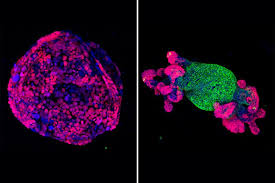
A representative image (Image Source: MSKCC)

A representative image (Image Source: MSKCC)

FacebookTwitterWhatsAppTelegramEmail

A gene linked to colorectal cancer appears to play a role in the development of other solid tumours, according to a study.

A study of over 350,000 patient biopsy samples was conducted by researchers from the Johns Hopkins Kimmel Cancer Centre, the Johns Hopkins Bloomberg School of Public Health, and Foundation Medicine.

Scientists have known since the early 2000s that inheriting two mutant copies of the gene MUTYH increases the risk of colorectal cancer by 93 times and is a leading cause of the disease in people under the age of 55 years.

The current study, published online on February 23 in JCO Precision Oncology, is the largest to date to look into whether a single mutant copy of MUTYH influences one’s risk of acquiring cancer.

“We know two missing copies of MUTYH greatly increases the risk of colon cancer, and now it appears that having only one missing copy may lead to a small increased risk of other cancer types,” says the study’s lead author, Channing Paller, M.D., director of prostate cancer clinical research and an associate professor of oncology at the Johns Hopkins University School of Medicine. She co-led the work with Emmanuel Antonarakis, M.D., associate director of translational research at the Masonic Cancer Center and Clark Endowed Professor of Medicine at the University of Minnesota Medical School. He was at Johns Hopkins at the time the research was conducted.

The gene MUTYH encodes a critical enzyme in the base excision repair (BER) pathway, which fixes DNA damage in human cells. When the BER pathway isn’t working, routine DNA damage is not repaired, leading to additional DNA mutations or cell death.

Since 2021, Paller has co-led PROMISE, a genetic registry of patients with inherited mutations in prostate cancer. When one of her patients asked whether his MUTYH mutation, for which he had one defective copy rather than two, affected his aggressive prostate cancer, there was not enough data on MUTYH variants to answer the question, says Paller. Past studies reached conflicting results about whether a single, heterozygous mutation of MUTYH might predispose a person to cancer.

In pursuit of an answer, Paller reached out to Foundation Medicine, a Massachusetts-based genomic profiling company that maintains one of the world’s largest cancer genomic databases. With researchers at Foundation Medicine; Alexandra Maertens, Ph.D., of the Center for Alternatives to Animal Testing at the Bloomberg School of Public Health; and others, the team applied an advanced algorithm to analyze the genetic data of 354,366 solid tumor biopsies stored in the Foundation database.

Within that population of tumor samples, 5,991 had one working version and one mutated version of MUTYH. Of those, 738 (about 12 per cent) had lost their working copy of the gene, leaving them with just the mutated copy. Those with a single, mutated copy of MUTYH showed a genetic signature, like a fingerprint, of additional genetic mutations and a defective BER pathway. Individuals with that genetic signature had a modest increase in susceptibility to a subset of solid tumors, including adrenal gland cancers and pancreatic islet cell tumors. However, they did not have an increased risk for breast or prostate cancer, resolving the original patient’s question.

The results suggested that MUTYH variants might be involved in a broader range of cancers than previously known, Paller said.

“The next question is whether this finding has therapeutic implications,” she said. “Can we target the BER pathway for possible drug sensitivities?” If so, doctors might be able to add a new therapeutic approach to their arsenal of tools against solid cancers.

(With inputs from ANI)

Topics: Health Newscolorectal cancer genesolid tumors
ShareTweetSendShareSend
✮ Subscribe Organiser YouTube Channel. ✮
✮ Join Organiser's WhatsApp channel for Nationalist views beyond the news. ✮
Previous News

Mukhtar Ansari Dead: End of mafia raj; know all about notorious “Bahubali,” & relative of former VP Hamid Ansari

Next News

Ten Powerful Leadership Mantras from Chhatrapati Shivaji Maharaj

Related News

Accused Madesh who tried delivering the baby at home (L) and the woman who lost her life, M Loganayaki (R) (India Today)

Tamil Nadu: Woman lost life after husband tries to deliver baby at home watching YouTube videos

Load More

Latest News

Andhra Pradesh Chief Minister N. Chandrababu Naidu inaugurates the Jonnagiri Gold Mining Project in Kurnool district

Andhra Pradesh: CM Chandrababu Naidu lunches first major gold mining project in Kurnool district

AI-generated image for representation

Tamil Nadu: School teacher faces action over alleged humiliation of menstruating student

Cochin Shipyard (File Photo)

Keralam: ‘I Love Pakistan’ inscription found inside vessel at Cochin Shipyard; Central agencies launch probe

BJP national spokesperson Pradeep Bhandari

Karnataka: BJP accuses Kharge family of illegally acquiring government land worth over Rs 100 crore

Elomi Global Worship Centre in Omalloor, Pathanamthitta district ; Pastor Binu Vazhakkuttom (Left to Right)

Keralam: Child abuse allegations at Pentecostal worship centre in Pathanamthitta; locals demand Pastor Binu’s arrest

Modi Govt’s Tourism Revolution: 183 projects, Rs 9,225 crore investment & rise of India’s cultural & spiritual circuits

Padma Awards 2026: Tamil Nadu’s distinguished achievers receive national honours

India’s history is not merely a tale of foreign domination but also a remarkable story of resilience, resistance & civilisational continuity

Indian History: Not just foreign rule, but a timeless story of resistance, self-respect and civilisational resilience

From $10 Billion to $190 Billion: Indian Bioeconomy Touches New Heights in 12 Years

From $10 Billion to $190 Billion: India’s Bioeconomy leads a 12-Year science revolution

Nagpur | Acceptance of Bharatiya civilisational values is steadily increasing worldwide: Shanta Kumari

Load More
  • Privacy
  • Terms
  • Cookie Policy
  • Refund and Cancellation
  • Delivery and Shipping

© Bharat Prakashan (Delhi) Limited.
Tech-enabled by Ananthapuri Technologies

  • Home
  • Search Organiser
  • Bharat
    • Assam
    • Bihar
    • Chhattisgarh
    • Jharkhand
    • Maharashtra
    • View All States
  • World
    • Asia
    • Africa
    • North America
    • South America
    • Europe
    • Australia
  • Editorial
  • Operation Sindoor
  • Opinion
  • Analysis
  • Defence
  • Culture
  • Sports
  • Business
  • RSS @ 100
  • Entertainment
  • More ..
    • Sci & Tech
    • Vocal4Local
    • Special Report
    • Education
    • Employment
    • Books
    • Interviews
    • Travel
    • Health
    • Politics
    • Law
    • Economy
    • Obituary
  • Subscribe Magazine
  • Read Ecopy
  • Advertise
  • Circulation
  • Careers
  • About Us
  • Contact Us
  • Policies & Terms
    • Privacy Policy
    • Cookie Policy
    • Refund and Cancellation
    • Terms of Use

© Bharat Prakashan (Delhi) Limited.
Tech-enabled by Ananthapuri Technologies