Ramayan flourishes beyond India, influencing cultures and beliefs worldwide
June 7, 2026
  • Read Ecopy
  • Circulation
  • Advertise
  • Careers
  • About Us
  • Contact Us
Android AppiPhone AppArattai
Organiser
  • ‌
  • Bharat
    • Assam
    • Bihar
    • Chhattisgarh
    • Jharkhand
    • Maharashtra
    • View All States
  • World
    • Asia
    • Europe
    • North America
    • South America
    • Africa
    • Australia
  • Editorial
  • International
  • Opinion
  • RSS @ 100
  • More
    • Op Sindoor
    • Analysis
    • Sports
    • Defence
    • Politics
    • Business
    • Economy
    • Culture
    • Special Report
    • Sci & Tech
    • Entertainment
    • G20
    • Azadi Ka Amrit Mahotsav
    • Vocal4Local
    • Web Stories
    • Education
    • Employment
    • Books
    • Interviews
    • Travel
    • Law
    • Health
    • Obituary
  • Subscribe
    • Subscribe Print Edition
    • Subscribe Ecopy
    • Read Ecopy
  • ‌
  • Bharat
    • Assam
    • Bihar
    • Chhattisgarh
    • Jharkhand
    • Maharashtra
    • View All States
  • World
    • Asia
    • Europe
    • North America
    • South America
    • Africa
    • Australia
  • Editorial
  • International
  • Opinion
  • RSS @ 100
  • More
    • Op Sindoor
    • Analysis
    • Sports
    • Defence
    • Politics
    • Business
    • Economy
    • Culture
    • Special Report
    • Sci & Tech
    • Entertainment
    • G20
    • Azadi Ka Amrit Mahotsav
    • Vocal4Local
    • Web Stories
    • Education
    • Employment
    • Books
    • Interviews
    • Travel
    • Law
    • Health
    • Obituary
  • Subscribe
    • Subscribe Print Edition
    • Subscribe Ecopy
    • Read Ecopy
Organiser
  • Home
  • Bharat
  • World
  • Operation Sindoor
  • Editorial
  • Analysis
  • Opinion
  • Culture
  • Defence
  • International Edition
  • RSS @ 100
  • Magazine
  • Read Ecopy
Home Bharat

Ramayan flourishes beyond India, influencing cultures and beliefs worldwide

The epic tale of Maharishi Valmiki's Ramayan, renowned for its portrayal of the triumph of virtue over malevolence, holds a cherished place not only in Indian folklore but also worldwide. These adaptations of Ramayan have left an indelible mark on local folklore and cultural beliefs, featuring altered plots, character nuances, attire, weaponry choices, and settings

WEBDESKWEBDESK
Jan 10, 2024, 09:00 am IST
in Bharat, Culture
Follow on Google News
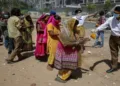
Ramayan in Indonesia

Ramayan in Indonesia

FacebookTwitterWhatsAppTelegramEmail

Maharishi Valmiki’s Ramayan is a much-loved tale of good triumphing over evil, the world over. Valmiki Ramayan is recognised as the original but over 300 Ramayan versions are known to exist, especially in South East Asia, when around the 12th and 13th centuries, the region received and imbibed many of the cultural traits, along with goods and services, travelling from Bharatiya shores.

The Ramayan adaptations have influenced their folklore and culture beliefs, changed plots, character traits, attire, choice of weaponry, and locations, and in turn offer an array of refreshing perspectives on the original version.

Many of the versions may not ascribe to certain values in the original Ramayan but different versions and interpretations are found in Bharatiya versions of Ramayan as well. For example, some different characters are found in Jain texts. Such texts seem to have influenced Ramayan versions outside Bharat. Ram is depicted and considered as a respectable figure in the Buddhist version in South Asian countries. The Buddhist version of Ramayan is called `Dasarata Jataka’. We find two versions here. Firstly, Dashratha sent Ram, Sita and Laxman to live in the forest to protect them from his third ambitious wife. The second version does not have the abduction of Sita. The fact is that both versions got immense popularity and gained social acceptance. It is seen that Ramayan was even used by the rulers to legitimise their kingship. Eleventh century Burmese stone is found, with inscription in Mon language. The inscription describes King Kyanzittha, who belonged to the Bagan dynasty, as Ram’s close relative. In several countries like Cambodia, Thailand and Myanmar, Hindutva had a large following before Buddhis entered in these regions. Orissa and Tamil sea merchants were responsible for the proliferation of Bharatiya culture to Southeast Asia, when they would undertake an annual voyage, and along with the goods exchanged stories. In some Southeast Asian versions, Hanuman is depicted as someone playing mind games, who charms and outwits especially the female characters. Despite having multiple versions, Ram continues to be a dominant character in these countries.

The Cambodian Ramayan is known as Reamker (Ramakerti–Ram+Kirti/glory), a text of Khmer literature, which takes from both Hindutva and Buddhism to demonstrate the balance of good and evil. In Cambodia, Ram is known as Phreah Ream and Sita, Neang Seda. A corridor with carved episodes on Ramayan is seen in 12th century Angkor Wat ruins. Some murals are also noticed on the walls of Phnom Penh’s royal palace. Interestingly, Hanuman is shown expanding his body between Bharat and Sri Lanka so that Ram’s army could cross the sea.

The monarchs of Thailand, erstwhile Siam, used to call themselves as descendants of Ram. Their names had Ram either as a prefix or suffix. Its capital city was Ayutthaya, which sounds similar to Ayodhya. In the 18th century, Burmese soldiers invaded Ayutthaya and the name was changed to Rama I, this happened despite him being a practicing Buddhist. Later, he wrote the Thai version of Ramayan, which is known as Ramakien and it is still considered as a national epic.

Myanmar (Burma) has a national epic, known as Yamayana; Yama or Zatdaw was introduced during King Anawratha’s reign in the 11th century CE. This version calls Ram as Yama and Sita as Thida. Ravana is called Yawana. Ram is portrayed as a Bodhisattva. The narrative is mostly the same as Valmiki’s Ramayan, except for localised names of places and characters.

In Laos, the national epic is Phra Lak Phra Ram. Lao devotees believed that their ruler King Lava was Ram’s son. They believe that Lava gave Laos its name. This is viewed as a Jataka story. Malay version of Ramayan – Hikayat Seri Rama – is very similar to the original Sanskrit text. But the central character in Malaysia is Laxman and not Ram.

Spread and versions of Ramayan in Southeast countries can be understood by the fact that every island has different versions….

In Bali, it is Ramakavaca, in Java its Kakawin or Yogesvara Ramayan, and in Sumatra it is Ramayan Swarnadwipa. In the latter version, Tamawaka (Ram) rescues Himegini (Sita), from Baramon (Ravan). The Javanese Kakawin is a Sanskrit-metre-poetry composed during the Medang kingdom era. In some Indonesian versions, Sita is shown as a fierce lady, who fought against Asuras on her own. In the Maranao version of the Philippines, which is called as Maharadia Lawana, a completely new version is seen, in which adventures of monkeys can be seen. Deep influence of Ramayan on Southeast countries continues even today. The opening ceremony of the 2017 ASEAN summit involved a staging of the musical version of Ramayan.

In China, few parts picked up orthodox and ethical values noted in the Bharatiya epic. Jataka Katha of Ram are popular with the Chinese. China has also a Buddhist text Liudu ji jing. This is an elaborate account of the Ramayan, while in Sun Wukong, Hanuman finds some representation in the form of a monkey-king.

Japan has two versions namely, Hobutsushu and Sambo-Ekotoba. Hanuman has a diminutive role in another adaptation titled, Ramaenna or Ramaensho, and in the Bontenkoku version, Tamawaka (Ram), a flute player rescues his wife Himegini (Sita) from King Baramon (Ravan).

In Nepal, Mahakavi Siddhidas Mahaju Amatya wrote Siddhi Ramayan in the Nepal Bhasha. There’s also Bhanubhakta Acharya’s Bhanubhaktako Ramayan in Khas language. However, the revelry of Dussehra called Dasain or Mohini in Nepal is more about the Goddess Durga, than Ram’s triumph over Ravan.


Topics: BharatRamayanBhgawan RamRamayan outside BharatMaharishi Valmiki’s Ramayan
Share1TweetSendShareSend
✮ Subscribe Organiser YouTube Channel. ✮
✮ Join Organiser's WhatsApp channel for Nationalist views beyond the news. ✮
Previous News

Ayodhya’s Ram Mandir Sanctum ready after 500-year long journey, awaits Pran Pratishtha

Next News

Lakshadweep: India plans new airport for both military, civilian aircraft operations in Minicoy

Related News

As fuel shortages rippled across Asia, New Delhi expanded supplies to its neighbours while Beijing sought to turn energy security into strategic influence.

The Hormuz Test: How India’s energy assistance outshines China’s conditional approach

Demographic changes in Bharat’s border districts have raised concerns about migration, security, and social cohesion

Demographic Shift in Border Areas of Bharat: The dangerous design

J. Nandakumar addresses the Citizens programme

Hindutva is Bharat’s identity and intellectual foundation, Says J Nandakumar

An eternal civilization cannot be eradicated! The Sanatana Dharma debate beyond politics and ideology

Representative Image

Bharat must act decisively against infiltration, forced religious conversion & adverse demographic changes

“Bharat must rise as vishwaguru through its civilisational values”: Manisha Sant

Load More

Latest News

(Left) Victorious Indian Men-s hockey team who who won Gold in U-18 Asia Cup (Right) U-18 Women's hockey team who won bronze medal in the Asia Cup

U18 Asia Cup 2026: Indian Men’s hockey wins gold, women secure bronze medal; PM Modi & Amit Shah hail the teams

India’s semiconductor roadmap shifts from import dependence to silicon sovereignty, aiming for a self-reliant ecosystem by Viksit Bharat 2047

From Import Dependence to Silicon Sovereignty: India’s bold semiconductor roadmap for Viksit Bharat 2047

Keralam Chief Minister V.D. Satheeshan

Jamaat-e-Islami Hind Team Meets CM Satheeshan, Senior Ministers, fuel debate over influence in UDF government

Singapore acts against China-linked posts targeting Indian community, cites threat to social harmony

Singapore Invokes OCHA: Facebook, YouTube and X ordered to block anti-Indian content originating from China

Editors of the HAF Wikipedia page run propaganda and disinformation campaign against the organisation, India and Hindu cultural ethos

Wikipedia fuels propaganda against Hindu American Foundation: How anonymous writers demonise Hindu rights group?

Israel to Install Statue of Chhatrapati Shivaji Maharaj; Israel’s Consul General in Mumbai, Yaniv Revach, met Maharashtra Chief Minister Devendra Fadnavis and sough his support in this regard

Chhatrapati Shivaji Maharaj’s legacy to reach Israel; Statue to be installed as symbol of India-Israel friendship

IIGH Public Policy Seminar: Women’s dignity, safety & equal opportunity discussed

Representative Image

Decoding Hezbollah: How the terror group built a massive arsenal against Israel

Representative Image

Plastic, Traffic and Landslides: How rising tourist footfall is posing threat to the mountainous region

The Green Realignment: Why the US-India trade pact is a battle for climate and supply chain security

Load More
  • Privacy
  • Terms
  • Cookie Policy
  • Refund and Cancellation
  • Delivery and Shipping

© Bharat Prakashan (Delhi) Limited.
Tech-enabled by Ananthapuri Technologies

  • Home
  • Search Organiser
  • Bharat
    • Assam
    • Bihar
    • Chhattisgarh
    • Jharkhand
    • Maharashtra
    • View All States
  • World
    • Asia
    • Africa
    • North America
    • South America
    • Europe
    • Australia
  • Editorial
  • Operation Sindoor
  • Opinion
  • Analysis
  • Defence
  • Culture
  • Sports
  • Business
  • RSS @ 100
  • Entertainment
  • More ..
    • Sci & Tech
    • Vocal4Local
    • Special Report
    • Education
    • Employment
    • Books
    • Interviews
    • Travel
    • Health
    • Politics
    • Law
    • Economy
    • Obituary
  • Subscribe Magazine
  • Read Ecopy
  • Advertise
  • Circulation
  • Careers
  • About Us
  • Contact Us
  • Policies & Terms
    • Privacy Policy
    • Cookie Policy
    • Refund and Cancellation
    • Terms of Use

© Bharat Prakashan (Delhi) Limited.
Tech-enabled by Ananthapuri Technologies